If you’ve ever walked into a space with walls that feel like a gentle, tactile escape instead of flat, impersonal drywall, chances are you’ve encountered sand texture paint. As someone who’s spent the last 12 years as a sand texture paint supplier, I get asked this question at least three times a week: “What’s the cost per gallon?” It’s not a simple number to spit out, though—sand texture paint pricing depends on so many factors, and guessing at it could lead to big mistakes for both do-it-yourself homeowners and general contractors. Let me break this down like I would for a new painter picking up their first batch from my warehouse, no corporate jargon, just real-world numbers and context that actually matters. Sand Texture Paint
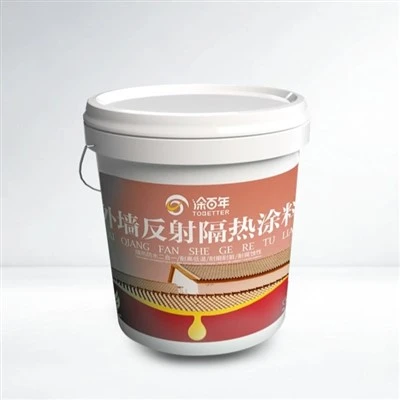
First, let’s start with the basics: what even is sand texture paint, anyway? For the uninitiated, it’s not just regular wall paint with a little sand stirred in. Good sand texture paint combines acrylic polymer binders (the stuff that makes it stick and not peel), quartz sand aggregate (that’s the gritty texture you feel), pigments, and additives to resist mildew, fade, or cracking when it’s applied indoors or out. Cheap knockoffs cut corners on the binders or use inconsistent sand size, but I’m talking about the reliable, consistent product my team manufactures for residential and commercial jobs. That consistency is why pricing isn’t one-size-fits-all.
Let’s get to the per-gallon numbers, because that’s what everyone is here for. Right now (this is 2024, for anyone reading this down the line), the average cost of a quality interior sand texture paint per gallon is between $32 and $55. For exterior, which has to hold up to rain, UV rays, and temperature swings, it’s a little higher: $38 to $62 per gallon. Wait, that’s a big gap—why the range? Let’s unpack that.
The biggest factor in that gap is the type of sand aggregate we use. Not all sand is the same. Some suppliers use plain construction-grade sand, which has inconsistent particle sizes, can have sharp edges that scratch walls or rollers, and leach minerals that make the paint fade faster. We use washed, graded quartz sand for our texture paint; it’s screened to uniform sizes (usually between 20 and 40 mesh, for anyone who wants to know) so the texture is smooth and even, no lumps, no grit that falls off as dust. That graded quartz costs us 15 to 20 cents more per pound than construction sand, and that adds up to about $2 to $4 extra per gallon of finished paint. It’s worth it, though—our customers tell us they never have to touch up texture from dusting, which saves them money on labor later.
Another big variable is the binder. Acrylic binders are the backbone of the paint, and higher-quality, 100% acrylic binders (instead of vinyl-acrylic blends) cost more, but they’re flexible, so they don’t crack when walls shift slightly from settling or temperature changes. For interior use, where UV exposure isn’t an issue, some manufacturers use cheaper vinyl blends to cut costs, but those can peel or chip in high-traffic areas like entryways or playrooms. For exterior paint, we only use 100% acrylic binders because they resist fading for 8 to 10 years, compared to 3 to 5 years for lower-grade blends. That’s why exterior sand texture paint is always more expensive—its raw material costs are higher.
Then there’s color. White or off-white base sand texture paint is at the lower end of the price range, around $32 to $38 per gallon for interior, $38 to $45 for exterior. That’s because we don’t add extra pigment to the base. If you want a custom color, though, that can add $5 to $15 per gallon, depending on how dark or saturated the color is. Darker colors require more pigment to cover evenly, and some specialty shades use pigments that cost twice as much as standard white or gray base. I always tell customers to plan for that extra cost, too—if you buy a gallon of deep navy sand texture paint for $45 instead of $35, that’s $10 extra per gallon, which adds up if you’re painting a whole house.
Wait, what about the difference between retail and bulk pricing? That’s another huge one that a lot of first-time buyers miss. If you’re a DIY homeowner buying one or two gallons at your local hardware store, you’re going to pay the full retail rate, which is at the top of the range I mentioned. But if you’re a contractor painting 10,000 square feet of apartment units, or a property manager renovating 20 townhomes, buying in bulk from a supplier like me? You can cut that per-gallon cost by 15% to 25%, because we pass along the savings from large-volume raw material orders. Last quarter, one of our regular contractors bought 500 gallons of exterior sand texture paint for a retail store renovation, and their per-gallon cost was $42, compared to the $52 retail rate. That’s $5,000 saved on a single order—enough to cover a full week of a crew’s labor.
Let’s also talk about application, because the cost of the paint is only part of the story, and I always advise customers to factor that in when they’re budgeting. A gallon of sand texture paint will cover about 250 to 350 square feet of wall, depending on how thick you apply it. Sand texture paint is thicker than regular flat paint, so you can sometimes cover a little less area than the label says, especially if you’re going for a heavy, prominent texture. Let’s do the math: if you’re painting a 1,500-square-foot living room, that’s about 1,200 square feet of actual wall space (subtracting windows and doors), so you’d need 4 gallons of paint at 300 square feet per gallon. At an average $40 per gallon, that’s $160 for the paint alone, plus labor (which is usually $2 to $4 per square foot, so another $2,400 to $4,800 for the job). But if you cut corners and buy cheap sand texture paint for $25 per gallon, you might need an extra half-gallon because it’s thinner and doesn’t cover as well, and it might start peeling after 3 years, so you’ll have to repaint sooner. That means the cheap option could actually cost you more in the long run.
I also get a lot of questions about specialty sand texture paint—like the kind that’s antimicrobial, or low-VOC for schools or hospitals. That’s another driver of cost. Low-VOC (volatile organic compound) sand texture paint is required in many commercial spaces to meet indoor air quality standards, and it costs about $5 to $10 more per gallon than standard low-VOC paint, because we have to use different additives that don’t release harmful fumes. Antimicrobial texture paint, which resists mold and mildew in bathrooms, basements, or outdoor walls, adds another $3 to $7 per gallon, since we add a small amount of EPA-approved antimicrobial agents to the mix. For a daycare center, that’s worth every penny, but if you’re painting a spare bedroom, you might not need that extra feature.
Let me share a real example from a job I worked on last year, to make this concrete. A customer came to me asking for 10 gallons of interior sand texture paint for a 2,200-square-foot home. They wanted a warm beige color, moderate texture (not too chunky, not too thin), and low-VOC, since they had a toddler. Their initial budget was $40 per gallon, so they thought they’d be looking at $400 total. But when we broke it down, the base beige interior low-VOC paint was $36 per gallon, the moderate texture added $2 per gallon, and the custom color added $4 per gallon—so total per gallon was $42, for a total of $420. That was a small gap from their initial budget, but it meant they got a consistent, long-lasting paint that wouldn’t off-gas in their baby’s room. Later, they told me that same paint held up perfectly for 4 years, no chipping, no fading, and they never had to touch up a spot.
Another common mistake I see: people confusing sand texture paint with textured spray paint for small projects. Those cans of spray texture paint cost about $8 to $12 per can, and they’re not the same as a gallon of sand texture paint. The spray cans are for small repairs or accent walls, not for whole rooms, because a single can covers barely 50 square feet. Buying a gallon of sand texture paint is always more cost-effective for large projects, even if the upfront price is higher.
Now, let’s talk about what affects pricing in the future. Raw material costs for quartz sand and acrylic binders have gone up 7% to 10% over the last two years, thanks to supply chain delays and increased demand for construction materials post-pandemic. That’s why the per-gallon rates I’m quoting are slightly higher than they were in 2022. But we work with three different quartz suppliers to keep our costs as low as possible, and we offer bulk discounts to loyal customers, so their rates stay stable.
If you’re still trying to figure out what you need for your project, here’s my advice: first, decide if it’s interior or exterior, because that’s the biggest split in cost. Then, pick your texture style—light, medium, or heavy—since a higher texture sometimes uses a tiny bit more paint, but the cost difference is negligible. Next, choose your color and any specialty features (low-VOC, antimicrobial). Finally, buy in bulk if you can, even if it’s just two gallons instead of one. And if you’re a contractor or large-scale buyer, reach out directly to get a custom bulk quote—we don’t list our bulk rates publicly, because they’re tailored to how much you need, how soon you need it, and what your specific project requirements are.
Wait, I should also address the elephant in the room: what about super cheap sand texture paint, the stuff you see for $15 per gallon at big box stores? I get asked about that all the time. I’ve tested a lot of those budget products over the years, and most of them use construction sand, cheap vinyl binders, and uneven pigment. They might work for a closet or a shed, but for a living room or a bedroom? They’ll fade in two years, chip if you so much as bump a furniture leg, and the sand might start falling off the walls when you wipe them down. I’d rather see a customer pay $10 extra per gallon for a quality product that lasts 8 years than save $50 total and have to repaint in 2 years. That’s not a sales pitch—that’s just years of doing this job, seeing what works and what doesn’t.
At the end of the day, the “cost per gallon” of sand texture paint isn’t just a number on a price tag. It’s tied to the materials that go into it, the consistency you can expect, and how long it will stand up to wear and tear. For a DIY homeowner doing a small accent wall, maybe the mid-range $40 per gallon product is perfect. For a contractor doing 100,000 square feet of commercial space, bulk pricing can bring that cost down to a manageable rate without sacrificing quality.
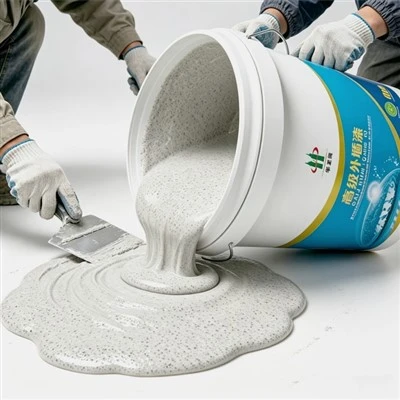
If you’re planning a project and want a precise quote, or if you’re a professional looking to set up a recurring supply relationship, don’t hesitate to reach out to my team. We can talk through your specific needs, break down exact costs, and make sure you’re getting the right paint for your budget and your project. Whether you’re doing a single bedroom or a full commercial build, we’ve got the products and the expertise to help you get it done right.
Sand Texture Paint References:
- American Coatings Association. (2023). “Construction Coating Cost Analysis: 2023–2024 Market Trends.” ACA Industry Report.
- National Paint and Coatings Association. (2022). “Textured Paint Performance and Durability Standards.” NPCA Technical Bulletin.
- U.S. Geological Survey. (2023). “Quartz Sand Supply and Demand Report for Industrial Use.” USGS Mineral Studies.
- Environmental Protection Agency. (2024). “Low-Vocity Organic Compound (VOC) Emission Standards for Architectural Paints.” EPA Guide for Commercial and Residential Products.
Guangdong Tubainian New Materials Co., Ltd.
Guangdong Tubainian New Materials Co., Ltd. is one of the most professional sand texture paint manufacturers and suppliers in China. If you’re going to buy bulk CE approved sand texture paint made in China, welcome to get quotation from our factory. All customized products are with high quality and low price.
Address: Lanshukeng Industrial Zone, Hongwei Village, Xinxu Town, Huiyang District, Huizhou City, Guangdong Province, China (Factory of Huizhou Huiyang Bohua Packaging Products Co., Ltd.)
E-mail: sean17898430991@gmail.com
WebSite: https://www.tobettercoating.com/
