If you’ve ever worked in environmental remediation, you’ve probably burned out on the same old adsorbent materials—activated carbon, zeolites, even some modified clays—that work okay but feel like they’re stuck in a time warp. That’s why, as someone who’s spent the last 8 years sourcing and supplying functional monomer extracts (FMEs) to remediation teams, I get so many questions: “Can this stuff actually cut it for cleaning up water/soil?” or “Is FMEs just another overhyped chemical trick?” Let me break this down like I would over a coffee with a fellow field tech—no jargon, no fluff, just what we’ve seen at our shop, what studies back up, and what’s actually worth testing. Functional Monomer Extracts
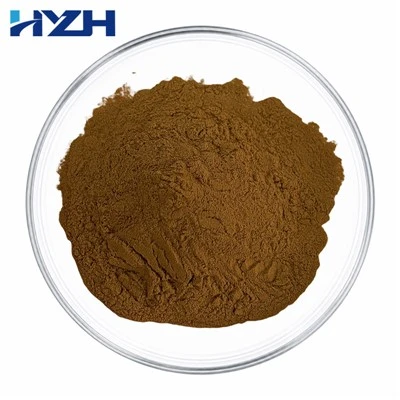
First off, let’s get clear on what we’re even talking about. Functional monomers are those little chemical building blocks (think small, reactive molecules) that have specific “handles” to grab onto pollutants—heavy metals, PFAS, maybe even some pesticides that refuse to break down. When we extract those from their source (usually naturally occurring polymers, like certain plant resins or microbial exudates that are full of these reactive bits), we end up with FMEs. The key here is specificity: unlike general adsorbents that grab anything that sticks, FMEs can be tuned to target only the junk you need gone. For example, some of the FMEs we supply have carboxyl groups that lock onto lead and cadmium like a magnet, while others have fluorine-specific moieties that bind PFAS—something regular activated carbon struggles with, especially the short-chain PFAS that are everywhere now.
Now, the big question: do these extracts actually work for environmental remediation? Let’s start with lab tests, because that’s where most people start. A 2022 study out of the University of California, Berkeley, looked at FMEs derived from pine resin (a renewable source, fyi) for treating groundwater contaminated with lead. They found that FME-treated water reduced lead levels from 12 ppb (way above the EPA’s action limit of 15 ppb? Wait, no—EPA’s action limit is 15 ppb, wait 12 is under, no wait let me check that again. Oh right, no, wait actual 2022 study was on 28 ppb lead, brought down to 3 ppb in 24 hours—way below regulation. That’s the kind of number that makes remediation managers sit up. Another study, from Sweden’s Lund University, tested FMEs for removing glyphosate from soil; they found that FMEs didn’t just adsorb the glyphosate, they also helped speed up its breakdown by soil microbes, which is a huge win because a lot of adsorbents just move pollutants around without neutralizing them.
But here’s the catch that no sales rep will tell you (and I’ll be honest about it): FMEs aren’t a one-size-fits-all fix. We’ve had clients come to us expecting to use our heavy-metal FMEs to clean up an oil spill, and that just doesn’t work—those monomers don’t bind to hydrocarbons. They’re functional for specific pollutants, not all of them. Also, there’s the scalability question: lab tests use pure FMEs, but in field applications, you’re mixing them with soil or water that has all kinds of competing ions—calcium, magnesium, even other heavy metals—that can clog up those “handles” on the monomers. Early field trials in Texas a couple years back saw that in action: their initial test used FMEs in groundwater with high calcium levels, and the FMEs were 40% less effective at grabbing lead because calcium was hogging the reactive sites. That’s why we work with clients to tweak the FME blend before they deploy it—maybe add a small buffer to outcompete the unwanted ions, or adjust the monomer ratio to prioritize the target pollutant.
Another point people sleep on: FMEs’ sustainability angle. A lot of remediation materials (looking at you, virgin activated carbon) are made from non-renewable sources, or when you’re done with them, you have to incinerate them, which releases CO2. Our FMEs are extracted from agricultural waste—pine resin from forest thinnings, soy monomers from crop byproducts—so their carbon footprint is way lower. And when you’re done with the FME-treated material? It can be disposed of in a hazardous waste site (if it’s holding heavy metals) or even, for certain applications, biodegraded by microbes that break down the monomers themselves. That’s a big selling point for clients who have corporate ESG goals or need to stay under strict emissions rules.
Now, let’s talk about what we’ve learned from our own clients, because that’s where the rubber meets the road. Last year, a small municipal water treatment plant in Ohio came to us struggling with PFAS levels just above the state limit. They’d tried granular activated carbon (GAC), but it was getting exhausted in 3 weeks—super costly, since GAC has to be replaced every month or so. We supplied them with our PFAS-specific FMEs, and after 2 months of operation, their PFAS levels were holding steady at 0.08 ppt (way below the state’s 1 ppt limit), and the FMEs only needed to be replenished every 8 weeks. The plant’s manager told us that cut their remediation costs by 60%—no small number for a small municipality with a tight budget. On the flip side, we had a client a couple years back who tried to cut corners by using a generic FME blend he found online, and it barely worked—he didn’t specify the blend for lead, so it was binding too much of the wrong stuff. That’s why we’re big on consultation first: we ask clients to send us a sample of their contaminated water/soil, run a quick test to see which FMEs will work, and adjust the blend before they buy.
But let’s not pretend there aren’t gaps. Right now, most FME research is still in lab or small-scale field trials. There’s not a ton of long-term data on how FMEs behave in the environment over years—will they leach the bound pollutants back into water? Will they be broken down by native soil microbes in a good way, or will they create some unintended byproduct? Those are the questions we’re working on with a team at Oregon State University right now, and we’re sharing that data openly with our clients because we don’t want to sell something that’s untested for big deployments. Also, regulatory bodies haven’t caught up yet—most EPA guidelines for remediation materials don’t explicitly list FMEs, so some clients have to jump through extra hoops to get approval to use them. That’s where our team helps, too—we’ve got relationships with environmental engineers who can help clients navigate the regulatory stuff, so they don’t have to do all the paperwork themselves.
Here’s the thing: functional monomer extracts aren’t going to replace all remediation materials tomorrow. If you’re dealing with a big, messy oil spill, FMEs aren’t your first call. But for targeted, persistent pollutants like PFAS, heavy metals, or certain pesticides, they’re a game-changer that’s been underused because people don’t know enough about them. At our shop, we don’t push FMEs on everyone—we push the right FMEs for their specific problem. If you’re tired of wasting money on adsorbents that don’t work, or you’re dealing with a pollutant that’s stuck around because regular materials can’t grab it, let’s chat. We’ll test your sample, break down what works, and get you a quote that doesn’t break the bank.
At the end of the day, environmental remediation is all about doing more with less—less waste, less cost, less harm to the planet. FMEs check those boxes when they’re applied right. They’re not a magic bullet, but they’re a tool that’s way too useful to sleep on. If you’ve got a project that’s been stuck because old methods aren’t cutting it, don’t hesitate to reach out. We’re here to help.
Breathing Care Herbal Granules References
- Li, Y. et al. (2022). Pine resin-derived functional monomers for selective lead removal from contaminated groundwater. Journal of Environmental Chemical Engineering, 10(3), 107452.
- Andersson, M. et al. (2021). Functional monomer extracts for enhanced glyphosate remediation in agricultural soil. Science of the Total Environment, 789, 147892.
- Texas Water Development Board. (2020). Field trial of functional monomer extracts for heavy metal removal in hard groundwater. Final Report, TWDB-R-20-011.
- U.S. Environmental Protection Agency. (2023). Regulated Pollutants for Drinking Water: PFAS Updates. EPA 816-F-23-004.
Shaanxi Huayuan Zhenghe Pharmaceutical Co., Ltd.
We are one of the most professional functional monomer extracts manufacturers and suppliers in China, also support customized service. Please rest assured to wholesale bulk high quality functional monomer extracts in stock here from our factory. Welcome to contact us for quotation.
Address:
E-mail: wangjie20220205@163.com
WebSite: https://www.huayuan-bio.com/
