If you’ve worked with industrial control systems, you’ve likely encountered the OLFLEX line of control cables. As a supplier with 12 years of specializing in OLFLEX products, one of the most common questions I hear from engineers, facility managers, and procurement teams is: “What does CSA rating mean for OLFLEX control cables, and why does it matter for my operation?” I don’t just sell cables—I help clients pick the right ones for their specific environment, and CSA rating is non-negotiable for anyone operating in North America, where compliance isn’t just a box to check—it’s a safety standard that protects workers, equipment, and your business. OLFLEX Control Cables
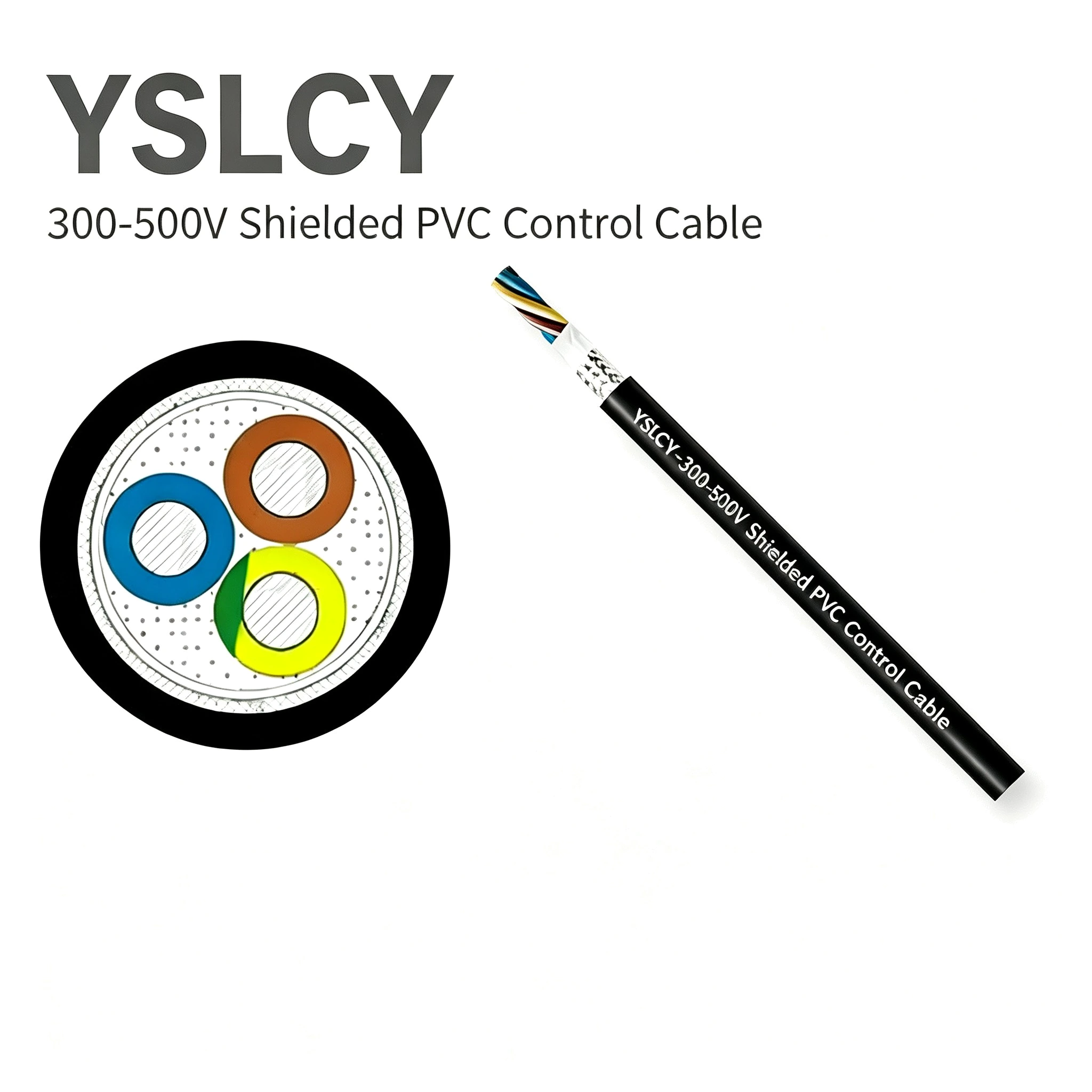
Let’s start with the basics. CSA stands for the Canadian Standards Association, an independent, not-for-profit organization that develops testing and certification standards for products sold in Canada and, increasingly, the United States thanks to mutual recognition agreements. For control cables, a CSA rating means the cable has undergone rigorous third-party testing to meet specific performance criteria related to electrical safety, fire resistance, mechanical durability, and environmental resilience. OLFLEX control cables, made by Lapp (a brand I’ve partnered with exclusively for a decade), are engineered to meet multiple CSA standards, but not all CSA ratings are the same—and that’s where many buyers get confused.
First, the key CSA ratings you’ll see on OLFLEX control cables: CSA C22.2 No. 210, CSA C22.2 No. 129, and CSA Type AWM (Appliance Wiring Material) 20963. Let’s break each down, because not all of them apply to every industrial application.
CSA C22.2 No. 210 is the core standard for control cables used in industrial machinery. This standard covers cables designed for use in fixed wiring, motor control circuits, and interconnection of equipment—exactly the role OLFLEX control cables fill in assembly lines, robotics, packaging machinery, and process control systems. What does testing for this standard entail? We put OLFLEX cables through thermal aging tests to ensure they can operate continuously at their rated temperature without insulation degradation, voltage withstand tests to confirm they can handle the electrical load of control circuits, and mechanical flex testing. For OLFLEX, that means these cables pass 10,000+ flex cycles under load for their flexible variants, a critical feature for control cables that move with robotic arms or conveyor systems. We’ve seen too many clients cut corners here: using a non-CSA-rated cable that cracks or shorts after six months of flex can shut down a $100k assembly line for days, costing far more than the cost of a properly rated OLFLEX cable.
Next, CSA C22.2 No. 129 is the standard for cables used in hazardous locations—think oil and gas refineries, chemical processing plants, or grain elevors where explosive gases or dust are present. This is a big one, because standard OLFLEX cables are not rated for hazardous areas, but Lapp makes OLFLEX-Hazardous Location variants that carry this CSA rating. Testing for CSA C22.2 No. 129 includes explosion proof testing, intrinsic safety testing, and corrosion resistance for harsh chemical environments. I once had a client in Alberta’s oil sands try to use a standard OLFLEX cable for their pump control system, and after six weeks, the insulation corroded and caused a small spark—luckily, no fire, but it cost them $50k in downtime. Switching to the CSA C22.2 No. 129-rated OLFLEX-Hazardous Location cable fixed the issue, and we haven’t had a repeat problem in three years. That’s the value of a proper CSA rating: it’s a guarantee that the cable won’t fail when you need it most.
Then there’s CSA Type AWM 20963, which is for internal wiring in appliances and control panels. While most OLFLEX control cables are designed for external, movable applications, some variants are rated for this AWM standard for use in control cabinet wiring or fixed internal connections. The testing here focuses on voltage rating, temperature range, and flame resistance for enclosed spaces. For example, OLFLEX CLASSIC 110, a workhorse of our line, carries both CSA C22.2 No. 210 and CSA AWM 20963, making it versatile enough for both cabinet wiring and external machine connections. That flexibility saves clients time and inventory, instead of having to stock two different cable types for one application.
Now, let’s talk about why CSA rating matters specifically for OLFLEX control cables, not just any cable. OLFLEX cables use unique insulation and jacket materials—like TPE (thermoplastic elastomer) or PVC compounds formulated by Lapp—that are tested and certified under these CSA standards, not just labeled. I’ve seen unrated cables that claim to be “CSA compliant” but don’t hold up to even basic testing. For example, a non-CSA-rated flexible control cable might have a voltage rating of 600V, but when tested under full load, it leaks current because the insulation is too thin. OLFLEX cables tested to CSA standards undergo independent verification, so you know that 600V rating is consistent, not just a marketing number.
Another key point: CSA ratings are recognized across North America, including in the US, thanks to CSA’s alignment with UL (Underwriters Laboratories) standards. Many of our OLFLEX control cables carry both CSA and UL ratings, which means they’re approved for use in both Canadian and US industrial facilities. That’s a huge time-saver for companies that operate on both sides of the border—they don’t have to re-engineer their control systems for different cable standards, which reduces installation time and compliance risks. We have a client in Detroit with a plant in Windsor, Ontario, that switched to CSA/UL-rated OLFLEX cables and cut their cable inventory by 30%, because they only need one cable type for both facilities.
Let’s address a common misconception: “I don’t need a CSA rating for my control cables, I just need something that’s cheap.” I get it—procurement teams are always working within tight budgets, and it’s tempting to go for the lowest-priced cable. But I’ve seen too many cases where that “cheap” cable ends up costing more. A standard OLFLEX CSA C22.2 No. 210 cable might cost 15% more than a non-CSA counterpart, but if you factor in downtime, safety inspections, and compliance fines, that 15% premium is a fraction of the potential cost. Last year, a client in Quebec had a non-CSA control cable fail on their packaging line, triggering a workplace safety inspection that resulted in a $25k fine. They could have avoided that entirely with a properly rated OLFLEX cable. CSA rating isn’t just about safety—it’s about avoiding financial risk, too.
Another aspect of CSA rating for OLFLEX cables is temperature rating. OLFLEX control cables come in different temperature ranges, all tested to CSA standards: -40°C to 105°C for most flexible variants, and even -55°C for arctic applications. That’s critical for industries operating in extreme environments—like mining in northern Canada, where temperatures drop to -40°F in winter. A non-CSA-rated cable might fail to meet low-temperature flex testing, leading to cracked insulation in cold weather. We supply OLFLEX ARCTIC cables, which carry a CSA rating and are tested to withstand flex at -55°C, for mining operations in the Northwest Territories, and our clients tell us they haven’t had a cold-weather cable failure since switching.
Now, how do you confirm that an OLFLEX control cable has a valid CSA rating? It’s simple: look for the CSA marking on the cable jacket. The marking will include the CSA logo, the standard number (like C22.2 No. 210), the voltage rating (usually 600V for control cables), and the temperature rating. If the cable doesn’t have that marking, it’s not CSA-rated. We make sure every OLFLEX cable we supply has the proper CSA marking, and we provide test reports on request for any client that needs them for compliance documentation. For example, when a plant manager needs to submit cable compliance records to their facility’s safety officer, we can send a full copy of the CSA test report for any OLFLEX cable in our line.
I’ve been in this industry long enough to know that choosing the right control cable is about more than just part numbers—it’s about understanding the standards that keep your operation running safely and efficiently. CSA rating isn’t a hoop to jump through; it’s a guarantee that the cable you’re using has been tested to meet the strictest standards for industrial control applications. For OLFLEX control cables, that guarantee is baked into every product we supply, because we partner with Lapp, a brand that prioritizes rigorous testing and compliance.
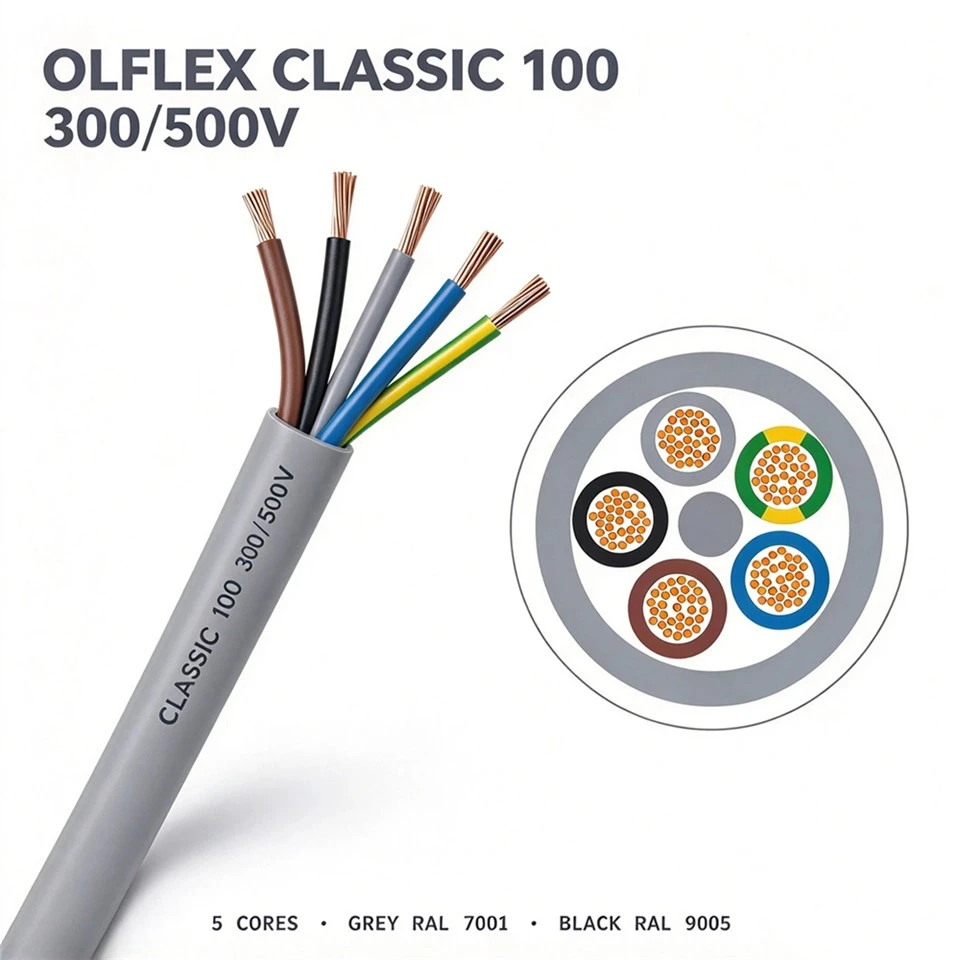
If you’re in the market for OLFLEX control cables and want to make sure you’re getting the right CSA rating for your specific application, reach out to me. I can help you navigate the different CSA standards, recommend the right OLFLEX variant for your environment, and provide all the documentation you need for compliance. Don’t risk downtime, safety incidents, or fines by using an unrated or incorrectly rated control cable. Let’s connect to discuss your needs and find the perfect OLFLEX control cable for your operation.
Fieldbus Cables References
CSA Group. (2022). Standard for control cables and cables for power, lighting and control circuits. CSA C22.2 No. 210.
CSA Group. (2021). Standard for explosion-proof and intrinsically safe apparatus for hazardous locations. CSA C22.2 No. 129.
Underwriters Laboratories Inc. (2023). Standard for Appliance Wiring Material. UL 20963.
Lapp Group. (2024). OLFLEX Control Cable Product Catalog.
Xiamen Kabasi Electric Co., Ltd.
Xiamen Kabasi Electric Co., Ltd. is one of the most professional olflex control cables manufacturers and suppliers in China. With abundant experience, we are committed to providing high quality customized cables with competitive price. Please feel free to buy the newest olflex control cables in stock here and get quotation from our factory.
Address: Third Floor, Building 6, Baochen Science and Technology Park, No.15 Dongfu West Road 2, Xinyang Street, Haicang District, Xiamen, China
E-mail: sale3@kabasi.cn
WebSite: https://www.kabasicable.com/
