If you’ve ever stood in a manufacturing plant, a chemical storage yard, or even a food processing facility and wondered if the motors powering the equipment there are safe, you’re not alone. As a supplier of explosion-proof motors, I talk to people every week who have no clear way to spot a hazardous area—or if they do, they don’t know what to do about it. The truth is, classifying a space as hazardous isn’t guesswork; it’s rooted in strict safety standards that prevent explosions, fires, and dangerous downtime. And when it comes to motors, getting this right isn’t just a legal box to check—it’s the difference between a safe shift and a catastrophic event. Let’s break down how to figure out if your area is hazardous, and why the right motor can make all the difference. Explosion-proof Motor
First, let’s start with the basics: what even counts as a hazardous area when it comes to motors? A hazardous location is any space where flammable gases, vapors, combustible dust, or even ignitable fibers exist in quantities that could create an explosion or fire if a spark, heat, or arc from a motor hits them. For example, a paint shop where lacquer fumes hang in the air, a grain elevator with fine wheat dust drifting through the rafters, or a sewage treatment plant releasing methane gas are all common hazardous spots. But how do you tell if your specific space falls into that category? It starts with three core factors, set by global safety bodies like the National Electrical Code (NEC) in the U.S., ATEX in Europe, and IECEx for international markets.
The first factor is what’s called the “ignition source” risk, but wait—no, let’s lead with the substance itself first, because that’s what defines the hazard. Any area has to have three things to be an explosion risk: a flammable substance, the right concentration of that substance, and an ignition source. The ignition source is where motors come in. Standard electric motors, the kind you might have in your home workshop or a regular office, produce small sparks when their contacts turn on and off, generate heat as they run, and have exposed electrical parts that can arc. If a flammable gas is present at its “lower explosive limit” (LEL)—the minimum concentration that can ignite—and a standard motor’s spark touches it, that’s a recipe for disaster. So first, ask: does your workspace regularly handle, store, or process flammable materials that can become airborne? That’s the first red flag.
Next, you need to figure out how often that flammable substance is present, because that determines how the area is classified. NEC divides hazardous areas into three classes based on the substance: Class I for gases and vapors, Class II for combustible dust, and Class III for ignitable fibers or flyings. For each class, there are divisions or zones that tell you how likely the substance is to be there. For example, a Class I, Division 1 area is one where flammable gas is present under normal operating conditions—think inside a pipeline pumping gasoline, where fumes leak every time a valve is opened. A Class I, Division 2 area is where the gas only exists during a fault, like a valve that only leaks when it breaks. ATEX and IECEx use Zones instead of Divisions, but the idea is the same: how often the hazard is present.
Now, why does this matter for motors? Because a standard motor can’t be used in any of these classified hazardous areas. Let’s take a recent example I dealt with last month: a small chemical blending plant in Ohio called me because they had two motors overheating and one had sparked during a routine check. They thought their area was just a regular industrial space, but a quick walkthrough showed they stored 55-gallon drums of isopropyl alcohol with lids that leak small amounts of vapor 24/7. That made their entire blending bay a Class I, Division 2 area, which means they needed a motor rated for that classification. The motor they had bought from a big-box industrial supplier was a standard general-purpose unit, not explosion-proof. The spark from its brushes could have ignited the alcohol fumes—something that could have blown the entire plant’s roof off, as I later explained to the plant manager.
So how do you actually confirm your area’s classification, beyond just guessing? Let’s walk through the step-by-step checks I advise every customer to do:
First, audit your materials and processes. Go through every part of your facility: what chemicals do you use? Do you process grain, sugar, or wood products that produce fine dust? Do you handle textiles or fibers that could catch fire? I once worked with a grain elevator in Kansas that didn’t realize the fine flour dust they swept up daily was combustible—they’d been using standard motors on their conveyor belts for years, and a small spark from a faulty motor had caused a near-miss the month before they reached out to me. That audit is non-negotiable; you can’t classify an area without knowing what’s present there.
Second, check for “normal” vs. “abnormal” exposure. As I mentioned earlier, the frequency of the flammable substance is key. If your only exposure is when a pipe breaks or a valve malfunctions, that’s a different classification than if vapor is present every time the equipment runs. ATEX defines a Zone 1 as an area where an explosive atmosphere is present for more than 10 hours a year, while Zone 2 is 10 hours or less. NEC’s Division 1 is similar to Zone 1, Division 2 to Zone 2. If you’re not sure, bring in a certified safety inspector to test air quality during normal operations—they can measure gas or dust levels and tell you exactly what classification your area falls into. A lot of people try to skip this step to save money, but it’s the only way to avoid a dangerous mistake.
Third, look for hidden hazards that people often miss. For example, even if your main processing area is clean, do you have a small storage closet for cleaning solvents? A janitor’s closet with rags soaked in lacquer thinner that evaporates all day counts as a hazardous area, and if it’s near a motor, that motor needs to be explosion-proof. Or outdoor areas: many refineries have pump houses outside where gas vapors can pool low to the ground, and standard motors there can ignite those vapors. I once had a customer in Texas who thought their outdoor pump area was safe because it was open air, but a safety test showed methane from nearby wells pooling in a low spot, making it a Class I, Zone 2 area. They had to replace two standard motors with explosion-proof units, and it cost less than the fine they would have gotten from OSHA for non-compliance.
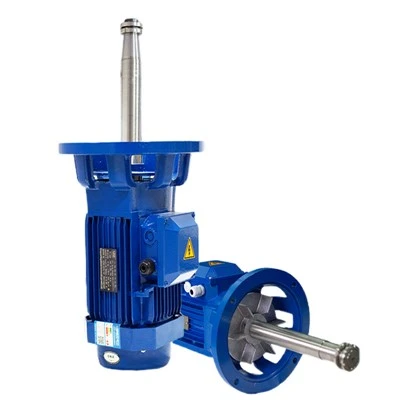
Now, once you know your area is hazardous, what’s the role of an explosion-proof motor? A lot of people think “explosion-proof” means the motor can’t explode itself, but that’s a common misconception. The term refers to the motor’s construction: it’s sealed in a heavy, rigid casing that contains any spark, arc, or heat generated inside, and the casing is strong enough to withstand an internal explosion of the surrounding gas or dust. That way, even if the motor’s internal parts ignite a small amount of flammable gas that seeps in, the explosion stays inside the casing, and the heat and sparks can’t escape to ignite the area around it. For dust hazards, explosion-proof motors also have special dust-tight seals to prevent fine dust from building up inside and igniting.
Let’s go back to that chemical plant example from earlier. The standard motor they had produced a spark when its brush wore out. An explosion-proof motor of the same horsepower would have a brush assembly enclosed in a sealed chamber, so even if the brush sparked, the spark couldn’t get out. The casing would also prevent any external gas from getting inside where the spark could reach it. That’s why these motors aren’t just more expensive versions of standard motors—they’re engineered specifically for the hazard level of your area.
But here’s the thing: not all explosion-proof motors are the same. You can’t just buy any explosion-proof unit and stick it in your hazardous area. It has to be rated for the specific class and division/zone of your area, and also for the type of flammable substance. For example, a motor rated for methane gas (common in refineries and sewers) won’t work the same way for acetylene gas, which is more flammable. Dust-rated motors are different than gas-rated, because dust can build up in crevices and ignite over time. I once had a customer who bought a gas-rated explosion-proof motor for their woodworking shop, which produces sawdust. The motor didn’t have the dust-tight seals needed, so sawdust got inside, and a small spark ignited the dust—even though the motor was rated for gas, it wasn’t rated for their hazard. That’s why matching the motor’s rating to your area’s classification is critical.
Another common mistake I see is people using a general-purpose explosion-proof motor for every hazardous area, but that’s inefficient and unnecessary. For example, a Zone 2 area (where gas is only present during faults) doesn’t need the same heavy-duty construction as a Zone 1 area. A smaller, lighter explosion-proof motor for Zone 2 will cost less, run more efficiently, and last longer than an overbuilt motor designed for the harshest hazards. That’s why getting a proper area classification is so important—it helps you pick the right motor, saving you money while keeping your facility safe.
Now, if you’ve read this far and you’re thinking “Wait, I don’t even know if my area is hazardous,” what do you do next? First, don’t ignore small signs: if your facility handles flammable materials, if you’ve had a motor sparking unexpectedly, or if you’ve smelled gas or noticed fine dust in the air, that’s a sign to get it checked. OSHA, NEC, ATEX, and other safety agencies all require employers to classify hazardous areas and use appropriate equipment, so skipping this step isn’t just dangerous—it’s a legal risk. Fines for non-compliance can run into tens of thousands of dollars, and if there’s an accident, you could be held liable for injuries or property damage.
A lot of small business owners tell me they can’t afford to replace all their motors right now, and I get that. But the alternative—waiting for an accident—is way more expensive. One customer in Pennsylvania had a motor failure in a Class I, Division 1 area, which caused an explosion that destroyed half their processing line. The cost of replacing the line, paying employee workers’ comp, and OSHA fines was over $2 million. The motors they would have needed were less than $20,000 total. That’s a no-brainer, but it’s easy to put off when you’re focused on daily operations.
So to wrap this up, let’s recap the key questions to ask to know if your area is hazardous:
- Does your facility handle, store, or process flammable gases, vapors, combustible dust, or ignitable fibers?
- Is that substance present during normal operations, or only during equipment faults?
- Have you ever noticed sparks from your motors, overheating, or unusual fumes or dust in the air?
- Have you ever had a safety inspection, or do you know the area’s classification from a certified inspector?
If any of these are “yes,” your area is likely hazardous, and you need to make sure your motors are explosion-proof, rated for your specific class and zone/division, and installed correctly.

I’ve been supplying explosion-proof motors for over a decade, and I’ve seen too many close calls that could have been avoided with a simple area classification and the right motor. My team and I can help you walk through your facility, do a free (no-obligation) risk assessment, and recommend the right motor for your space, no matter what industry you’re in—chemical processing, grain handling, pharmaceuticals, automotive, you name it. We work with facilities of all sizes, from small shops to large refineries, and we make sure every motor we supply meets all global safety standards. If you’re not sure about your area’s hazard level, or if you need to replace your current motors, reach out to my team to discuss your needs.
Vacuum Motor References:
National Electrical Code (NEC) 70: Electrical Installations in Hazardous (Classified) Locations, National Fire Protection Association (NFPA)
ATEX Directive 2014/34/EU: Equipment and Protective Systems Intended for Use in Potentially Explosive Atmospheres, European Union
IECEx Scheme for Certification to Standards for Electrical Equipment for Explosive Atmospheres, International Electrotechnical Commission (IEC)
OSHA Hazardous Locations Standards, Occupational Safety and Health Administration (OSHA), U.S. Department of Labor
Dongguan Xingya Mechanical and Electrical Equipment Co., Ltd.
As one of the most experienced explosion-proof motor manufacturers in China, we have world-leading production equipment and strong manufacturing capabilities. Please feel free to buy bulk customized explosion-proof motor made in China here from our factory.
Address: 1st Floor, Building 14, Morgan Industrial Park, No.328 Zhenhua Road, Dongguan City, Guangdong Province,China.
E-mail: gldzsm@outlook.com
WebSite: https://www.xingyamotor.com/
