If you’re running a small powder coating business, you already know that efficiency, finish quality, and operational cost are make-or-break for your bottom line. One of the most critical tools in your powder coating line is the reciprocator—also called a powder coat reciprocator—whose job is to automate the movement of your spray guns across parts to ensure even, consistent powder coverage, reduce overspray, and cut down on manual labor hours. For small businesses with limited capital, small floor space, and variable production volumes, choosing the right reciprocator isn’t just a convenience—it can be the difference between scaling your business and staying stuck in a cycle of overtime and inconsistent work. As a supplier focused exclusively on powder coating reciprocators for small to mid-sized shops, I’ve worked with dozens of small business owners to cut through the noise and find the tool that fits their unique needs. Let’s break down exactly what to look for, what’s worth investing in, and why the right reciprocator might be the best upgrade you make this year. Powder Coating Reciprocator
First, let’s clear up a common misconception: reciprocators aren’t one-size-fits-all. A 10,000-square-foot industrial powder coating shop running 24/7 for automotive parts needs a very different machine than a 2,000-square-foot shop doing small appliances, farm equipment parts, or custom metal work. For small businesses, the biggest tradeoff often comes between flexibility, footprint, and cost—three factors that are non-negotiable when you’re operating with tight budgets and limited space. I’ve seen too many small business owners drop $10,000 on a heavy-duty, 10-axis reciprocator that’s designed for large runs of identical parts, only to realize half its features go unused because 60% of their jobs are small batches of unique parts. That leads to wasted space, idle equipment, and a return on investment that never materializes. So, the first step in choosing the best reciprocator is to map out your production reality: what size parts do you coat most often? How many different part variations do you handle in a typical week? What’s your daily production volume? Once you have those numbers, you can narrow down the type of reciprocator that will actually work for you.
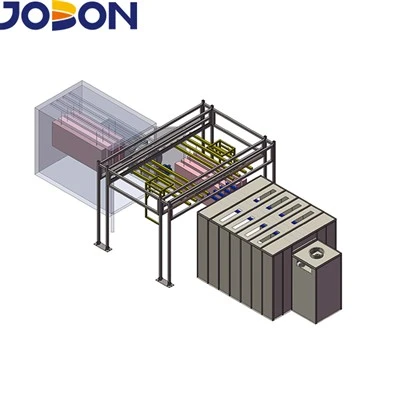
The most popular reciprocator style for small powder coating businesses is the vertical beam reciprocator, and for good reason. Unlike heavy-duty enclosed systems that require a dedicated booth expansion, vertical beam reciprocators mount directly to the side of your existing spray booth, take up minimal floor space, and are simple enough to retrofit without a full line overhaul. These machines have a single moving beam that runs up and down, holding 1 to 4 spray guns, and are designed to accommodate parts ranging from small brackets to 8-foot long rails or furniture legs—most of what small shops coat, day in and day out. I recently worked with a custom metal fabrication shop in Ohio that was manually coating small tool holders and fence posts 5 days a week, paying their sprayer $22 an hour to move back and forth the same path 8 hours a day. After adding a entry-level vertical reciprocator that cost less than $4,000, they cut their spray labor time per job by 70%—and their finish quality improved because the machine moves at a consistent speed, something even the most experienced manual sprayer can’t sustain for full shifts.
But not all vertical reciprocators are created equal. For small businesses, the key features to prioritize here are speed adjustment, stroke length range, and gun spacing flexibility. Let’s start with speed: a reciprocator that can only move at one fixed speed is useless, because different powders and parts require different speeds. A fast speed works well for thin, flat parts like sheet metal, while a slower speed is needed for thick, textured powders that need more time to adhere. Look for a reciprocator with a variable speed control range of 5 to 50 feet per minute—any narrower than that, and you’ll be limited in what you can coat. Stroke length is another big one: if your reciprocator’s maximum stroke is only 3 feet, you can’t coat a 6-foot door or a 4-foot farm gate without stopping and repositioning parts, which defeats the purpose of automation. For small shops, aim for a stroke range of 2 to 8 feet—this covers almost every standard part size, from small brackets to large HVAC ductwork or furniture frames. Gun spacing flexibility is also important, especially if you coat parts of different widths. Some entry-level reciprocators fix gun spacing at 12 inches, which works for narrow parts but not for wider ones. Look for a model that lets you adjust gun spacing from 6 inches to 18 inches, or even add a second beam if you scale up later—modularity is key for small businesses that expect to grow.
Another style of reciprocator that’s gaining traction with small powder coating shops is the portable reciprocator. Wait, you read that right—portable. If your shop handles batch jobs, custom work, or uses multiple spray booths, a portable reciprocator lets you move the machine from job to job instead of being anchored to one line. I had a customer in Toronto who runs a mobile powder coating service, showing up to job sites to coat parts for construction companies. For years, he dragged a manual spray gun and an extension ladder around to every job, spending half his time setting up and the other half fixing uneven finishes. He switched to a portable reciprocator that weighs less than 100 pounds and mounts to a adjustable stand, fits in the back of his van, and costs under $3,000. Now he can set it up in 15 minutes, coat parts twice as fast, and his clients have noticed a huge difference in finish uniformity. The best portable models for small businesses have telescoping stands that adjust from 4 feet to 10 feet, variable speed control, and enough gun hold space for two spray guns. They’re not designed for 24/7 high-volume runs, but for small shops that do on-site work, batch jobs, or want to test automation without a big investment, they’re a game-changer.
Now, what about the mistakes small businesses make when choosing a reciprocator? The biggest one is overbuying. I can’t tell you how many times a shop with 20 parts a day decided to splurge on a 6-axis reciprocator with automatic part recognition, just because the sales rep said it was “future-proof.” That future never comes, because it costs 3 times more than a basic vertical reciprocator and requires specialized programming that most small shop owners don’t have time to learn. Another mistake is ignoring compatibility with your existing equipment. A reciprocator doesn’t work in a vacuum—you need it to sync with your powder coating system, gun type, and booth size. For example, if you use manual spray guns now, make sure the reciprocator’s gun mount is compatible with your gun brand (most standard models work with Graco, Nordson, and Wagner, but always confirm). If your booth opening is only 4 feet wide, don’t buy a reciprocator with a 6-foot beam—you’ll have to modify your booth, which will erase any savings from a lower upfront cost. I always recommend that before you buy, measure your booth’s opening, note your gun type, and bring a sample of your largest regular part to a supplier to test the machine. Most reputable powder coating reciprocator suppliers will let you run a test with your own parts before you commit, which is a no-brainer for small shops.
Cost is obviously a big factor, and small businesses often think reciprocators are out of their price range—but that’s not true. Entry-level vertical reciprocators start at around $3,500, portable models start at $2,500, and mid-range models for shops that do higher volume work (100+ parts a day) are usually under $7,000. Compare that to the cost of manual labor: if you’re paying a sprayer $25 an hour, that’s $52,000 a year for a full-time employee. Even a basic reciprocator will pay for itself in less than a year by cutting labor hours, reducing powder waste (machines use 15-20% less powder than manual sprayers because they don’t overspray as much), and cutting down on rework from uneven finishes. I had a customer in Detroit who was reworking 10% of his parts every week because of manual spray errors. After adding a vertical reciprocator, rework dropped to less than 1%—saving him over $2,000 a month in powder and labor for rework. That’s not even counting the extra jobs he can take on because his shop is faster.
Another feature to look for in a reciprocator for small businesses is ease of maintenance. Small shops don’t have a dedicated maintenance technician, so you need a machine that doesn’t require constant upkeep. Avoid models with complex electronics, enclosed gear systems, or specialized parts that are hard to find. The best reciprocators for small shops have open-frame designs, sealed bearings that don’t need frequent lubrication, and basic control panels with simple on/off and speed controls—no fancy touchscreens that crash or require software updates. Some suppliers even offer free annual tune-ups for the first two years, which is a huge perk for small businesses that don’t have the time or budget to troubleshoot machine issues on their own.
Wait, what about if you’re a brand new powder coating business, just getting set up, and not sure if you need a reciprocator at all? That’s a valid question. If you’re only coating a few small parts a week, and you’re the only employee doing the spraying, a reciprocator might not be a priority. But if you plan to grow beyond that—even just adding one part-time employee to handle more jobs—automation will become a necessity. Manual spray work is physically demanding, and high turnover is common in small powder coating shops. A reciprocator eliminates that labor gap, so you don’t have to spend time training new employees on basic spray technique, and you can keep quality consistent even if you’re short-staffed.
Let’s wrap this up with a real example to put it all together. Last year, a small powder coating shop in Chicago opened with $15,000 in startup capital. They had a used spray booth, a basic powder coat oven, and two manual spray guns. Their first month, they brought in $8,000 in revenue, spent $3,000 on powder, and had $2,500 in labor costs for their one sprayer. Half of their jobs were small parts—brackets, signs, and small appliance parts. They added a entry-level vertical reciprocator for $3,800 at the start of their second month. By the end of the quarter, their labor costs dropped to $1,200 a month, powder waste went down by 18%, and their rework rate fell from 12% to 2%. That same quarter, their revenue hit $14,000, and they were able to take on 3 new bigger jobs they couldn’t have handled manually because the reciprocator let them coat parts twice as fast. They ended up paying for the reciprocator in 2 months, and now they’re planning to upgrade to a mid-range model next year as they grow. That’s the ROI every small powder coating business should be looking for.

At the end of the day, the best reciprocator for your small powder coating business isn’t the fanciest or the most expensive one—it’s the one that fits your current production, is easy to use and maintain, and delivers a return on investment within a year or less. Don’t fall for the “future-proof” hype if you don’t need all the extra features. Don’t buy a machine that’s too big for your booth or too complex for your team. And don’t be afraid to ask for a demo, test the machine with your own parts, and work with a supplier who understands the unique challenges of small shops. If you’re ready to stop wasting hours on manual spray work, reduce powder waste, and scale your business without hiring more labor, let’s connect to discuss the right reciprocator for your specific needs.
PENTOO Brand Powder Coating Equipment PENTOO References:
- Powder Coating Industry Association. (2022). Automation for Small to Mid-Size Powder Coating Operations. PCA Technical Bulletin Series.
- Metal Finishing Magazine. (2021). Reciprocator Selection Guide for Small Batch Coating Facilities. Vol. 95, No. 6.
- Smith, J. (2020). Labor Cost Reduction in Powder Coating: The Role of Reciprocating Automation. Small Business Manufacturing Journal.
Qingdao Jobon Science&Tech Development Co., Ltd.
Qingdao Jobon Science&Tech Development Co., Ltd. is one of the leading powder coating reciprocator manufacturers and suppliers in China. We warmly welcome you to buy high-grade powder coating reciprocator for sale here from our factory. All our products are with high quality and competitive price.
Address: 48, YANGZHOU ROAD, LAIXI EDZ, QINGDAO, CHINA
E-mail: Info@joboncoating.com
WebSite: https://www.joboncoating.com/
