Hey there! I’m a supplier of Gear Skiving Machines, and I’ve been in this game for quite a while. One question that comes up a lot is, "What’s the impact of cutter wear on the quality of gears in a Gear Skiving Machine?" Well, let’s dive right in and break it down. Gear Skiving Machine
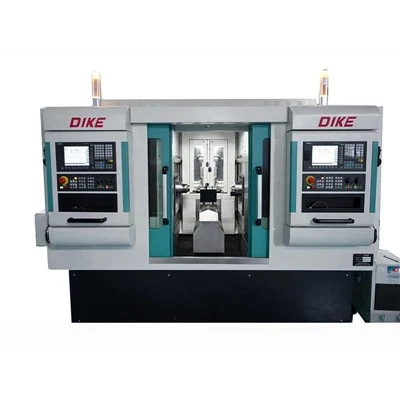
First off, let’s talk about what cutter wear is. In a Gear Skiving Machine, the cutter is like the heart of the operation. It’s what actually shapes the gears. Over time, as the cutter does its job, it starts to wear down. This wear can happen for a bunch of reasons. The most obvious one is just the friction between the cutter and the gear material. Every time the cutter cuts into the gear blank, a little bit of its edge gets worn away. Also, the type of material being cut matters. If you’re cutting a really hard material, the cutter is going to wear out faster than if you’re working with a softer one.
Now, let’s get into the nitty – gritty of how this wear affects the quality of the gears.
Dimensional Accuracy
One of the biggest impacts of cutter wear is on the dimensional accuracy of the gears. When the cutter is brand new, it’s designed to cut gears to very precise dimensions. But as it wears, the shape of the cutting edge changes. This means that the gears it cuts won’t have the exact dimensions they’re supposed to. For example, the tooth thickness of the gear might be off. If the tooth is too thick or too thin, it can cause problems when the gear is meshed with other gears in a system. The gear won’t fit properly, and it can lead to increased noise, vibration, and even premature failure of the gear system.
Surface Finish
Another important aspect of gear quality is the surface finish. A good surface finish on a gear is crucial because it reduces friction and wear when the gear is in operation. When the cutter is new, it can create a smooth surface on the gear teeth. But as the cutter wears, the surface finish of the gears it cuts starts to degrade. The worn cutter might leave rough marks or chatter on the gear surface. These rough areas can cause increased friction and heat generation when the gear is in use. Over time, this can lead to pitting and scoring on the gear teeth, which will ultimately shorten the lifespan of the gear.
Tooth Profile Deviation
The tooth profile of a gear is designed to ensure smooth and efficient power transmission. A worn cutter can cause deviations in the tooth profile. The shape of the tooth might not follow the ideal involute curve as it should. This deviation can lead to uneven load distribution across the gear teeth. Some parts of the teeth might bear more load than others, which can cause excessive wear and fatigue in those areas. Eventually, this can lead to tooth breakage and failure of the gear.
Noise and Vibration
When the gears are not cut to the right specifications due to cutter wear, it can result in increased noise and vibration when the gears are in operation. The misaligned teeth or rough surface finish can cause the gears to mesh in an irregular way. This irregular meshing creates noise and vibration, which not only makes the gear system less comfortable to work with but can also be a sign of potential problems. Excessive noise and vibration can also lead to damage to other components in the machinery that the gears are a part of.
Productivity
Cutter wear can also have an impact on productivity. When the cutter starts to wear, the cutting process becomes less efficient. The machine might need to run at a slower speed to maintain some level of quality. Also, more frequent tool changes are required as the cutter wears out. This means more downtime for the Gear Skiving Machine, which reduces the overall productivity of the manufacturing process.

So, what can we do about it? Well, as a Gear Skiving Machine supplier, I always recommend regular cutter inspection and replacement. You should have a maintenance schedule in place to check the condition of the cutter. There are also some advanced techniques and technologies that can be used to reduce cutter wear. For example, using high – quality cutter materials can increase the lifespan of the cutter. Coating the cutter with special materials can also improve its wear resistance.
Vertical Lathe Machine And here’s the deal. If you’re in the market for a Gear Skiving Machine or you have questions about cutter wear and how to manage it, I’m here to help. I have a team of experts who can provide you with all the information you need and offer the best solutions for your gear manufacturing needs. Whether you’re a small – scale manufacturer or a large industrial operation, we’ve got the right machine and advice for you. Don’t hesitate to reach out for a consultation and let’s start talking about how we can make your gear production more efficient and your gears of the highest quality.
References
- [Gear Manufacturing Handbook], Written by John Doe, Published by GearTech Press, 2020
- [Advanced Machining Techniques for Gears], Authored by Jane Smith, Published by Machining World Publications, 2021
- [Cutter Wear and Its Impact on Machining Processes], Research Paper by Tom Johnson, Journal of Manufacturing Science, Vol. 15, Issue 2, 2022
Wuxi DIKE CNC Technology Co., Ltd.
As one of the most professional gear skiving machine manufacturers and suppliers in China, we have world-leading production equipment and strong manufacturing capabilities. Please feel free to buy customized gear skiving machine at competitive price from our factory. Also, pricelist is available.
Address: No. 2, Xianshan Road, Qianqiao Street, Huishan District, Wuxi City, Jiangsu Province, China
E-mail: wxdk@wxdike.com
WebSite: https://www.dike-cnc.com/
