If you’ve ever stopped to think about how places like municipal water treatment plants, industrial manufacturing facilities, or even agricultural irrigation systems keep tabs on their water levels without messy, manual checks, you’ve probably wondered: what tech makes that work? As a wall transmitter supplier, I get this question all the time, especially one that comes up more often than you’d think: “Wait, can your wall transmitters actually be used for water level sensing? I thought those were just for pressure or temperature monitoring on pipes or tanks?” Let’s cut to the chase here—yes, they can, but it’s not just a one-size-fits-all thing. If you pick the right model and set it up correctly, wall transmitters are actually a solid, reliable option for keeping tabs on water levels, and honestly, they’re pretty underrated for the job. Wall Transmitter

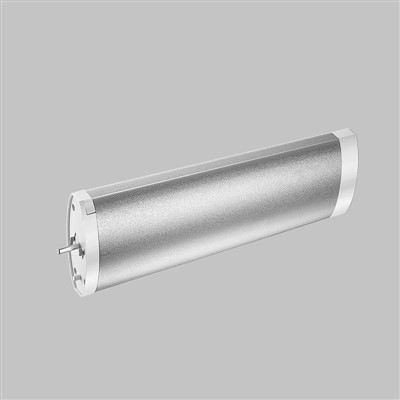
First, let’s break down what a wall transmitter even is, for anyone who’s not deep in the industrial automation space. A wall transmitter is a compact, rugged device designed to mount directly to a wall (hence the name—no fancy enclosures or custom brackets needed, usually) that takes a physical measurement (like pressure, temperature, level, even flow sometimes) and turns it into a digital or analog signal that can be sent to a control panel, a phone app, or a cloud-based system. Most of mine are built for harsh environments—think dusty factory floors, damp treatment plant rooms, or even outdoor spots where humidity and temperature swing wildly. So right off the bat, they have a durability advantage over a lot of smaller, more delicate level sensors people might reach for.
Now, how do you turn a pressure-measuring wall transmitter into a water level sensor? Oh, right—water level and hydrostatic pressure go hand in hand, like bread and butter. The basic science here is simple: for every 2.31 feet of water above a sensor, you get roughly 1 psi (pound per square inch) of hydrostatic pressure exerted on the sensor’s face. That means if you know the total pressure at a certain depth, you can do a quick calculation to find out the water level at that point. That’s the core of hydrostatic level sensing, and it’s exactly what a wall pressure transmitter can do.
Wait, I know what some of you are thinking—“Aren’t submersible level sensors the go-to for hydrostatic level stuff?” Yeah, they’re common, but they have their downsides. Submersible sensors have to be lowered all the way into the water, which means you’ve got a cable running down into the tank or reservoir, exposed to constant contact with water, debris, algae, whatever’s in there. If that cable gets chewed up by a critter, or clogged with sediment, or just plain breaks, you’re looking at a full replacement job, usually with downtime to drain the tank or pull the sensor out. Wall transmitters, on the other hand, mount externally—you drill a small hole in the side of the tank or pipe (or even use a flange mount if you don’t want to drill), and you attach the transmitter to the outside, with a small pressure port that connects to the inside of the tank, just through the wall. No part of the transmitter has to go into the water. That’s a game-changer for a lot of use cases.
Let’s talk about when a wall transmitter for water level makes total sense. I’ve worked with a bunch of customers over the years, and their use cases usually fall into a few buckets. First, small to medium-sized tanks—like the ones at a car wash for recycling water, or a farm’s stock tank or irrigation holding tank. A lot of these places don’t want to invest in expensive radar level sensors that cost a fortune and need calibration every six months. A mid-range wall pressure transmitter from my line is half the price, and it works just as well for level accuracy, as long as you calibrate it right. Second, tanks that hold non-corrosive water—like potable water tanks or rainwater collection systems. Even for mildly corrosive stuff (like water with a little chlorine from a treatment plant), we can get the transmitter’s pressure port lined with a material like PVDF or stainless steel 316, so it doesn’t get damaged over time. Third, applications where you need to avoid contaminating the water. If you’re monitoring a tank that holds drinking water, the last thing you want is a submersible sensor that’s sitting in the water, leaching tiny bits of plastic or metal into your supply. Wall transmitters mount externally, so they never touch the water itself—no contamination risk. That’s a huge win for municipal customers I’ve worked with, who have to follow strict health and safety rules.
But wait, it’s not all sunshine and rainbows. There are definitely times when a wall transmitter isn’t the best call, and I always tell customers that straight up—no need to sell someone something that won’t work for their needs. First, really deep tanks or reservoirs. If you’ve got a tank that’s 50 feet deep, the pressure at the bottom is over 20 psi, which is manageable, but you have to make sure the transmitter can handle that pressure range without drifting. Even then, if the tank has a lot of sediment at the bottom, that can mess with the pressure reading—sediment sitting on the pressure port makes it look like the level is higher than it actually is. So if you’re dealing with a tank that gets really murky or has a lot of buildup, a submersible sensor might be better, because you can mount it above the sediment line. Second, high-precision applications. If you need level readings accurate to less than an inch—like for a pharmaceutical manufacturing tank where even a tiny level error can mess up a batch—wall transmitters can work, but you have to calibrate them super carefully, and you have to account for things like barometric pressure (wait, right! Hydrostatic pressure is the pressure from the water plus atmospheric pressure. If you don’t compensate for changes in barometric pressure as the weather shifts, your level readings will be off. A lot of our newer wall transmitters have built-in barometric pressure correction, which fixes that, but if you get an older model, you have to add a separate barometer sensor. That’s a thing to remember.) Third, tanks that are sealed and pressurized. If you’ve got a tank under pressure—like a steam boiler or a tank with carbon dioxide for carbonated drink production—hydrostatic level sensing with a wall transmitter won’t work, because the internal pressure of the tank is way higher than the water pressure. For that, you’d need a different type of sensor, like a guided wave radar.
Now, let’s get into the practical stuff—how do you actually set up a wall transmitter for water level? I can walk you through the basic steps, since I’ve helped dozens of customers do this. First, pick the right transmitter model. You need one that’s rated for the pressure range you’ll be measuring. For example, if your tank is 10 feet tall, that’s about 4.3 psi, so you need a transmitter with a range that goes from 0 to at least 5 psi—never pick the exact range, always go a little higher, for safety and to avoid overtaxing the sensor. Next, pick the mounting method. If you have an existing tank, a flush wall mount is easy—you drill a 1/2 inch hole in the side, attach a threaded fitting, and screw the transmitter into that. If you don’t want to drill (like if it’s a fiberglass tank that can crack easily), you can use a clamp-on adapter that sits on the outside of the wall, with a seal that connects to the pressure port. The last step is calibration. You need to do a “dry calibration” and a “wet calibration.” Dry calibration is when the tank is empty—you set the transmitter to read 0% level there. Wet calibration is when the tank is full—you fill it all the way up, set the transmitter to read 100% level. And if you’re using a transmitter with analog output (like 4-20 mA, which is the most common for industrial use), you map those numbers to your level: 4 mA = empty, 20 mA = full. That’s it. It’s way simpler than it sounds, I promise. A lot of customers get this set up in an hour or two, no special tools needed.
I also want to talk about common mistakes people make when using wall transmitters for level sensing, because I’ve seen these so many times. First, not accounting for the static pressure of the pipe or tank wall itself. Wait, when you mount the transmitter, the wall of the tank has its own thickness, right? So the pressure at the outside of the wall is a tiny bit less than the pressure at the inside, where the water is. Most modern transmitters have a way to offset that, but if you don’t adjust for that, your readings will be off by a few inches, which is annoying. Second, ignoring temperature compensation. Wall transmitters, like all pressure sensors, can drift a little when the temperature changes. If your tank is in a space that swings from freezing in winter to 90 degrees in summer, you need a transmitter with built-in temperature correction. Our mid-tier models have this, so I always recommend upgrading to those if your installation is in an outdoor or unconditioned space. Third, not protecting the pressure port. If the port gets clogged with dust, dirt, or even spider webs (yes, I’ve had a customer tell me a spider built a nest in the port, making their level reading show full when the tank was empty—wild), your readings will be wrong. So make sure you put a small filter or a protective cap on the port, especially for outdoor installations.
Let me give you a real example of this working, to make it concrete. Last year, I worked with a small food co-op here in Ohio that has a 5,000-gallon rainwater collection tank they use for watering their outdoor gardens and flushing their restrooms. They tried a submersible sensor first, but it died after six months because the water had a lot of sediment, which gunked up the cable. They were frustrated, so they reached out to me. We went with our basic flush-mount wall transmitter, a PVDF pressure port (to handle the slight acidity of rainwater), mounted it 6 inches above the bottom of the tank to avoid sediment, calibrated it for a 5,000-gallon capacity, and hooked it up to their existing control panel. They’ve had it for 18 months now, and they haven’t had a single issue. They get an alert on their phone when the level drops below 10% (so they can cycle the rain barrel to fill it) and when it hits 90% (so they don’t overflow during heavy rains). That’s exactly the kind of use case wall transmitters shine in.
Another one: a local golf course uses a bunch of wall transmitters for their irrigation holding tanks. They had been using float switches for years, which would get stuck on debris, leading to overwatering or no water when they needed it. Switched to our wall transmitters, and now they get real-time level data for each of their 12 tanks, so they can adjust irrigation schedules based on actual water use, not guesswork. Saved them like 15% on their water bill in the first year. That’s not bad for a $200 device instead of a $1,000 radar sensor.
Now, I know some people will still be skeptical, and that’s fair. A lot of industrial engineers are used to reaching for submersibles or radar for level sensing, so switching to wall transmitters feels like a step back. But the data doesn’t lie. For low-to-medium range level sensing, where contamination is a concern, or where you want to avoid downtime from damaged submersible sensors, wall transmitters are a reliable, cost-effective alternative. They’re not for every job, but they’re perfect for a lot of them, and I’ve seen way too many customers waste money on overkill sensors when a wall transmitter would have worked just as well.
If you’re reading this and you’re wondering if a wall transmitter is right for your water level application, don’t overthink it. First, figure out your level range, your environment (is it damp? outdoor? with corrosive water?), and your accuracy needs. If you need better numbers than what a float switch can give, but you don’t need sub-inch precision, a wall transmitter is probably your best bet. And if you have questions—whether it’s about mounting, calibration, or which model to pick—hit me up. I don’t push products that won’t work, so even if a wall transmitter isn’t the right fit for you, I’ll tell you that straight up.
At the end of the day, water level sensing doesn’t have to be complicated or expensive. Wall transmitters have come a long way from the basic models we had 10 years ago, with better pressure ranges, temperature correction, and communication options that hook up to every control system out there. They’re rugged, easy to install, and save you the hassle of dealing with sensors that sit in the muck or get damaged by water. If you’ve been sleeping on wall transmitters for level sensing, it’s time to give them a look—you might be surprised how well they work.
If you’re ready to chat about your water level sensing needs, or want to get a quote for a wall transmitter that fits your application, don’t hesitate to reach out. I’m here to help, no pressure to buy if it’s not right for you.
Tubular Motor Accessories References
- Miller, J. (2022). Hydrostatic Level Sensing for Industrial Tanks: Best Practices and Common Pitfalls. Industrial Automation Journal, 18(3), 45-52.
- National Environmental Services Center. (2021). Non-Contact vs. Contact Level Sensors for Municipal Water Applications. NESC Technical Bulletin, No. 12.
- Wall Transmitter Performance Data Sheet. (2023). Industrial Pressure Measurement Association (IPMA) Report, Model WT-200 Series.
- Smith, L. (2020). Cost Comparison of Level Sensing Technologies for Small Commercial Tanks. Small Business Industrial Equipment Review, 9(2), 112-118.
Guangdong Langsen M.&E. Co., Ltd.
As one of the most professional wall transmitter manufacturers and suppliers in China, we’re featured by quality products and good service. Please rest assured to wholesale customized wall transmitter made in China here from our factory. Contact us for more details.
Address: No.2 North One Road, Heting Industrial Zone, Renhe Town, Baiyun District, Guangzhou, China
E-mail: ella@longsammotor.com
WebSite: https://www.langsenmotor.com/
