If you’ve ever walked a construction site, a farm with muddy fields after rain, or a cleared forest plot ready for grading, you’ve probably seen a track tractor at work. But if you’re like a lot of people, you might’ve mixed it up with a standard wheeled tractor, a bulldozer, or even a tracked excavator. As a tractor supplier who’s spent 18 years selling and servicing this equipment to farms, contractors, and landscape crews across the Midwest, let me break down what a track tractor really is, how it’s different from other machines, and why it’s the workhorse that no job site can afford to miss. Tractor

First, let’s get the basics right: a track tractor—sometimes called a “crawler tractor” or simply a “crawler”—is a heavy-duty machine built with endless tracks instead of rubber or steel wheels. That’s the core difference, and it’s the reason it outperforms wheeled equipment in soft, uneven, or steep terrain. Unlike wheeled tractors, which rely on pressure from four small contact points to grip the ground, a track tractor’s steel (or heavy rubber, for lighter models) track spreads its weight over a much larger area. The result is lower ground pressure—usually between 3 and 10 pounds per square inch (PSI), compared to 20 to 60 PSI for a standard farm wheeled tractor. That means it doesn’t sink into mud, sand, or loose gravel, and it won’t tear up fragile terrain like wet grass or newly planted soil.
Wait, you might be thinking: isn’t a bulldozer the same thing? For casual observers, they look identical at first glance. But here’s the key distinction: a bulldozer is a track tractor outfitted with a front-mounted blade for pushing material. A track tractor, on the other hand, is a base platform that you can customize with a dozen different attachments, depending on the job. That’s why it’s so versatile. One week, a customer might use their track tractor with a ripper to break up hardpan soil on a corn farm; the next, they swap in a brush cutter to clear overgrown lots for a housing developer; and then they switch to a dump bucket to move demolition debris. I’ve sold track tractors to loggers, snow removal crews, even municipal park departments—and every single one has a custom setup tailored to their specific line of work.
Let’s get into the mechanics, because that’s where the magic happens. A track tractor’s undercarriage is made up of several key parts: the drive sprocket at the back that pulls the track, idlers at the front that keep the track tight, rollers that support the machine’s weight, and the track itself (either steel links for heavy-duty work or rubber belts for compact urban models). Most models are powered by diesel engines, ranging from 70 horsepower for compact residential models up to 500+ horsepower for large mining or construction crawlers. Unlike wheeled tractors, which use a differential to turn, track tractors steer by turning one track faster than the other—or stopping it entirely. That gives them a “zero turn” radius, meaning they can pivot almost perfectly in place, which is a huge advantage when working on tight job sites like residential backyards or narrow field rows.
I learned this the hard way early in my career. Back in 2007, a local corn farmer came to me upset, saying his wheeled tractor was sinking so badly in his post-harvest wet fields that he couldn’t plant his next crop. I recommended a mid-sized track tractor with a 120-horsepower engine and a rear planter attachment. A month later, he came back grinning, saying he’d finished planting two weeks ahead of schedule, while his neighbors with wheeled tractors were still stuck in mud at the edge of their fields. That’s the moment I realized how much track tractors aren’t just a “luxury” upgrade—they’re a necessity for anyone working in challenging terrain.
Another common question I get from potential buyers: are track tractors better than tracked excavators? Again, it comes down to the base platform and attachments. Excavators are built for digging, with a long arm and bucket, but they’re not designed to push large amounts of material or move heavy loads over long distances. A track tractor can pull a 10-ton trailer, move a bulldozer blade to level a gravel lot, or run a hay baler just as easily as it can run a digging attachment. For large jobs that mix moving, digging, and clearing, a track tractor often replaces multiple machines, saving customers time and money.
Of course, track tractors aren’t without their considerations. If you’re working on hard, smooth pavement like a city street, a wheeled tractor will get better fuel efficiency and move faster than a track tractor, which has more rolling resistance. The tracks also require more maintenance than wheels—you have to check for tension, replace worn links, and lubricate the undercarriage regularly. That said, for 90% of the jobs our customers tackle, the increased traction and terrain flotation far outweigh the extra maintenance.
Here’s a breakdown of the most common uses for track tractors, based on the customers I work with:
- Agriculture: Farmers use them for tilling, planting, harvesting, and moving feed or equipment in muddy fields. We’ve even sold small compact track tractors to hobby farmers with small plots, where they can navigate steep hills without slipping.
- Construction & Landscaping: Contractors use them to clear land, grade lots, move dirt, and operate attachments like brush cutters, stump grinders, and snow blowers. They’re also ideal for jobs in environmentally sensitive areas, because their low ground pressure reduces soil compaction—something that’s critical for preserving topsoil on development sites.
- Forestry: Logging crews use heavy-duty steel-track track tractors to pull logs over rough, uneven terrain, where wheeled trucks would get stuck. Many of these models come with enclosed cabs and winches to handle steep slopes and heavy loads.
- Mining & Heavy Industry: Large track tractors with 400+ horsepower engines are used to move ore, clear mine sites, and operate heavy equipment like rock crushers and conveyors.
Over the past decade, track tractor technology has come a long way. Today, many models come with GPS guidance systems, so operators can auto-steer the machine with centimeter-level accuracy, which cuts down on waste and makes jobs like grading or planting far more precise. Rubber tracks, which were once only for compact residential models, are now available on mid-sized construction track tractors, reducing ground disturbance and lowering noise levels, which is a big plus for urban and suburban jobs.
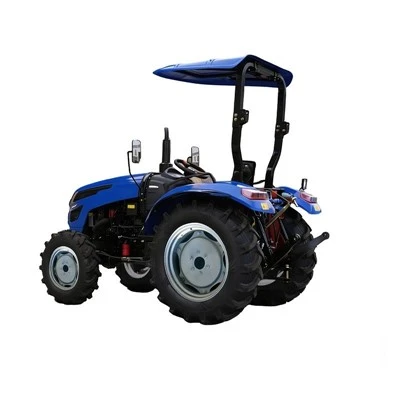
One thing I always tell anyone looking to buy a track tractor: don’t just shop by horsepower. Think about the terrain you work in, the attachments you need, and how much weight you’ll be pulling. For a small landscape contractor working in suburban backyards, a 70-horsepower compact track tractor with rubber tracks is perfect. For a large logging operation in the Pacific Northwest, you’ll need a 300-horsepower steel-track model with heavy-duty undercarriage. We work with every customer to match them to the right model, because a track tractor that’s too big will be hard to maneuver, and one that’s too small won’t handle the workload.
Utility Tractors At the end of the day, a track tractor is more than just a machine—it’s a solution to some of the toughest problems in heavy work. It’s the reason a farmer can plant through a rainy spring, a contractor can clear a lot without ruining the surrounding neighborhood’s lawns, and a logger can pull a 20-ton log over a steep hill without getting stuck. If you’re in the market for equipment that can handle whatever your job throws at it, let’s connect to talk through your needs. We’ll walk you through the different models, attachments, and maintenance plans to find the track tractor that works for you.
References
- National Agricultural Statistics Service. (2022). Agricultural Tractor and Equipment Usage Report. U.S. Department of Agriculture.
- Association of Equipment Manufacturers. (2023). Crawler Tractor Market Analysis: Global Trends and Applications. AEM.
- Soil Science Society of America. (2021). Ground Pressure and Soil Compaction in Heavy Agricultural Equipment. SSA Journals.
- Construction Industry Institute. (2022). Versatile Heavy Equipment for Site Development. University of Texas at Austin.
- Forest Products Laboratory. (2020). Tracked Equipment for Timber Harvesting in Rough Terrain. U.S. Department of Agriculture.
Shandong Woye Heavy Industry Co., Ltd.
As one of the most experienced tractor manufacturers in China, we ensure reliable supply for global partners. We warmly welcome you to wholesale high-grade farm tractor for sale here from our factory. Quality products and reasonable price are available.
Address: No. 7999, Health East Street, Qingchi Street, High Tech Zone, Weifang City, Shandong Province, China
E-mail: info@woyemachinery.com
WebSite: https://www.woyeagro.com/
