If you’ve ever stood in front of a burning building, watching firefighters battle flames that seem to warp metal and melt concrete, you’ve probably wondered one thing: what stops those flames from breaking through the windows? As a fire-resistant windows supplier, this is the question I get asked most often—usually by building owners, architects, or even homeowners looking to update their properties for safety. The answer isn’t a simple number, though. It depends on how the window is made, what it’s designed to do, and what standards it’s tested against. Let me break this down, from the science of heat resistance to what that actually means for you when a fire strikes. Fire-resistant Windows
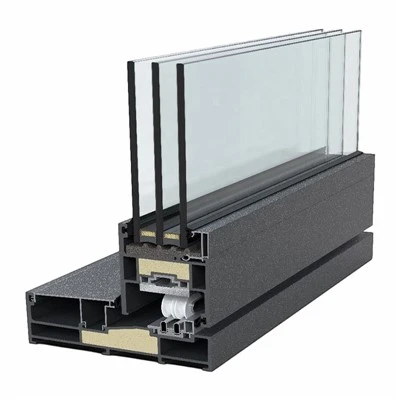
First, let’s get one thing straight: fire-resistant windows aren’t like the tinted or insulated windows you put in your living room. Those windows might keep a room comfortable, but they can’t stop flames or smoke from entering during a fire. Fire-resistant windows are built to meet specific testing standards that measure how long they can withstand not just high temperatures, but also radiant heat and direct flame impingement. The highest temperature these windows can handle isn’t a random stat—it’s tied directly to how they’re engineered and tested.
Let’s start with the science behind heat, because that’s where a lot of people get confused. Fire’s temperature can vary wildly, depending on what’s burning. A small, contained kitchen fire might only reach 1,000°F (about 538°C), while a large commercial fire in a warehouse full of paper or plastic can climb to 2,000°F (1,093°C) or even higher. But even that number is a peak—temperatures shift as oxygen is used up, and as different materials burn. Fire-resistant windows are tested to simulate these real-world conditions, but not just the maximum temperature. The tests measure three key performance metrics: integrity, insulation, and radiation. Integrity is how long the window keeps flames and smoke from passing through. Insulation is how well it keeps the opposite side of the window cool enough to touch without causing burns. Radiation is how much heat it blocks from reaching the unexposed side—because even if the window doesn’t break, radiant heat can start fires on the other side.
Now, to the core question: what’s the highest temperature fire-resistant windows can withstand? The short answer is that most standard-rated fire-resistant windows are tested to handle temperatures up to around 2,000°F (1,093°C) for their rated duration. But that’s not a one-size-fits-all number. Let’s talk about the different ratings, because that’s where the real clarity comes in. In the United States, the National Fire Protection Association (NFPA) and Underwriters Laboratories (UL) set the standards. For example, a UL 90-minute rated window is tested to withstand 2,000°F for 90 consecutive minutes, while a 3-hour rated window is tested for three hours under the same heat conditions. These tests are done in a specialized furnace, where the temperature is controlled to follow a standard curve—called the ASTM E119 time-temperature curve—that mimics how a real fire grows over time. That curve starts at 70°F and rises to 1,000°F after 5 minutes, 1,700°F after 30 minutes, and 2,000°F after 1 hour, holding there or climbing higher as needed for the test duration.
But here’s the thing: the temperature the window can withstand isn’t just the furnace temperature. The window’s performance also depends on its materials, which is where most of my team’s engineering work comes in. Traditional fire-resistant windows used wired glass, but wired glass has a big flaw—it breaks easily when heated, and when it breaks, it leaves gaps for flames to get through. That’s why modern fire-resistant windows use different glazing materials, like intumescent gels or fire-rated laminates, that expand when exposed to heat to form a barrier. These materials are what let the window handle high temperatures without failing. For example, intumescent glazing can start expanding at temperatures around 250°F, but once it’s fully activated, it creates a thick, opaque layer that can withstand 2,000°F or more for hours. Some of the high-end windows we supply for commercial high-rises are tested to handle even higher temperatures for short bursts—up to 2,500°F (1,371°C) for 15 minutes—to simulate the intense heat of a flashover event, which is when all the contents of a room ignite at once, temperatures spiking rapidly.
I want to make sure I’m not overstating this, though. A common misconception is that a fire-resistant window can stop a fire forever. That’s not true. Every window has a rated duration—30 minutes, 1 hour, 2 hours, etc.—and that’s how long it will maintain its integrity and insulation under test conditions. After that, the materials start to degrade, and the window can fail. For example, a 1-hour rated window might handle 2,000°F for 60 minutes, but after that, the glazing material will break down, allowing smoke and flames through, and the unexposed side will get too hot. That’s why choosing the right rating for your space is so important. A small office closet might only need a 30-minute rated window, while a stairwell in a high-rise needs a 3-hour rated window to give occupants enough time to evacuate.
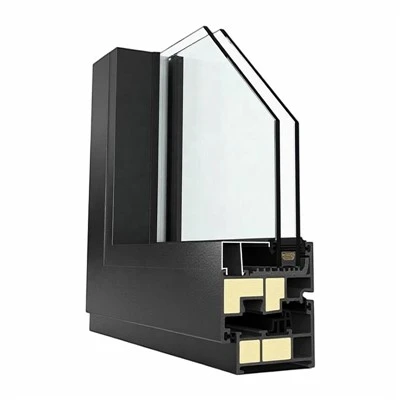
Another factor that affects how much heat a window can take is its frame. The glazing gets most of the attention, but if the frame fails, the whole window is useless. Fire-resistant frames are made of materials like steel, aluminum with a fire-resistant coating, or concrete, and they’re tested to expand or degrade at the same rate as the glazing. Our frames, for example, are designed to stay rigid under high temperatures so the glass doesn’t shift or crack, and we test every window assembly—glazing plus frame—together, not just the glass alone. That’s a key point: you can’t test just the glazing in a furnace; you have to test the entire window unit, because gaps between the glazing and frame are where heat and smoke can get through.
I’ve seen too many projects where someone tries to cut corners by using a regular window with a cheap fire-resistant film, thinking that will do the same job. Let me be clear: those films don’t come close to the heat resistance of a purpose-built fire-resistant window. We tested one of those films a few years back, just to see, and it started to bubble and fail at around 300°F—nothing compared to the 2,000°F a real fire-resistant window handles. That’s why NFPA and UL don’t recognize those films as a replacement for tested, rated windows. Safety isn’t a place to save money, and that includes choosing the right window for your space.
Let me also talk about real-world performance, because lab tests are one thing, but how does this hold up when there’s an actual fire? I’ve worked on a few projects where our windows were put to the test, both in residential and commercial settings. A few years ago, we supplied windows for a new hospital wing, and a small electrical fire broke out in a storage closet near one of our 2-hour rated windows. The fire burned for almost 2 hours, and while the closet was damaged, the window never failed. The radiant heat was blocked, the glass stayed intact, and the hallway on the other side of the window was cool enough that staff could evacuate patients safely. That’s the kind of performance we design for, and it directly ties back to the temperature ratings we test against.
Another example: a residential building we worked on after a wildfire in California. Several nearby homes lost their windows to the wildfire’s intense radiant heat, but our windows held up. Wildfires can produce temperatures even higher than structural fires—sometimes up to 2,800°F—for short periods, and our windows that were rated for 2,000°F still managed to protect the home because they withstood the short burst of extreme heat. That’s why understanding the maximum temperature a window can handle matters beyond just building fires; it’s important for areas prone to wildfires too.
So, to circle back to the original question: what’s the highest temperature fire-resistant windows can withstand? The answer is that purpose-built, rated fire-resistant windows can handle temperatures up to 2,000°F (1,093°C) for their full rated duration, with some specialized windows able to withstand even higher temperatures for short periods. But that number isn’t the only thing that matters. You also have to look at the rating’s integrity and insulation, the frame’s performance, and how the window is installed. A window that’s rated for 2 hours but installed incorrectly—with gaps around the frame—will fail long before the test duration, no matter how high its temperature rating is.
As a fire-resistant windows supplier, my team and I spend our days working with architects, building owners, and contractors to make sure they choose the right window for their specific needs. We don’t just sell a window; we provide a solution that keeps people safe. If you’re planning a new build, renovating an existing space, or looking to update your home’s safety, I encourage you to ask questions about the ratings, the materials, and the testing that went into the window you’re considering. Don’t settle for something that isn’t tested to meet national standards, because when a fire happens, you’ll be glad you invested in a window that can stand up to the heat.
If you have questions about which fire-resistant window is right for your project, or you want to learn more about our testing processes, feel free to reach out to our team to discuss your needs. We’re here to help you make the right choice for safety and compliance.
Fire-resistant Door References
ASTM E119, Standard Test Methods for Fire Tests of Building Construction and Materials
UL 900, Standard for Fire Tests of Window Assemblies
NFPA 80, Standard for Fire Doors and Other Opening Protectives
National Institute of Standards and Technology (NIST) – Fire Research Division: Fire Behavior and Safety in Buildings
Henan Enbuess Composite Materials Co., Ltd.
Henan Enbuess Composite Materials Co., Ltd. is one of the most professional fire-resistant windows manufacturers and suppliers in China, also supports customized service. Please feel free to buy bulk durable fire-resistant windows made in China here from our factory. Welcome to contact us for free sample.
Address: No.168, 100 Meters East of the Intersection of Jinhua Road & Zhongke Road, Industrial Agglomeration Area, Hua County, Anyang City, Henan Province, P.R. China
E-mail: leila.salesdir@enbuess.com
WebSite: https://www.enbuessfrp.com/
