Hey everyone, it’s Sam from [your MCB brand], and today I wanna break down one of the most important bits of your MCB – that instant trip function you’ve probably seen listed on every spec sheet, but never really stopped to dig into. If you’re an electrician, a DIYer, or just someone who’s ever wondered why that circuit breaker in your panel slams shut right now instead of waiting a few seconds, this post is for you. Let’s keep this real, no boring jargon that makes your eyes glaze over. MCB
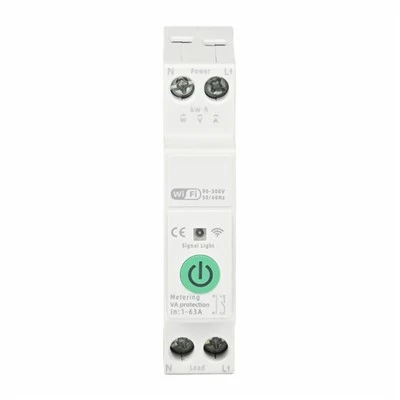
First off, let’s recap what an MCB even is for folks who might be new here. MCB stands for Miniature Circuit Breaker – it’s that little switch in your electrical panel that protects your wiring and your gear from overcurrent or short circuits. You flip it on, it powers your lights, your fridge, your TV, whatever. And when something goes wrong, it trips. Most people know there are two main trip functions: the thermal trip and the instantaneous trip. That’s the star of this show today.
Let’s start with why we even need an instantaneous trip. Think of your home wiring like a garden hose. If you turn the faucet on a little, the hose fills up slow, no problem. But if you yank the faucet all the way open, you get a massive surge of water that could burst the hose, right? Same idea with electricity. Normally, your circuit carries a “normal” amount of current – like, say, 15A for a standard bedroom outlet. But if something goes really wrong? Like a wire frayed and touching another live wire, or you plug in a power tool that’s shorted internally, that current spikes super fast – way faster than the thermal trip can handle.
Here’s the thermal trip vs. instantaneous trip breakdown to keep it simple. The thermal part of an MCB is like a little metal bimetallic strip. When current runs through it, it heats up. If there’s a small overcurrent – like, maybe you have 18A flowing through a 15A circuit because you’re running a space heater and a laptop – that strip bends slowly over time, maybe a few seconds or even minutes, and trips the breaker. That’s for overloads, not emergencies.
The instantaneous trip? That’s the super-fast safety switch built to stop short circuits dead in their tracks. A short circuit is when live and neutral wires touch accidentally, creating a path of almost zero resistance. That means current can spike to thousands of amps in a fraction of a second – like, milliseconds. If that surge isn’t stopped right away, it can melt wiring insulation, start a fire, or fry your expensive gear before you even notice anything’s wrong. The instantaneous trip is the only thing that can react that fast.
Now, how does it actually work inside the MCB? I’ve pulled apart a few hundred MCBs over the years (don’t worry, they’re junk after that, but it’s the only way to learn), so I know a bit. Most standard MCBs use an electromagnetic coil for the instantaneous trip part. When current is low, the coil’s magnetic field is weak, so it doesn’t do anything. When that short circuit surge hits, the current through the coil jumps so high the magnetic field gets strong enough to yank a little plunger inside the breaker. That plunger slams into the tripping mechanism, and the breaker turns off – instantly. No waiting, no messing around.
Wait, but not all instantaneous trips are the same, right? That’s a question I get all the time. The trip current rating – that’s the amperage where the instantaneous trip kicks in – is classified into types. The most common ones you’ll see are Type B, Type C, Type D. Let’s make these easy to remember, not just random letters.
Type B is for general household use – lights, outlets, regular appliances. Its instantaneous trip kicks in at 5x to 10x the MCB’s rated current. So a 16A Type B MCB will trip instantly when current hits 80A to 160A. That’s perfect for small overloads and short circuits from things like a faulty toaster or a loose wire. It’s sensitive enough to catch small shorts but won’t trip for normal inrush current (we’ll get to that in a sec).
Type C is for places where there’s a bit more inrush current – like offices, workshops, places with bigger appliances. Type C trips at 10x to 20x the rated current. So a 20A Type C would go at 200A to 400A. Why? Because things like power tools, desktop computers, or coffee makers draw a big initial burst when you turn them on – that’s called inrush current. If you used a Type B for a workshop table saw, the inrush might be enough to trip the MCB every time you start it, which is annoying. Type C waits out that normal inrush and trips only for actual dangerous short circuits.
Then Type D is for really high inrush stuff – industrial machines, welding equipment, big motors. Type D trips at 20x to 50x the rated current. You won’t find these in your home, that’s for sure. But if you’re running a lathe or a compressor, you need that extra buffer so the startup surge doesn’t flip the breaker unnecessarily.
Now, let’s bust a common myth here: the instantaneous trip doesn’t handle overloads. That’s what the thermal trip is for. People think “oh, my breaker tripped instantly, that must be a short” – usually that’s right, but sometimes a really big overload could trip it fast too. But the key difference is time. An overload takes seconds to minutes, a short circuit instantaneous trip takes less than 0.02 seconds – faster than you can blink.
Another thing I hear all the time: “Why does my MCB trip instantly when I plug in my new microwave?” Let’s do the math. A 1200W microwave on 120V is about 10A, but the inrush current when it starts is like 3x to 5x that, so 30A to 50A. If you had a 15A Type B MCB, its instantaneous trip is 75A to 150A, so that shouldn’t trip it. But if you used a 10A Type B for some reason, or the microwave has a faulty circuit, that could be the issue. Also, older MCBs – they wear out, right? The electromagnetic coil can get gunked up from heat and time, so it might trip early when it shouldn’t. That’s why replacing old breakers every 15-20 years is a good call.
From a supplier’s perspective, this is why we spend so much time testing each MCB before it leaves our warehouse. We don’t just slap a label on a switch and send it out. We test the thermal trip to make sure it trips at the right current and time, and we test the instantaneous trip with precise surge generators to make sure it kicks in exactly when it’s supposed to. If an MCB’s instantaneous trip is off by even a little, it’s useless – it either won’t trip when it needs to, which is a fire hazard, or it trips for no reason, which is a hassle for the customer.
I work with electricians and contractors every day, and one of their biggest pain points is picking the right MCB for the job. Too much sensitivity, and they’re getting calls at 2 a.m. because a breaker tripped for no reason. Too little, and they’re risking a fire. The instantaneous trip rating is a huge part of that. If you’re wiring a new kitchen, you don’t want a Type D MCB for your outlets – that’s overkill and could let a dangerous short slide. If you’re wiring a garage with power tools, a Type C is way better than a Type B.
Let’s talk about what happens if the instantaneous trip fails. Like I said earlier, a short circuit is thousands of amps. If the breaker doesn’t trip, that current will heat the wiring so fast the insulation melts, then the copper wires themselves get so hot they start a fire. We’re talking about a tiny part of the MCB preventing a whole house fire, or a workshop burning down. That’s why this little function is so critical – it’s not just a switch, it’s a life safety feature.
Now, maybe you’re a DIYer working on a project – like rewiring a shed or adding a new outlet. A lot of people try to pick MCBs based on price alone, but don’t sleep on the instantaneous trip specs. Cheaper MCBs from no-name brands often cut corners on the electromagnetic coil. They might trip at a higher current than they’re supposed to, or not trip at all when a short hits. We’ve seen that first hand – customers come back saying “your breaker let a short go and I had a wire melt” and it was a cheap competitor’s product that didn’t have a properly calibrated instantaneous trip.
What should you look for when choosing an MCB? First, match the rated current to your circuit – don’t put a 20A breaker on a 15A circuit, that’s dangerous. Then, match the type (B, C, D) to what you’re powering. And if you’re buying from a supplier, ask about their testing standards. Reputable suppliers will have third-party testing to make sure that instantaneous trip is within the correct range.

Let’s wrap this up with a quick recap to make sure you didn’t zone out. Instantaneous trip is the super-fast part of an MCB that trips during short circuits, way faster than the thermal trip handles overloads. It works via an electromagnetic coil that reacts to the massive surge current. The type (B, C, D) tells you what current it trips at, so you pick the right one for your application – general household for Type B, appliances/tools for Type C, big industrial gear for Type D. And this isn’t just a random feature – it’s the line between a minor incident and a disaster.
Power Quality Monitoring Device If you’re an electrician looking to stock up on MCBs that are properly tested for their instantaneous trip, or a contractor who needs to spec out a new build, or even a DIYer who has questions about which breaker you need for your next project, hit us up. We don’t do pushy sales stuff, just real advice and quality products that we stand behind. Shoot us a message to start a conversation about what you need.
References
- Electrical Safety Council. “Miniature Circuit Breakers (MCBs): Function and Selection.” EIS, 2022.
- International Electrotechnical Commission. “IEC 60898-1: Electrical Accessories – Circuit Breakers for Overcurrent Protection for Household and Similar Installations – Part 1: Circuit Breakers for AC Operation.” IEC, 2019.
- Becker, B. “Understanding Short-Circuit Protection in Low-Voltage Distribution Systems.” IEEE Industry Applications Magazine, vol. 26, no. 3, 2020, pp. 45-52.
Zhejiang Leidun Electric Co., Ltd.
As one of the most experienced mcb manufacturers and suppliers in China, we also support customized service and OEM service. Please feel free to wholesale high quality mcb made in China here from our factory. Thank you for your interest in our products.
Address: No.337, Liule Road, Liushi Town, Yueqing City, Wenzhou City, Zhejiang Province, China
E-mail: Sales@zgleidun.com
WebSite: https://www.leidunelectric.com/
