If you’re in the market for precision injection molded parts, you already know that the material you choose isn’t just a detail—it’s the foundation of your part’s performance, durability, and even its cost. After 12 years as a precision injection molded parts supplier, I’ve seen firsthand how picking the wrong plastic can turn a seemingly straightforward component into a manufacturing nightmare: I once worked with a medical device startup that tried to use a low-grade polypropylene for a surgical implant part, only to discover it warped during sterilization, costing them six weeks of production time and a small fortune in rework. That’s why today, I’m breaking down the plastics that are most common for precision molded parts, why they work, and when you should choose each one. Precision Injection Molded Parts
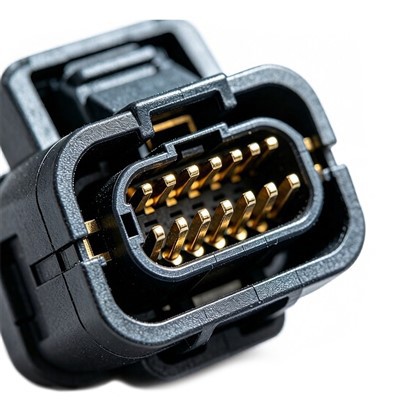
First, let’s get one thing straight: precision injection molding isn’t the same as standard mass production molding. We’re talking about parts with tolerances as tight as ±0.001 inches, intricate features like micro-channels or snap-fit hinges, and often strict requirements for chemical resistance, biocompatibility, or dimensional stability. Not every plastic can hold up to that level of accuracy, and not every plastic is cost-effective for high-volume precision runs. The most common materials fall into two broad categories: thermoplastics (the go-to for most precision parts, since they melt and re-solidify cleanly) and a few specialty engineering thermosets that offer unique benefits.
Let’s start with the workhorse of precision injection molded parts: Acrylonitrile Butadiene Styrene, or ABS. If you’ve ever held a consumer electronics casing, a toy, or a small automotive interior trim part, you’ve held ABS. It’s one of the most widely used plastics in precision molding for a reason: it balances strength, stiffness, and impact resistance at a fraction of the cost of more engineering-focused materials. For precision parts, ABS has a low shrinkage rate—usually between 0.4% and 0.8%—which means it doesn’t warp or change shape as it cools, even when we’re molding tiny, intricate features. That shrinkage rate is a big deal for precision work; even a 0.1% difference can throw a part out of tolerance.
I’ll be honest, ABS isn’t perfect. It’s not ideal for extreme temperatures (it starts to soften around 220°F, so it’s out for high-heat automotive under-hood parts or kitchen appliances that go through dishwashers) and it’s not biocompatible, so it’s off the table for medical devices. But for parts like laptop hinges, printer components, or consumer electronics housings where impact resistance and dimensional consistency matter, ABS is hard to beat. Last year, we molded 1.2 million precision ABS parts for a major brand’s wireless earbud casing, and only 0.2% of them failed quality checks—way below the industry average of 1% for high-volume precision runs. That reliability is why it’s still our most requested material for general precision projects.
Next up, Polycarbonate, or PC. If ABS is the workhorse, polycarbonate is the heavyweight. It’s a transparent engineering plastic with nearly double the impact strength of ABS, and it can withstand temperatures up to 280°F, making it perfect for parts that need to be heat-resistant or see use in bright environments. Think: safety goggles, medical device components like syringe barrels, automotive headlight lenses, or even smartphone screens. For precision molding, PC’s shrinkage rate is a bit lower than ABS—usually around 0.5% to 0.7%—which makes it great for tight-tolerance parts that need to stay clear.
That said, PC comes with its own set of challenges that only precision molders know how to handle. First, it’s hygroscopic, meaning it absorbs moisture from the air. If you don’t dry it properly before molding, the moisture will turn to steam during injection, causing bubbles or surface imperfections in the part. I always tell new clients who want to use PC for precision parts that we run it through a dehumidifying dryer for 4 to 6 hours at 250°F before molding—skip that step, and you’re left with scrapped parts and a frustrated team. Another thing: PC is prone to stress cracking, especially when it’s molded with sharp corners or exposed to certain chemicals (like some cleaning solvents). That means we have to adjust our mold design and process parameters to add small fillets to edges and anneal parts after molding to relieve internal stress. It’s extra work, but for parts that need clarity and strength, it’s worth it. Last quarter, we molded 800,000 PC parts for a line of medical diagnostic equipment, and the parts passed all of the manufacturer’s drop and temperature-resistance tests on the first try.
If you need something even more durable, heat-resistant, or chemically stable, you’ll usually turn to Nylon (also called Polyamide, PA) or its reinforced versions. Nylon is a versatile engineering plastic that comes in a few grades, but for precision parts, glass-reinforced nylon (usually 30% glass-filled) is the most common. It’s stronger, stiffer, and has a lower shrinkage rate (as low as 0.2% for 30% glass-filled) than both ABS and PC, which makes it ideal for precision parts that need to hold tight dimensions under load. Think: automotive gears, small structural components for industrial machinery, or electronic connectors.
Here’s where it gets tricky with nylon: it’s also hygroscopic, so it absorbs moisture from the environment. This means it can swell over time, which can throw dimensional tolerances off—huge problem for precision parts. That’s why we never use unmodified nylon for tight-tolerance projects; we use moisture-stabilized grades, which have additives that slow moisture absorption, or glass-filled versions to minimize dimensional change. We also test every nylon part we mold for dimensional stability after it’s been exposed to humidity, because even a 0.002-inch change can make a connector or gear stop fitting. A few years back, we had an aerospace client that needed nylon gears for a satellite component; we ran 12 different test batches, adjusting the moisture stabilization formula and molding process, to make sure the gears stayed within ±0.001 inches after being exposed to extreme space conditions. That’s the kind of attention to detail that comes with being a precision molder, not a standard mass producer.
For parts that need to be biocompatible, sterilizable, or FDA-compliant, the go-to plastic is usually Polypropylene (PP)—but not just any PP. Medical-grade polypropylene is a semi-transparent plastic that’s resistant to many chemicals, can withstand autoclave sterilization (up to 270°F), and is lightweight. It’s the material used for syringes, surgical trays, IV components, and even some implantable devices. For precision molding, PP’s shrinkage rate is a bit higher than the other materials I’ve mentioned—usually between 1.5% and 2.5%—but that’s manageable with custom mold design, like adjusting the cooling channels or adding ejector pins in specific places. The key with medical-grade PP is that it has to meet strict purity standards; no residual monomers or additives that could leach into the body. That’s why we work with suppliers that provide third-party FDA certification for every batch of PP we use, and we audit our mold cleaning processes regularly to prevent cross-contamination between different material runs.
Another specialty plastic that’s gaining traction for precision parts, especially in electronics and aerospace, is Liquid Crystal Polymer (LCP). LCP is a high-performance engineering plastic with extremely low shrinkage (as low as 0.05% for some grades)—that’s almost unheard of. It can withstand temperatures up to 500°F, is chemically resistant to almost every industrial solvent, and has excellent electrical properties, making it perfect for micro-sized components like electronic connectors, sensors, and micro-switches. The downside? It’s more expensive than most of the other materials I’ve talked about, and it’s harder to mold because it has a very high melting temperature (around 550°F) and tends to be brittle if not processed correctly. We only recommend LCP for parts where its unique properties are non-negotiable; last year, we used LCP to mold 50,000 micro-connectors for a 5G device, where the tolerances were ±0.0005 inches—so tight, a hair would barely fit between the connector pins. That would have been impossible with any other plastic.
Now, you might be wondering: why does it matter which plastic I choose, as long as the part is precise? Let me circle back to that story I opened with. That medical startup tried to use standard PP for a surgical implant part, not realizing that standard PP isn’t sterilizable, and its higher shrinkage rate warped the part during autoclaving. They thought precision was just about the mold, not the material, and they were wrong. The best precision injection molded parts are a combination of two things: a mold with tight tolerances, and a material that’s suited to the part’s purpose.
I’ve seen so many clients come to us with a part design they’ve used for standard molding, expecting us to replicate it on a precision scale, only to realize the material they picked won’t hold up. A few months ago, a automotive engineer brought us a part design for a small engine sensor housing, made for mass production with ABS. When we looked at the design, we realized ABS wouldn’t stand up to the engine’s operating temperature of 250°F, and its shrinkage rate would make the housing too loose to seal. We recommended switching to 30% glass-filled nylon, adjusted the mold to accommodate its lower shrinkage, and the part passed all of their thermal and pressure tests on the first try. That’s the value a precision supplier brings—we don’t just mold what you send us, we help you pick the right material for your application.
Let’s also talk about a few materials that are less common, but critical for specific precision parts. For optical parts, like lenses or light guides, Cyclic Olefin Copolymer (COC) is a top choice. It’s transparent, has low birefringence (so it doesn’t distort light), and has very low shrinkage, making it perfect for precision optical components used in cameras, medical imaging devices, and LED displays. For parts that need to be biocompatible and sterilizable without being polypropylene, Polyether Ether Ketone (PEEK) is the gold standard for implantable devices. It’s a high-performance thermoplastic with strength similar to bone, can withstand hundreds of sterilization cycles, and has excellent chemical resistance. It’s expensive—around 10 times more than ABS—but for orthopedic implants or spinal components, it’s irreplaceable.
One thing I always emphasize with new clients: there’s no “one size fits all” plastic for precision injection molded parts. The best choice depends on your part’s requirements: will it be used inside a car, inside a body, inside a computer? Does it need to be transparent, heat-resistant, or chemically resistant? Do you need tolerances in the thousandths or ten-thousandths of an inch? And don’t forget about cost—while LCP or PEEK might be perfect, they’re not necessary for a simple consumer electronics part, and overspending on material can eat into your profits.
Over the years, I’ve built our business on matching the right material to each customer’s needs. We don’t cut corners on material testing, and we don’t force a client to use a more expensive material just because it’s easier for us to mold. Last year, a startup came to us with a design for a wearable fitness monitor, worried about keeping costs low while maintaining tight tolerances for the sensor housing. We recommended a specialty grade of ABS with added impact modifiers, which was cheaper than PC, had a shrinkage rate low enough for their tolerances, and was rigid enough to protect the internal sensor. They saved 15% on material costs, and the part passed all their drop and accuracy tests. That’s the kind of partnership we strive for.
If you’re working on a project that requires precision injection molded parts—whether it’s a medical device, an automotive component, an electronic part, or something else entirely—getting the material right is the first step to success. A bad material choice can lead to scrap parts, delays, and extra costs, while the right material paired with a skilled molder can make a part that lasts for years, meets all your requirements, and stays within budget.
If you’re ready to move forward with a precision injection molding project, or you’re just exploring material options, feel free to reach out. We’ve worked with projects of all sizes, from prototype runs of a few hundred parts to high-volume production of millions, and we have the expertise to help you choose the right material and process for your needs. Don’t let material choices derail your project—let’s work together to get it right.
Automotive Injection Molded Components References
- Engineering Materials Handbook. “Thermoplastics for Precision Manufacturing.” Society of Manufacturing Engineers, 2021.
- Medical Plastics Association. “Biocompatible Materials for Injection Molded Medical Devices.” MPAnnual Conference Proceedings, 2022.
- Plastic Technology. “Shrinkage and Dimensional Stability in Injection Molding: A Guide for Precision Parts.” October 2023.
- Aerospace Materials Database. “High-Performance Thermoplastics for Aerospace Injection Molding.” NASA Glenn Research Center, 2022.
Modelon Precision Industry (Suzhou) Co., Ltd.
With abundant experience, we are one of the most professional precision injection molded parts manufacturers and suppliers in China. Welcome to buy customized precision injection molded parts at competitive price from our factory. If you have any enquiry about pricelist, please feel free to email us.
Address: 1st Floor, Building 22, No. 2628 North Gate Road, Kunshan City, Jiangsu Province, P.R.China
E-mail: jessica_huang2025@163.com
WebSite: https://www.modeloncn.com/
