If you’re a specifier, engineer, or project manager working on civil, mechanical, or industrial installations, you know cable supports aren’t just metal brackets or plastic mounts to screw to a wall—they’re the unsung heroes holding power lines, data cables, and industrial wiring in place, often in environments with extreme temperature swings, heavy vibration, or high wind loads. As a cable support supplier with 12 years on the front lines working with installation teams, I’ve lost count of how many jobs have derailed because a subpar support failed a load test long before cables were even strung. Today, I want to pull back the curtain on how to actually test a cable support’s installation strength—no generic checklists, just the real-world tests we run on every batch we ship, and how you can replicate them on-site to avoid costly failures. Cable Support
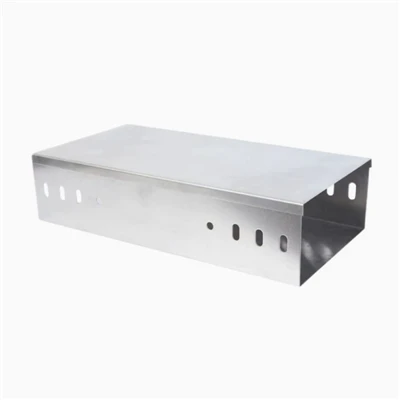
First, let’s ground this in what “installation strength” actually means. It’s not just how much weight the bracket itself can hold; it’s how well the bracket stays secured to its mounting surface long-term, once cables are installed. That includes pulling the support off the wall or ceiling, holding it steady against dynamic forces, and simulating decades of use to make sure it doesn’t loosen, crack, or shift. Too many teams skip these on-site tests because they think the manufacturer’s lab reports are enough—but lab tests use controlled conditions, not the rough concrete with aged drywall you’ll find in a commercial building, or the corroded steel beams on a coastal wind farm. Let’s break down the four most critical tests we recommend, ordered from pre-installation screening to post-installation validation.
The first test is the Static Pull Test, the simplest but most revealing check for how well your support anchors to its surface. Here’s how we do it on-site, no fancy lab equipment needed: pick a representative sample of supports from your shipment (we always tell clients to test 1 out of every 20 units, minimum, and never skip testing at least one from the first pallet you unload). Mount it exactly as you plan to on your project—use the same drill bit size, the same anchor type (expansion bolt, drywall anchor, concrete screw), even the same torque on your drill as your installation team will use. Once it’s secured, attach a scale or a tensile testing tool (even a digital luggage scale works for smaller supports) to the center of the bracket, parallel to the cable run it will hold. Slowly apply force straight away from the mounting surface, not at an angle, and keep increasing until either the support fails (bracket breaks, anchor pulls out) or you reach 125% of the maximum design load the support is rated for. If it pulls out at less than 125%, that’s a red flag—this means the anchor wasn’t installed correctly, or the support’s mounting points are too weak for your surface. Last year, a client in Austin tested our medium-duty cable tray supports on a crumbling parged concrete wall and found that their ¼-inch concrete screws pulled out at only 800 lbs, instead of the 1,000 lbs we rated them for. The problem wasn’t our support—it was they used a 3/16-inch drill bit instead of the ¼-inch we specified for that wall. The static pull test caught that before they strung 500 lbs of fiber optic cables, saving them a full rework and a $12,000 delay.
Next up is the Vibration Endurance Test, which is the one most people forget but is critical for industrial or outdoor installations. Vibration from elevators, heavy machinery, or constant wind doesn’t just add force—it loosens hardware over time, even if a static test passes. We simulate this using a hand-held vibration tool (we don’t need industrial shaker tables for on-site checks) set to 60 Hz, the frequency most common in commercial and industrial spaces, and apply it to the mounting area of the support for 2 full hours. After running the vibration, go back and re-run the static pull test. If the support now pulls out at less than 110% of the design load, your installation is vulnerable. We once supplied supports for a food processing plant where the maintenance team skipped this test and installed the brackets near a conveyor belt. After 6 months of operation, 12 supports had loosened and dropped 40 lbs of control cables, shutting down the entire line for 3 hours. The root cause? Their vibration test would have showed the drywall anchors they used couldn’t hold up to the conveyor’s 50 Hz vibration, even if a static test had passed. For outdoor installations, we also add a wind shear test here: tie a 10 lb weight to the side of the bracket, parallel to the ground, and leave it for 24 hours. If the bracket shifts more than ¼ inch, or the anchor starts to back out, it’s not secure for high-wind areas—we recommend switching to wedge anchors instead of expansion bolts for those environments.
The third test is the Installation Torque Validation, which is the most common failure point we see, even when supports pass pull and vibration tests. A lot of teams use electric drills with torque settings, but most drill drivers over-tighten or under-tighten fasteners without anyone noticing. For this test, use a manual torque wrench (available at any hardware store for $20) to check the tightness of the anchor screws right after installation. Cross-reference the reading with the torque value listed on the support’s installation guide: for our medium-duty supports, we specify 15 ft-lbs for concrete screws, 10 ft-lbs for drywall anchors. If the torque is more than 20% below that, the anchor isn’t seated properly, and it will fail under load. If it’s more than 20% over, you risk stripping the anchor’s threads, which weakens the entire installation. A client in Dallas recently installed our heavy-duty cable supports on a steel beam and used a drill that delivered 25 ft-lbs of torque, 10 ft-lbs over our recommendation. The threads stripped, and when they loaded the supports with 1,800 lbs of power cables, half the anchors pulled loose. The torque test would have caught that before they even lifted the cables, saving them from a $25,000 repair bill and a 4-day project delay. We always tell clients to do this torque check on 5% of installed supports, not just a sample, because inconsistent drill torque is one of the most variable factors in on-site installations.
The final, most rigorous test is the Long-Term Durability Simulation, which is for high-stakes installations like hospital power cables, data center wiring, or offshore wind farm infrastructure. This isn’t a test you do for every small office job, but if your installation is critical to life safety or thousands of hours of operation, it’s non-negotiable. For this test, we mount the support in a temperature and humidity chamber (or, if you’re doing an on-site version, leave it exposed to extreme temperatures for 2 weeks: 120°F for 3 days, then 20°F for 3 days, repeated twice) to simulate years of temperature fluctuation. Then, load the support to 150% of its design static load for 48 straight hours, adding 1 hour of vibration every 8 hours. After that, run the static pull test and torque check again. If the load has shifted more than 10% from its original position, or the anchor torque has dropped more than 15%, the support isn’t rated for long-term use in your environment. We did this test for a client building a data center in Florida, where humidity and temperature swings are extreme. Our standard heavy-duty supports passed in a lab, but when we simulated 10 years of Florida weather, the powder coating on the brackets started to corrode, and the steel anchors lost 20% of their tensile strength. We switched to hot-dipped galvanized supports, which passed the long-term test, and that installation has run without issues for 7 years now.
Now, I know what a lot of you are thinking: “This seems like a lot of work, and it will delay my project.” But here’s the thing: a 2-hour on-site test takes less time than reworking a failed installation that shuts down operations for days. Over the 12 years I’ve been a cable support supplier, I’ve seen too many clients cut corners on these tests, and the costs add up fast. A single failed support might seem minor, but when it’s holding 500 lbs of live power cables in a hospital, the risk isn’t just downtime—it’s safety for workers and patients.

If you’re gearing up for a project and need to make sure your cable supports are installed to last, or you want to talk about custom testing for your specific environment (outdoor coastal, high-vibration industrial, cold-storage facilities), feel free to reach out to our team. We don’t just sell supports; we work with installers to test on-site, adjust anchor types, and make sure every installation meets your unique needs. We’ve developed a range of support styles designed to pass every one of these tests, from small drywall-mounted brackets for office wiring to heavy-duty hot-dipped galvanized trays for offshore energy projects.
Cable Support References
- American National Standards Institute (ANSI) B18.2.1, Fasteners for Steel Structures, 2020
- National Electrical Code (NEC) Article 300.19, Support of Cables, 2023
- International Building Code (IBC) Section 1607.8, Load Tests for Anchors, 2021
- ASTM F551, Standard Test Method for Tensile Strength of Anchors in Concrete, 2019
Jiangsu Zhongrui Electric Group Co., Ltd.
We are one of the most professional cable support manufacturers and suppliers in China, also accept customized orders. We warmly welcome you to wholesale high quality cable support in stock here from our factory. If you have any enquiry about quotation, please feel free to email us.
Address: No. 92 Weier Road, Chengbei Industrial Park, Jingjiang, Jiangsu, China 214500
E-mail: zrgjmy@jszrjt.com
WebSite: https://www.zhongruielectrical.com/
