As a stainless steel tank supplier who’s spent the last 12 years walking production floors, troubleshooting field issues, and answering hundreds of customer calls about tank quality, I can tell you this: not all stainless steel tanks are created equal. A subpar tank might leak within a year, corrode in places you can’t see, or fail to hold pressure when you need it most—costing you downtime, money, and even safety risks. Today, I’m breaking down the step-by-step, practical ways to check a stainless steel tank’s quality, the same methods I use for every tank that leaves our shop, so you can trust you’re getting something built to last. Stainless Steel Tanks
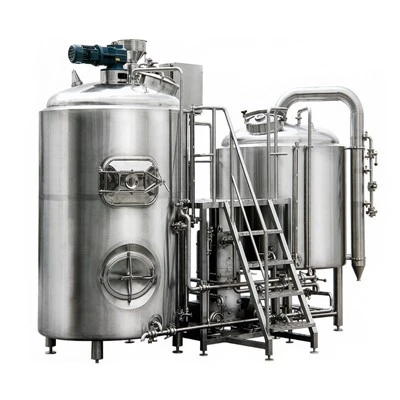
First, start with the basics that most buyers skip: verifying the stainless steel grade. This isn’t just a “marketing checkbox”—it’s the foundation of a tank’s performance. The two most common grades for industrial storage, food and beverage, and pharmaceutical tanks are 304 and 316 stainless steel. Here’s the hard truth: some cut-rate suppliers will pass off 301 or even 201 stainless as 304 to save money, and those grades corrode far faster, especially in environments with moisture, acids, or cleaning chemicals. How do you check? Grab a simple stainless steel tester (they cost $20 to $50 online, no lab required) and run a quick test on a visible, unpolished part of the tank—like the edge of a weld or the bottom of a mounting flange. A 304 test should register correctly, while a 316 test will show a slight, distinct signal if your tester is calibrated right. If you’re dealing with a food-grade or chemical processing tank, 316 is non-negotiable for exposure to salts, chlorine, or harsh acids, and a tester will confirm you didn’t get shortchanged. For context, we test every incoming coil before cutting it to size—we learned early that a bad batch of 304 from a bad mill cost us three customer tanks and a week of production back in 2017, so we never skip this step anymore.
Next, inspect the welds—because even top-grade stainless steel is useless if the welds are done poorly. Welds are the weakest point of a tank, and 90% of field leaks I’ve seen start with faulty welds, not base metal. Don’t just look for ugly, uneven lines; you need to check for penetration, spatter, and porosity. Let’s break this down: first, run your gloved hand along every weld. If you feel sharp edges, tiny bumps, or cracks, that’s a red flag—good welds are smooth, uniform, and flush with the base metal. For hidden defects that you can’t see with the naked eye, do a pressure test (even a low-cost DIY version works). Close all outlets on the tank, fill it with clean water, and pressurize it to 15 PSI (about 1 bar) — a standard for static pressure testing — and leave it for 24 hours. Mark the water level with a pen before you start, and check back: if the level drops more than 1/8 of an inch, there’s a leak, and it’s almost certainly in the welds. We do this test on every custom tank we build, and we’ve fixed small porosity issues before a tank even leaves our yard. Another trick: for food or pharma tanks, welds should be passivated, which means a chemical treatment that removes free iron from the surface to prevent rust. You can test passivation with a copper sulfate solution—apply a small drop to a weld, and if it turns pink (copper deposits), the passivation didn’t work, and the weld will corrode over time. We’ve caught a few off-the-line tanks with this issue before they go to customers, so it’s worth the 5-minute check.
Then, check the tank’s structural integrity, especially if it’s going to hold anything under pressure or heavy bulk materials. This includes the wall thickness and the support structure. A lot of buyers only look at the total tank volume, but a 1,000-gallon tank with 1/8-inch walls is way weaker than a 500-gallon tank with 3/16-inch walls for industrial use. How to measure wall thickness? Use a digital ultrasonic thickness gauge—another $50 tool that’s simple to operate. Hold it against the outside of the tank (avoid painted or coated areas) and it will display the exact thickness. For above-ground storage tanks, walls should be at least 12 gauge (0.104 inches) for 304 and 14 gauge (0.083 inches) for 316; for underground or pressure tanks, go 2 gauge thicker to account for external stress and corrosion. We once had a customer bring us a tank he’d bought from a discount supplier, and his ultrasonic gauge showed the walls were 1/16 inch thinner than advertised—when he filled it with 1,000 gallons of liquid, it warped slightly, putting stress on the welds. He ended up replacing it a year early, which cost more than the difference between a quality tank and a cheap one. Don’t forget supports: if the tank is vertical, check that the legs or base rings are the same thickness as the tank walls, not just thin brackets. For horizontal tanks, make sure the skid supports are spaced every 6 to 8 feet to prevent sagging—sagging can cause welds to crack over time.
Don’t overlook internal quality, either—especially if your tank is for food, beverage, or pharmaceutical use. A tank might look flawless on the outside, but the inside could have rough spots, residual contaminants, or poor finishing that ruin your product. First, if possible, look inside through a manway or lid: the surface should have a smooth, brushed (or polished, depending on your need) finish with no pitting, scratches, or debris left from manufacturing. Pitting is a tiny, localized form of corrosion that starts from small defects in the surface, and it’s impossible to fix once it’s there. If you can’t open the tank (which is rare for most industrial models), ask your supplier for a video of the internal inspection—we send one with every tank we deliver, so customers can see the inside before it even leaves our shop. For sanitary applications, check that the tank meets 3-A or NSF standards—those certifications mean the inside finishing is smooth enough to prevent bacteria growth, and no residual chemicals were left from welding or cleaning. We had a craft brewery client a few years ago who bought a cheap tank and ended up with off-flavored beer because the inside had leftover weld flux that wasn’t fully removed. That’s a mistake we make sure our customers don’t have to.
Finally, test for corrosion resistance—even if you’ve tested the grade, it’s smart to do a real-world trial if possible, or ask for documentation of the tank’s corrosion properties. For mild environments (like storing water), a basic 304 tank will work, but for anything with chemicals, salt, or high temperatures, 316 is a must. If you’re unsure, do a simple salt spray test: set up a small, enclosed area, spray a 5% salt solution on a small sample of the tank material (weld and base metal), and leave it for 48 hours. If no rust or pitting forms, the corrosion resistance is good. For a more official check, ask your supplier for a material test report (MTR)—every reputable stainless steel supplier will have these, which include the chemical composition of the steel, so you can confirm it meets the grade you’re paying for. We give our MTRs to every customer, and we store them in our system for 10 years, so if there’s ever an issue, we can track exactly which batch the tank came from.
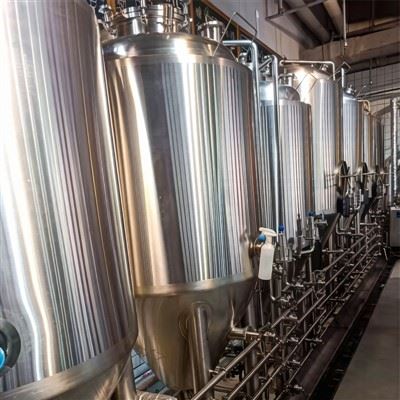
After 12 years in this business, I’ve seen too many customers cut corners on tank quality to save a few bucks, only to spend way more on repairs, downtime, and replacement. A quality stainless steel tank isn’t just a piece of equipment—it’s an investment in your operations, your products, and your safety. If you’re looking for a tank you can trust, or you want to walk through checking a tank you already have, reach out to our team—we’re here to answer questions, share more tips, and help you find the right tank for your needs. Whether you’re storing food, chemicals, water, or anything else, we’ll make sure you get a tank that lasts.
Auxiliary System References
- ASME Boiler and Pressure Vessel Code, Section VIII, Division 1: Rules for Construction of Pressure Vessels
- National Sanitation Foundation (NSF) International, Standard 61: Drinking Water System Components
- Stainless Steel World Association, “Guidelines for Verifying Stainless Steel Grade and Quality in Industrial Tanks”
- Food and Drug Administration (FDA), 21 CFR Part 175: Indirect Food Additives: Adhesives and Components of Coatings
Wenzhou Jinggong Machinery Equipment Co., Ltd.
We are one of the most professional stainless steel tanks manufacturers and suppliers in China. With abundant experience, we warmly welcome you to buy customized stainless steel tanks at competitive price from our factory. If you have any enquiry about quotation, please feel free to email us.
Address: No.Jiadi Industrial Zone, Yaoxi Town, Longwan District, Wenzhou City, China.
E-mail: jinggong2026@163.com
WebSite: https://www.jg-ind.com/
