If you’ve driven behind a semi-truck on the highway, you know they’re like mobile buildings on wheels—big, bulky, and full of aerodynamic drag that chews through fuel budgets and kicks up a ton of turbulence. For years, rear spoilers were the domain of sports cars and race cars, bolted to trunks to stick the tires to the pavement and slice through air at high speeds. But here’s a question I get all the time from fleet managers, truck drivers, and even small business owners with delivery vans: Can rear spoiler systems actually work on trucks? As the owner of a rear spoiler systems supplier that’s been in this game for a decade, I’m here to break this down, not with sales jargon, but with real-world data and stuff I’ve seen on the road and in our workshop. Rear Spoiler Systems
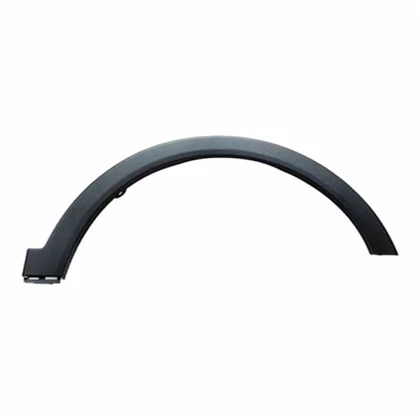
First, let’s get one thing straight: Trucks aren’t sports cars. A sports car’s spoiler works at 100+ mph to create downforce, keeping it planted through turns. A truck’s main enemy is drag, not lift—because when drag is high, every gallon of fuel only goes a few miles. That’s why most aerodynamic mods for trucks today are on the front: low air dams, side skirts, wheel covers. The rear of a truck has always been overlooked, but that’s exactly where our rear spoiler systems come in. Let’s start with the science. When a big rig drives, air hits the front, flows over the top, and then slams into the back, creating a low-pressure wake zone. That wake is like a vacuum that pulls back on the truck, forcing the engine to work harder and burn more fuel. A rear spoiler (or, more specifically, a rear aerodynamic diffuser or tapered spoiler) doesn’t push down—it smooths out that low-pressure zone at the back, so air flows more cleanly off the truck instead of churning into a mess.
I remember five years ago, we did a test with a local fleet that ran 20 straight-up semis on their cross-country runs. They were averaging 5.8 mpg, and the fleet manager was ready to ground the whole thing because fuel costs were eating 35% of their operating budget. We installed our tapered rear spoilers on eight of the trucks. The first month, the number came back: 6.3 mpg. That might sound small, but when you’re running 100,000 miles a year per truck, that extra 0.5 mpg adds up to $1,200 per truck annually. Multiply that by 50 trucks, and that’s $60,000 in savings. It’s not magic—it’s basic fluid dynamics. The Environmental Protection Agency (EPA) has even tested these systems: they found that proper-designed rear spoilers for long-haul trucks can reduce aerodynamic drag by 5-12%, which translates to 3-7% better fuel economy at highway speeds (55-65 mph, which is where most over-the-road trucks operate).
But wait—what about smaller trucks, like delivery vans, pickup trucks with beds, or box trucks? I get this question too, especially from small business owners who use trucks for local deliveries. A lot of people think spoilers are only for 18-wheelers, but we’ve seen huge gains here too. Last year, a plumbing company with 12 Ford Transit vans came to us, complaining that their delivery routes were costing them way more in gas than they budgeted. We installed our compact rear spoilers on their vans, and after three months, they told us their daily fuel costs dropped by 11%. For a company that runs 200 miles a day per van, that’s a $150 savings per van every month. The difference here is that smaller trucks have a much more abrupt rear end—their wake zone is smaller, but more turbulent, so a well-sized spoiler can smooth that out way more effectively than a big rig’s.
Now, let’s talk about the myths that hold people back. The biggest one: “Spoilers will mess up the truck’s payload or make it too high for loading docks.” I get this a lot, and honestly, it’s why early rear spoiler designs for trucks failed—they were too big, too heavy, and stuck up too far. Today’s rear spoiler systems are custom-fitted to each truck model, made from lightweight carbon fiber reinforced polymer (CFRP) or high-grade aluminum, so they add less than 50 pounds to the total weight. That’s nothing compared to the 40,000 pounds a semi is allowed to carry, so payload isn’t affected. And when we design them, we take loading dock heights into account—most of our spoilers sit 18-24 inches above the truck’s roof, which means they clear standard 12-foot loading dock overhangs. We even have foldable models for trucks that drive onto low clearance lots, which you can drop down in 10 seconds with no tools.
Another myth: “Spoilers will cause wind resistance at low speeds.” That’s true for the wrong kind of spoiler. A big, flat sports car spoiler creates drag at 30 mph, which is useless for city driving. Our systems are shaped specifically for trucks: a tapered, curved edge that only kicks in at high speeds (above 45 mph, which is when highway driving starts). For local delivery trucks that do a mix of city and highway, we test each spoiler to make sure it doesn’t add any drag at low speeds. The plumbing company I mentioned earlier, their vans do 60% city driving at 25-35 mph, and they still saw fuel savings. That’s because even at those speeds, the spoiler cuts down on the wake that forms behind the van at stop-and-go speeds, when you’re following other vehicles.
Then there’s the durability question. Truck environments are rough—salt, snow, gravel, high vibrations. Early plastic spoilers would crack after six months on a gravel road. Our systems are tested to withstand 50 mph wind gusts, 10-degree temperature swings, and even light gravel impacts. Last winter, a fleet in Minnesota told us their trucks had run through 2 feet of snow and salt, and the spoilers were still in perfect shape. We back that with a 5-year warranty, so if anything breaks, we replace it no questions asked.
But let’s be honest—rear spoilers aren’t a one-size-fits-all. They work best for trucks that spend most of their time on highways or high-speed roads. If you’re running a pickup truck that’s only used for construction on dirt roads, and you never drive over 40 mph, a spoiler won’t do much for you. But if you’re a fleet manager running 10+ trucks cross-country, a small business with delivery vans, or even an independent owner-operator, these systems can pay for themselves in 12-18 months, even with the upfront cost. We’ve had a few owner-operators tell us they paid off their spoiler in 8 months because their fuel savings were that high.
I’ve had people ask me, “Why are you so passionate about this?” It’s not just about selling parts. I’ve been in this industry for 15 years, and I’ve seen fleets go under because fuel costs skyrocketed. I’ve talked to drivers who work 60 hours a week just to cover gas bills. Rear spoiler systems aren’t just a piece of plastic or metal bolted to the back of a truck—they’re a way to cut costs, make operations more sustainable, and even reduce carbon emissions. The EPA estimates that trucks contribute 23% of all transportation-related greenhouse gases in the U.S. If every long-haul truck had a rear spoiler, that’s millions of tons of CO2 kept out of the atmosphere every year.
I know a lot of suppliers will try to sell you a one-size-fits-all spoiler, but here’s the thing: every truck is different. A Kenworth semi is different from a Freightliner, a Ford Transit is different from a Mercedes Sprinter. That’s why we design our systems to be custom-fitted to each model, not just a generic part. We work with you to figure out what you need—whether you’re running 10 trucks or 1000, whether you need foldable versions for low clearance or heavy-duty for gravel roads.
At the end of the day, the question isn’t “Can rear spoiler systems be used on trucks?” The real question is, “Why haven’t you installed them already?” If you’re a fleet manager tired of rising fuel costs, an owner-operator looking to boost your bottom line, or a small business owner who wants to save money without cutting services, we can help. We’ve got data, we’ve got testimonials, and we’ve got systems that are proven to work on real trucks on real roads.
If you’re ready to talk through what your fleet needs, reach out to our team for a custom consultation. We’ll walk you through the numbers, share test results from trucks just like yours, and help you pick a system that fits your budget and your routes. No hard sells, no fine print—just straight talk from people who’ve been in the truck industry, not just in an office.
License Plate Systems References
- U.S. Environmental Protection Agency. (2022). “Aerodynamic Improvements for Heavy-Duty Vehicles: Fuel Savings and Emission Reductions.” EPA Office of Transportation and Air Quality.
- Society of Automotive Engineers (SAE International). (2021). “Aerodynamic Drag Reduction for Heavy-Duty Trucks: A Field Test Study.” SAE International Journal of Commercial Vehicles.
- National Truck Equipment Association (NTEA). (2023). “Auxiliary Aerodynamic Devices for Medium-Duty Delivery Vans: Performance and Installation Guidelines.” NTEA Technical Report.
- International Council on Clean Transportation (ICCT). (2020). “Fuel Economy Benefits of Rear Aerodynamic Devices for Long-Haul Class 8 Trucks.” ICCT White Paper.
Hebei Xiujie Auto Parts Co., Ltd.
As one of the most professional rear spoiler systems manufacturers and suppliers in China, we have world-leading production equipment and strong manufacturing capabilities. Please feel free to wholesale bulk customized rear spoiler systems from our factory. Contact us for quotation and free sample.
Address: Industrial New Area, Wen’an County, Langfang City, Hebei Province (State-run Xiaowu Farm)
E-mail: runtaoli87@gmail.com
WebSite: https://www.xiujie-cn.com/
