Hey there, AC Motor
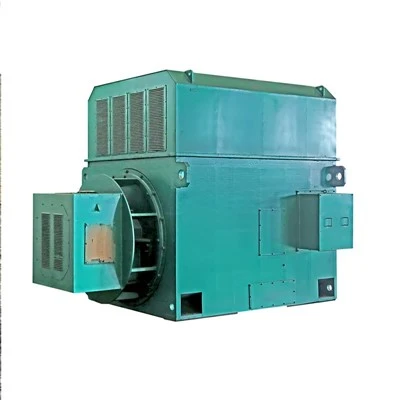
If you’ve ever dealt with AC motors for any length of time—whether you’re an engineer troubleshooting a factory line, a maintenance manager keeping HVAC running, or someone just trying to make a piece of industrial equipment work—you’ve probably heard the word “harmonics” thrown around. At our AC motor supplier, we get tons of questions about this stuff, and honestly, it’s one of those topics that sounds way more technical than it is… until it starts messing with your gear. Let’s break this down straight, no fancy jargon that makes your eyes glaze over.
First off, let’s keep this simple: AC motors run on alternating current, right? That means the current and voltage wiggle back and forth in a smooth, sine wave shape—think of a gentle rollercoaster hill, no sharp dips or jumps. Harmonics are extra, wiggly little waves that piggyback on that nice, smooth sine wave. They’re caused by non-linear loads—things like variable frequency drives (VFDs), which are super common now for saving energy on motors, or even other electronics like servers, welders, or LED lights. Those loads don’t draw current evenly, so they distort the sine wave, adding those harmonics.
Now, why should you care about these little waves? Let’s talk about the impact on your AC motor, because that’s what we deal with every day. The big one is heat. Harmonics aren’t just riding along—they add extra current to the motor, and that extra current turns into heat. I’ve seen motors run 10, 15, even 20 degrees hotter than they should just because of harmonics. Think about it: every 10-degree rise in operating temperature cuts a motor’s lifespan in half. So a motor that should last 20 years? Now it’s pushing 10, or even less. That’s a big problem when you’re relying on that motor to keep your plant running. No one wants an unplanned shutdown because a motor burned out.
Next up is torque. AC motors rely on a consistent magnetic field to turn the shaft and do work. Harmonics mess with that magnetic field. You get what’s called “torque ripple”—the motor’s output torque isn’t smooth anymore; it’s jerky, like driving a car with a stuck accelerator and brake at the same time. For some applications, like conveyor belts or pumps, that’s not a huge deal… but for precision stuff, like robotics, or motors driving compressors that need steady pressure? That’s a nightmare. The jerky torque can cause wear on gears, belts, and other parts way faster than normal. We’ve had customers come to us after switching to VFDs for energy savings, only to find their conveyor belts were wearing out 3x quicker because of harmonic-induced torque ripple.
Don’t forget about vibration and noise. That extra magnetic field distortion from harmonics doesn’t just affect torque—it makes the motor vibrate more. Higher vibration means more stress on the motor’s bearings, windings, and even the mount it’s bolted to. Over time, that vibration can crack windings or loosen connections. And let’s be real, the noise from a motor that’s fighting harmonics is way louder than it should be, too. Not only is that annoying for your team working around it, but it’s another sign something’s off that’s accelerating wear.
Wait, there’s also something called “skin effect” with harmonics. Higher-frequency harmonics (remember, harmonics are multiples of the fundamental frequency—so if your line is 60Hz, the 3rd harmonic is 180Hz, 5th is 300Hz, etc.) don’t flow evenly through the motor’s windings. They hang out closer to the surface of the wires, so the effective resistance of the windings goes up. That means more heat, more energy waste, and even more strain on the motor’s insulation. Insulation breakdown is a big one—if the windings overheat too much, the insulation breaks down, leading to short circuits or total motor failure. We’ve seen this in environments where there are a bunch of VFDs running on the same circuit—multiple harmonic sources amplifying each other.
But here’s the thing: harmonics aren’t always a death sentence for your motor. A lot of people think switching to a VFD is all gain for energy savings, and that’s true… but you have to pair it with the right steps to handle harmonics. At our AC motor supply company, we don’t just sell motors—we work with customers to figure out how to mitigate harmonics so their motors run like they should.
What are the common fixes? First, you can use harmonic filters. There are passive filters that are like “harmonic sponges” that soak up those extra waves, and active filters that actually monitor and cancel out harmonics in real time. Then there’s line reactors—they’re simple, affordable devices you put between the power source and the VFD (and the motor) that smooth out the current a little, reducing harmonic distortion. For existing motors, sometimes rewinding with better insulation that can handle higher heat from harmonics helps, or upgrading to motors specifically designed for variable frequency use (called VFD-ready motors) that have thicker wire in the windings to handle that skin effect, and better insulation to resist heat.
I want to share a quick real example that stuck with our team last year. A customer in the food processing industry came to us: they had 8 conveyor motors running VFDs, and every 18 months, they were having to replace half of them. They thought the VFDs were bad, so they swapped them out, but the problem kept happening. When we looked at their power data, we saw their total harmonic distortion (THD) was at 35%—way above the recommended 5% for most industrial setups. We suggested adding line reactors to each VFD and upgrading their motors to VFD-rated ones. Fast forward a year, and they haven’t replaced a single motor. That’s the kind of win we love to see—saving them time, money, and stress.
Another thing to mention: harmonics don’t just hurt the motor itself. They can mess with other equipment on the same circuit too—lights flickering, computers glitching, other electronics overheating. But since we’re an AC motor supplier, our focus is on keeping your motor running strong, because that’s what keeps your operations moving.
Wait, let’s clarify something so no one gets confused: not all harmonics are bad. Low levels are usually fine—most power grids have a little, and a standard motor can handle up to 5% THD without issues. It’s when it creeps above that, especially for motors running VFDs or in areas with multiple non-linear loads, that the problems start. The key is monitoring. If you have a motor that’s acting up—running hotter than normal, vibrating more, wearing out parts faster—check the power quality first. A quick THD test can tell you if harmonics are the culprit before you go replacing parts that don’t need it.
At our company, we take the time to explain all this to customers, not just sell them a motor. We’ve got people on our team who know power quality, harmonics, and how motors interact with different loads. We don’t want you to have the same headaches that that food processing customer had. We’d rather help you set things up right from the start, so you get the energy savings from VFDs and the long motor life you expect.
Here’s the takeaway: harmonics are a real thing that impact AC motors, causing heat buildup, shortened lifespan, torque issues, vibration, and more. But they’re not something you have to live with. With the right precautions—like line reactors, harmonic filters, and choosing VFD-ready motors—you can keep those extra waves from turning into big problems.

If you’re noticing your motors running hot, wearing out faster than expected, or having other issues that might be tied to harmonics, we’re here to help. We can walk you through power quality checks, suggest the right mitigation steps, and supply the motors and parts you need to keep your operations running smoothly. Don’t let harmonics catch you off guard—reach out to us, and let’s figure out the solution together.
AC Motor References
- Electrical Construction & Maintenance. "Harmonics: What They Are and How They Affect Motors." EC&M, 2022.
- IEEE Industry Applications Society. Understanding Power Quality Problems: Voltage Sags and Interruptions, Sags, Swells, and Harmonics. IEEE Press, 2000.
- NEMA MG 1-2021: Motors and Generators. National Electrical Manufacturers Association, 2021.
- Power Quality Association. "Harmonics Mitigation for Variable Frequency Drives." PQA, 2020.
Xian Putai Electric Motor Equipment Co., Ltd.
Xian Putai Electric Motor Equipment Co., Ltd. is one of the most professional ac motor manufacturers and suppliers in China, also supports customized service with low price. Welcome to buy advanced ac motor in stock here from our factory. If you have any enquiry about quotation, please feel free to email us.
Address: Haibo Guangchang Fengcheng Nine Road Economical & Technological Development District Xi’an City Shaanxi Province – China
E-mail: sales@putaimotor.com
WebSite: https://www.putaimotor.com/
