Hey there, fellow robotics enthusiasts! I’m here as a supplier of 0.80mm pitch components, and today we’re going to dig into the question: Can 0.80mm pitch be used in robotics applications? 0.80mm Pitch
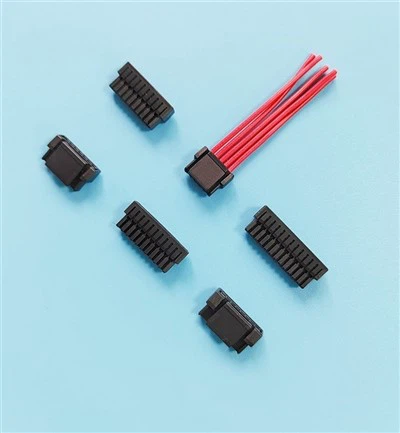
Let’s start by understanding what pitch means in the context of electronics. Pitch refers to the distance between the centers of adjacent pins or contacts on a component. In the case of 0.80mm pitch, it’s a relatively fine pitch, which means the pins are closer together compared to components with a larger pitch.
Now, when it comes to robotics, there are a ton of different applications, from small hobbyist robots to large industrial machines. And the choice of pitch can have a big impact on how well a component works in these applications.
One of the main advantages of using 0.80mm pitch in robotics is space savings. Robots often have limited space inside their frames, especially smaller ones. With a 0.80mm pitch, we can pack more components into a smaller area. This is super useful for things like circuit boards in robots, where every millimeter counts. For example, in a small surveillance robot that needs to fit a lot of sensors and processing units in a compact body, using 0.80mm pitch components can help keep the overall size down.
Another benefit is the potential for higher signal density. Since the pins are closer together, we can have more connections in a given area. This is great for robots that need to transfer a lot of data quickly, like those used in high – speed inspection or autonomous navigation. For instance, a robot that’s mapping a large warehouse needs to send and receive a large amount of sensor data in real – time. The 0.80mm pitch can support the high – speed data transfer required for this kind of application.
But it’s not all sunshine and rainbows. There are also some challenges when using 0.80mm pitch in robotics. One of the biggest issues is soldering. The closer pins make it more difficult to solder the components accurately. A small mistake during soldering can lead to short circuits or poor connections, which can be a nightmare to fix, especially in a complex robotic system.
Also, the manufacturing process for 0.80mm pitch components can be more precise and, therefore, more expensive. This can add to the overall cost of the robot. For small – scale hobbyist projects, this cost might be a deal – breaker. However, for large – scale industrial robotics, where performance and space are critical, the benefits might outweigh the cost.
In terms of reliability, 0.80mm pitch components need to be carefully designed and tested. The close proximity of the pins means that there’s a higher risk of electrical interference between them. This can affect the performance of the robot, especially in environments with a lot of electromagnetic noise. So, proper shielding and isolation techniques need to be employed to ensure reliable operation.
Now, let’s look at some real – world examples of 0.80mm pitch being used in robotics. In the field of medical robotics, where precision is of the utmost importance, 0.80mm pitch components are often used. For example, in robotic surgical systems, these components can help in creating compact and high – performance control units. The small size allows for more flexibility in the design of the robotic arms, and the high signal density ensures accurate control of the surgical tools.
In the consumer robotics market, 0.80mm pitch can also be found in smart home robots. These robots need to be small and efficient, and the 0.80mm pitch components help in achieving that. They can house all the necessary sensors and processing power in a small form factor, making them more appealing to consumers.
So, can 0.80mm pitch be used in robotics applications? The answer is a resounding yes! But it’s not without its challenges. It really depends on the specific requirements of the robotic project. If space and high – speed data transfer are crucial, and you’re willing to deal with the soldering and cost issues, then 0.80mm pitch is a great option.
As a supplier of 0.80mm pitch components, I’ve seen firsthand how these components can make a big difference in robotics. We offer a wide range of 0.80mm pitch products, from connectors to integrated circuits. Our components are designed to meet the high – quality standards required for robotics applications.

If you’re working on a robotics project and think 0.80mm pitch components might be right for you, I’d love to have a chat. Whether you’re a hobbyist just starting out or an engineer working on a large – scale industrial project, we can help you find the right components for your needs. Reach out to us to start a discussion about your requirements and how our 0.80mm pitch components can fit into your robotics design.
1.27mm Pitch References:
- "Electronics for Robotics" by Gordon McComb
- "Robotics: Modelling, Planning and Control" by Bruno Siciliano, Lorenzo Sciavicco, Luigi Villani, and Giuseppe Oriolo
Dongguan Yinglian Electronics Co., Ltd.
We’re well-known as one of the most professional 0.80mm pitch suppliers in China. With abundant experience, we warmly welcome you to buy bulk advanced 0.80mm pitch made in China here from our factory. If you have any enquiry about cooperation, please feel free to email us.
Address:
E-mail: James@csg-china.com
WebSite: https://www.csgconn.com/
