Hey there, if you’re someone who’s ever hauled a herd of cattle, shuffled a handful of bulls, or even just wrangled a few calves into a pen, you know how much those heavy critters can push, lean, and test every piece of gear you use. Today, I’m talking about one of the most underrated workhorses on a farm or ranch: the cattle gate. I get so many calls a week from folks asking the same thing, over and over: “What’s the weight capacity of a cattle gate anyway?” It’s not a question I can answer with a one-size-fits-all number, right? Because a gate meant for a tiny backyard hobby farm with 10 head of steers is way different from the heavy-duty one we build for 500-head feedlots. Let’s break this down like we’re chatting over a cup of coffee after a long day of moving cows—no fancy jargon, just straight talk from a guy who’s been selling cattle gates for years. Cattle Gates
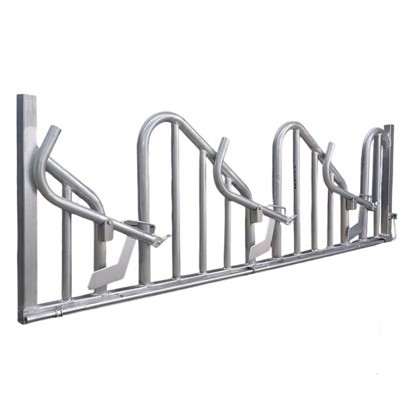
First off, let’s cut through the noise. I’ve seen so many cheap knockoff gates online that say they “hold 2,000 lbs” but bend like a soda can after a week. And I’ve had ranchers come to me with stories of their $500 gate buckling under a single 1,800-pound bull that decided it didn’t feel like moving that day. The truth is, weight capacity for cattle gates isn’t just about how much static weight it can sit still with. It’s about dynamic load, too—what happens when a bull charges at it, or a whole herd shoves through at once, or you back a pickup up to it to load cattle and slip the gate. That’s the stuff that kills gates, not just standing weight.
Let’s start with the basics of how we build our gates, since that’s what directly affects capacity. We don’t cut corners on materials here, plain and simple. The main things that dictate a gate’s strength are the gauge of steel we use, how many horizontal crossbars are welded on, the type of hinge and latch system, and whether we use gussets (those little triangular metal plates that reinforce the corners where the gate meets the post and the latch). For example, our standard 12-foot cattle gate—super popular for pastures—uses 1 5/8-inch square tubing for the frame, with 12-gauge steel crossbars. If you go with our heavy-duty 12-foot option, we bump that frame up to 2-inch square tubing, and 10-gauge crossbars. There’s a huge difference there, and that translates straight to weight capacity.
Now, let’s get into actual numbers, but frame ’em right. Our standard ranch cattle gates (the ones that work for most small to mid-sized operations, like 20 to 100 head of cattle) have a static weight capacity of roughly 2,500 to 3,500 pounds. Wait, but that’s sitting still. If you’re talking dynamic load—like a bunch of cows shoving all at once, or a bull ramming it—we rate those same gates for up to 8,000 pounds of distributed dynamic load. That sounds high, right? But think about it: a mature beef cow is about 1,200 to 1,500 pounds. If you have 6 cows leaning against the gate at once, that’s 9,000 pounds. Our standard gate doesn’t just hold that—it holds it without bending or warping, because we design for that dynamic stress. Our heavy-duty gates, which we build for commercial feedlots, auction yards, or places with really large, strong bulls, go way higher. Those have a static capacity of 5,000 to 7,000 pounds, and dynamic load ratings up to 15,000 pounds. I’ve had feedlot owners tell me they’ve had a whole line of 10 cows (that’s 12,000 to 15,000 pounds total) lean on a single heavy-duty gate, and it didn’t so much as creak. That’s the kind of reliability you need when you’re dealing with livestock that don’t care if your gate is expensive or not—they just want to get where they’re going.
Wait, but here’s a big mistake I see people make: they buy a gate that’s rated for 10,000 pounds, but they mount it on flimsy, wood posts, and wonder why it falls over. The gate’s capacity is only half the equation. The post and hinge system have to be able to handle that weight, too. I always tell customers: don’t skimp on the posts. If you have a heavy-duty gate, use 6×6 treated wood posts or steel posts set at least 3 feet deep in concrete. A gate is only as strong as its weakest link, and that’s usually the post it’s hung on. I had a guy call me last year complaining his new $1,200 heavy-duty gate broke in half. Turns out he hung it on two 4×4 posts set 2 feet deep in dirt. That’s not the gate’s fault— that’s user error. I try to walk every customer through that, because I’d rather they be happy with their purchase than come back mad because something went wrong that wasn’t the gate.
Another thing that affects capacity is gate length. I know a lot of people think a longer gate is weaker, and that’s mostly true if it’s cheaply made. But we design our gates so that longer lengths don’t cut their strength unnecessarily. Our 16-foot pasture gate, for example, still hits that same dynamic load rating as our 12-foot heavy-duty gate, because we add extra crossbars and thicker frame sections along the length. A cheap 16-foot gate might only hold 4,000 pounds, but ours is built to handle the same as the shorter, heavier models. That’s the difference between a company that just stamps metal and one that engineers gates for actual farm use.
I also want to talk about what we don’t do. We don’t exaggerate capacity numbers, that’s for sure. A lot of competitors will slap a “10,000 lb capacity” sticker on a gate that’s only rated for 5,000, and ranchers get burned. I’ve been in this business for 12 years now, and my reputation is everything—so if I say a gate is built for X amount, it’s built for X amount. I’ve tested every gate we sell. A few years back, I set up a test frame in my yard and loaded a standard gate with 3,000 pounds of concrete blocks to make sure it held. It did, no problem. Then I added another 1,000, and it stayed straight. That’s the kind of testing I do, not just looking at a spec sheet. Because when you’re out in the field, you need to know your gate isn’t gonna let you down when you’re busy.
Now, let’s get to when you need a higher capacity gate. If you’re a hobby farmer with 10 head of cow-calf pairs, our standard gates are more than enough. You might even be able to go with a lighter-duty option if you’re not dealing with super large bulls. But if you’re a commercial operation with 500 head, or you handle mature bulls that are 2,000 pounds or more, or you have gates that get used multiple times a day for loading and moving herds? You need that heavy-duty stuff. I’ve had feedlot managers tell me they go through a cheap gate every 6 months, and our heavy-duty gates last 5+ years. The initial cost is higher, but you save money in the long run because you don’t have to replace them every few months.
Wait, what about smaller gates? Like the 8-foot gates people use for small pens or barns? Their capacity is a little lower, obviously, because they’re shorter. Our 8-foot standard gate has a dynamic load rating of about 5,000 pounds, which is perfect for holding calves or smaller cattle. You don’t need a huge, beefed-up gate for a small pen full of yearlings— that’s overkill, and a waste of money. That’s another mistake people make: they buy the biggest, strongest gate they can find for every spot, and it’s unnecessary. You match the gate to the job, plain and simple.
I also want to mention that latch systems matter, too. A gate can be the strongest in the world, but if the latch breaks, it’s useless. We use heavy-duty, padlockable latches on all our gates, and we test those to make sure they can handle the same dynamic load as the gate itself. No flimsy twist latches here—those are great for garden gates, but not for cattle. I’ve seen a dozen calves bust through a gate just because the latch wasn’t up to par. That’s a headache you don’t need, so we make sure our latches are built to last.
Let me wrap this up, because I know you’re probably thinking about whether your current gate is enough, or if you need to upgrade. The short answer is: weight capacity depends on what you’re using the gate for, how big your cattle are, and how often you use it. For most small to mid-sized operations, our standard gates with 2,500 to 3,500 lb static capacity and 8,000 lb dynamic load are perfect. For commercial or high-stress use, go for our heavy-duty gates with 5,000 to 7,000 lb static and 15,000 lb dynamic load. Just don’t forget that the posts and hinges have to match that strength—no gate is gonna hold if it’s mounted on a flimsy post.
If you’re not sure which gate is right for you, don’t guess. Shoot me a message or give me a call— I’d be happy to walk you through the different options, ask you a few questions about your operation, and point you in the right direction. I’ve helped hundreds of ranchers pick the right cattle gates over the years, and I don’t just sell you something— I make sure it works for you. No pushy sales talk, no hidden fees, just honest advice and a gate that’s gonna hold up when you need it.

So if you’re tired of gates that bend, break, or don’t live up to the hype, reach out. Whether you need one gate for a small pasture or a whole line for a new feedlot, we’ve got you covered. Let’s get you set up with something that works as hard as you do.
Pig Feeding System References
- North American Meat Institute. (2021). Livestock Handling Equipment Safety and Capacity Guidelines.
- American Society of Agricultural and Biological Engineers. (2019). Standard for Agricultural Animal Handling Facilities (ASABE S361).
- Texas A&M AgriLife Extension. (2020). Building and Maintaining Cattle Handling Equipment for Small and Mid-Sized Ranch Operations.
- National Cattlemen’s Beef Association. (2022). Recommended Equipment Standards for Commercial Feedlots.
Hebei Honde Industrial Trade Imp & Exp Co., Ltd.
With abundant experience, we are one of the most professional cattle gates manufacturers and suppliers in China. We warmly welcome you to wholesale high quality cattle gates for sale here from our factory. We also accept customized orders.
Address: Room 1904, Yintai International Building, No.36 Guang’an Street, Shijiazhuang, Hebei, China
E-mail: livestock@hbhonde.com
WebSite: https://www.hondelivestocksupply.com/
