If you’ve ever shopped for steel products for industrial applications—whether for oil and gas, construction, machinery, or fluid transport—you’ve likely stumbled across two terms that sound interchangeable at first glance: seamless pipe and casing. As a seamless steel pipe supplier who’s worked with fabricators, rig operators, and infrastructure teams across North America for the past 12 years, I’ve lost count of how many times a new client has asked, “A pipe’s a pipe, right? What’s the big difference between seamless pipe and casing?” Seamless Steel Pipe
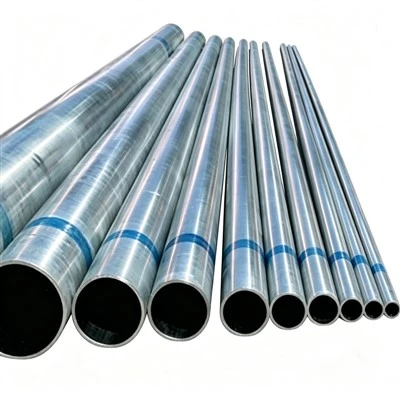
The short answer is: they aren’t the same. And choosing the wrong one can lead to costly delays, safety risks, or even project failure. Let’s break this down clearly, rooted in how both are made, what they’re designed for, and how to pick the right one for your job.
First, let’s start with the basics of manufacturing, because that’s where the key differences begin—even before we talk about end use. Seamless steel pipe is made from a single solid steel billet, heated to a malleable state, then pierced with a mandrel to create a hollow center. The billet is then drawn or rolled to the exact diameter, wall thickness, and length you need. There are no welds, no seams, no weak points along the length of the pipe. That’s why they’re called “seamless”: no joint where two pieces of steel are fused together. For most of my clients, this makes seamless pipe the go-to for high-stakes applications like oil well tubing, high-pressure steam lines, or hydraulic cylinders—anywhere a leak or rupture could have major consequences.
Casing, on the other hand, is a specific type of steel pipe designed exclusively for drilling and completing oil and gas wells. Unlike seamless pipe, casing can be seamless, welded, or even threaded and coupled in sections to reach hundreds or thousands of feet underground. Wait—hold on, that’s a common point of confusion. Some casing is seamless, but not all, and not all seamless pipe is casing. Casing’s definition isn’t about manufacturing method; it’s about its purpose. Casing is the structural outer layer of a well, inserted as you drill to stabilize the borehole, prevent collapse, stop groundwater from mixing with oil or gas, and protect the environment from subsurface contaminants. It’s not designed to carry flow directly—seamless pipe does that job inside the casing, as tubing, or for transmission lines.
Let’s get more specific about wall thickness, because that’s where the functional divide really shows. Seamless pipe is manufactured to very precise, consistent wall thickness, called “schedule” in standard sizing. For example, Schedule 40 seamless steel pipe has a wall thickness designed for a specific pressure rating, and it stays uniform along the entire length. That consistency is critical for applications where internal pressure, corrosion, or wear is a factor. A 2-inch Schedule 80 seamless pipe will have a thicker wall than Schedule 40, able to handle 2x to 3x the internal pressure for the same diameter.
Casing, though, is sized differently. Instead of schedule numbers, casing uses outer diameter (OD) measurements that start much larger than standard seamless pipe. A typical oil well might use 13 3/8-inch OD casing, for example, which is way bigger than most seamless pipe sizes. Casing also has a variable wall thickness, depending on its depth in the well. The deeper you go, the higher the pressure and stress, so the thicker the wall of the casing section. Some casing is also designed to be expandable, meaning it can be adjusted as it’s inserted, a feature almost unheard of in standard seamless pipe, which is cut to a fixed length before delivery.
Another key difference: threading and connections. Seamless pipe is often plain-ended, or has simple beveled ends for welding or flanging directly to other fittings. The joints are just as strong as the pipe itself, since there’s no weld to fail. Casing, though, needs specialized connections designed to lock together under extreme stress deep underground. Most casing is sold in 30 to 40 foot sections, each end threaded with a special joint—some with threads coated in sealant, some with metal-to-metal seals—that can hold against the enormous pressure of earth and fluid while preventing leaks. You’d never thread standard seamless pipe for a well; it’s not built for that kind of stress or connection.
End use is where this all clicks into place. Let’s use two common scenarios to make it real. First: if you’re building a high-pressure steam line for a power plant, you need seamless pipe. That line will sit above ground, carrying steam at hundreds of pounds per square inch, with no outer structure to support it. A seamless pipe’s uniform wall and seam-free design mean it won’t burst under pressure, and there’s no seam where corrosion can start. Casing isn’t designed for this—its outer diameter is too big, its wall thickness is optimized for structural support, not internal pressure, and it doesn’t have the consistent quality needed for a continuous above-ground line.
Second scenario: if you’re drilling an oil well, casing is non-negotiable. You’ll run multiple layers of casing as you drill deeper: conductor casing near the surface, intermediate casing to get through unstable rock, production casing to line the well where oil will come out. Each layer is inserted into the borehole, cemented in place, and connected to the section above it. The seamless pipe you’ll use here is the tubing that runs inside the casing, which carries the oil or gas to the surface. Trying to use seamless pipe as the outer casing would be a mistake: seamless pipe’s smaller OD would mean you can’t fit multiple layers, its fixed length can’t be adjusted for depth-specific needs, and it doesn’t have the specialized connections needed to seal off a well from groundwater.
I’ve seen a handful of clients mix these up over the years, and it never ends well. A few years back, a small drilling contractor once asked me for “seamless pipe for well casing” because he thought it was the same thing. He ordered a run of 2-inch seamless pipe, thinking it would work, only to find out his borehole was 10 inches wide—way too big for the seamless pipe, which is designed for small-diameter flow. He had to rush to reorder actual casing, lost two weeks of drilling time, and paid extra in rush fees. That’s the kind of avoidable mistake that comes from not understanding the difference.
Another common myth: seamless pipe is always stronger than casing. That’s not true. Casing for deep wells is built to handle far higher external pressure (from the weight of rock and fluid around it) than standard seamless pipe, which is designed for internal pressure. A casing rated for 10,000 feet of depth can handle thousands of pounds per square inch of external force, something most seamless pipe can’t match. But for internal pressure applications, seamless pipe is usually the stronger choice, since it’s made to withstand pressure inside, not outside.
Let’s also touch on standards, because that’s a marker of their intended use. Seamless steel pipe for industrial use is made to standards like ASTM A53, ASTM A106, or API 5L, which set strict guidelines for manufacturing, pressure testing, and dimensional consistency. Casing, by contrast, is made to API 5CT, a specific standard for oil and gas casing and tubing that covers things like connection strength, collapse resistance, and corrosion resistance for subsurface use. If a product is labeled API 5CT, it’s casing, full stop—even if it’s seamless. If it’s labeled ASTM A106, it’s seamless pipe, intended for flow applications, not well casing.
Now, how do you pick the right one for your project? Let’s run through a quick checklist:
- What’s the primary function of the product? If it’s to carry fluid, gas, or high-pressure flow (above ground or inside a structure), go with seamless pipe. If it’s to provide structural support for a well bore or to isolate subsurface layers, go with casing.
- What size do you need? Seamless pipe is almost always smaller than 24-inch OD, with standard schedule sizing. Casing ranges from 4-inch to 20-inch+ OD, with size tailored to your well or structure.
- What pressure are you dealing with? For internal pressure, seamless pipe is the right call. For external pressure (like in a well), casing is designed for that.
- Do you need specialized connections? If you’re welding or flanging to fittings, seamless pipe’s plain ends work. If you’re connecting sections deep underground, you need casing’s specialized threaded or coupled connections.
As a seamless steel pipe supplier, I work with all types of clients—from small fabricators building farm equipment to large energy firms. The biggest takeaway I want people to have is that neither product is “better” than the other; they’re built for different jobs. Trying to substitute one for the other will almost always lead to problems, extra cost, or safety risks.
If you’re not sure which you need, don’t guess. Tell me your project: what are you building? What pressure or environment will the product be in? What size and length do you need? I can help you sort it out, no sales pitch—just straight talk based on 12 years in the business. We’ve got seamless pipe in all standard schedules, sizes, and grades, from carbon steel to alloy steel, and we can also help you source the right casing for well projects if that’s what you need.

Whether you’re spec’ing a line for a new factory, planning a drilling project, or replacing a worn pipe in a hydraulic system, getting the right product the first time saves time and money. I’ve seen too many teams cut corners on this, and it’s never worth it. For any questions or to discuss your next project, reach out to our team to talk through your needs. We’re here to make sure you get the right product, on time, every time.
Grooved Fitting References
- API Specification 5CT, 12th Edition: Specification for Casing and Tubing. American Petroleum Institute, 2022.
- ASTM A106/A106M-21: Standard Specification for Seamless Carbon Steel Pipe for High-Temperature Service. ASTM International, 2021.
- American Society of Mechanical Engineers (ASME) B31.1: Power Piping Code. ASME, 2022.
- Global Seamless Pipe Market Report, 2023-2028. Grand View Research, Inc., 2023.
Shenzhen Gangyuanlong Building Materials Co., Ltd.
As one of the most professional seamless steel pipe manufacturers and suppliers in China, we also support customized service with low price. Please feel free to wholesale premium seamless steel pipe in stock here from our factory. Also, quotation is available.
Address: No.10-1, Jinlong 4th Road, Baolong Community, Longgang Subdistrict, Longgang District, Shenzhen
E-mail: szgylco@gmail.com
WebSite: https://www.szgylco.com/
