If you’re in the market for a hydraulic piston motor, let me cut to the chase—pick the wrong one, and you’ll be dealing with constant headaches: dropped production runs, overheating, way too much downtime, and a bill for repairs that’ll make you cringe. I’ve been selling these bad boys for over a decade, and I’ve seen every single mistake buyers make. Most of ’em go straight for the cheapest option, or grab whatever the guy at the last machine shop said was good. That’s how you end up with a motor that can’t handle your load, or dies in 6 months flat. Hydraulic Piston Motor
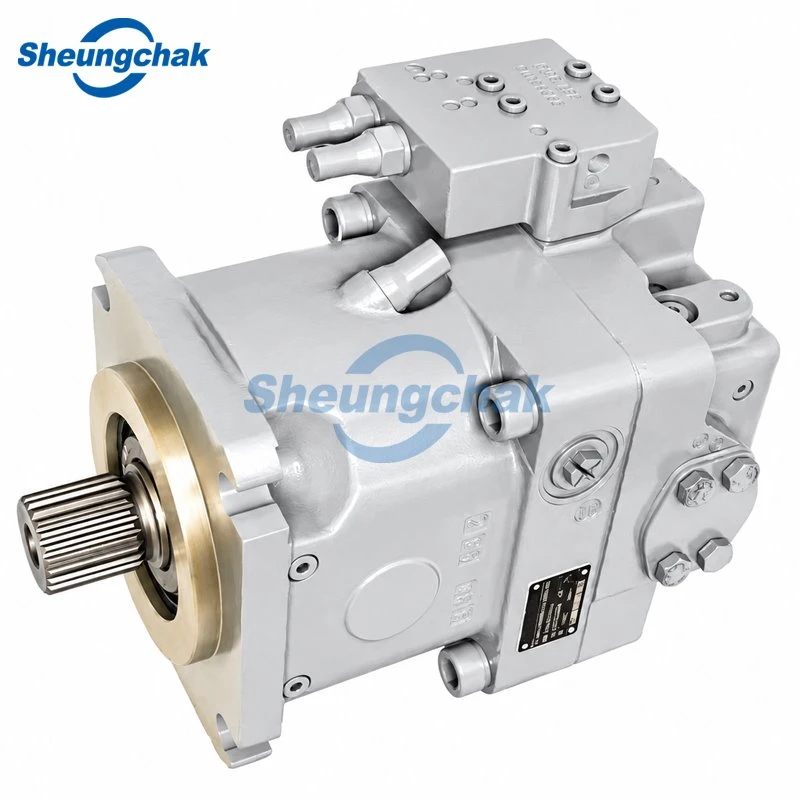
First off, let’s get the basics down. Hydraulic piston motors aren’t your garden-variety gear motors. They run on high pressure, for heavy-duty stuff—think construction equipment, agriculture, mining, even marine applications. The pistons inside are the thing that makes ’em tick: they move in and out, driven by hydraulic fluid pressure, which turns the output shaft. There are two main types: axial and radial. I’ll skip the jargon for a sec, but that difference matters a ton. Axial is for high speed, medium load—you know, things like skid steer drives or conveyor systems. Radial is for low speed, insane torque—like drilling rigs or heavy winches. Mix those up, and your motor’s gonna struggle before the day’s done.
Now, the stuff you actually need to figure out before even picking a model. Let’s start with torque. Torque is how much “twist” your motor can put out, right? If you’re running a hay baler that pulls through thick stems, you need way more torque than if you’re powering a small conveyor belt. A lot of buyers guess here, and that’s where they mess up. Don’t just go by your machine’s specs—calculate the actual load. Factor in friction, the weight you’re moving, even the angle your equipment’s at (like if you’re working on a steep jobsite). I can’t tell you how many times a guy’s come to me saying “my old motor worked fine” only to find out his old one was 20% underrated. Yeah, that’s a thing—some manufacturers lowball their specs to make ’em look cheaper. Ask for the stall torque, not just the continuous torque. Stall torque is the max twist it can put out when it’s stopped, which is super important for sudden starts or heavy loads.
Next up, speed. Speed’s the opposite of torque, more or less. High speed = lower torque, low speed = higher torque. If you need to spin a shaft fast—say, a blower or a small rotary table—don’t get a radial piston motor. It’ll move too slow, and waste energy. Axial can hit way higher RPMs, some up to 5,000 or more, but you lose torque there. Another thing: displacement. Displacement is how much fluid the motor needs to spin one full revolution. High displacement = more torque per revolution, low = more speed. If you’re running at variable loads, you might want a variable displacement motor—those are the ones that change displacement on the fly, so you get torque when you need it and speed when you don’t waste power. They’re a little pricier, but for guys who run multiple jobs, they pay for themselves.
Then there’s pressure. Max pressure is the big number on the spec sheet, right? But here’s the trick: that’s usually the peak pressure, not continuous. If your system runs at 3,000 PSI, don’t get a motor rated for 3,500 PSI. Get one rated for at least 4,000 PSI. Why? Because every time there’s a spike in pressure—like when you hit a rock with your excavator bucket—that motor’s gonna take that hit. Run it right at its max continuous pressure, and it’ll overheat, wear out way faster. I’ve seen motors blow a seal in 3 months because the guy ignored that rule. Pro tip: add a 15-20% buffer to your system’s max pressure. That buffer isn’t extra cost—it’s insurance.
Fluid type and condition. This is something most buyers overlook, and it kills motors faster than anything. Are you using standard hydraulic oil? Synthetic? Water-glycol for fire-resistant applications? Some piston motors are made only for petroleum-based oil—use the wrong fluid, and the seals will swell or harden, leading to leaks. Also, how’s your fluid quality? Water in the oil, dirt, debris—those are like little knives inside the motor. Hydraulic piston motors have tight tolerances between the pistons and the cylinder block. One tiny metal shard can score a cylinder wall, and that’s it—you’re looking at a rebuild. If your machine’s in a dirty environment (construction, mining), get a motor with extra sealing and filtration ports. We stock motors with built-in breather filters for exactly that reason, and customers who use ’em get 2x longer life out of ’em.
Mounting and shaft size. Don’t laugh—this is another common mistake. You can have the perfect motor for torque and speed, but if its bolt pattern doesn’t match your equipment, or the shaft is too small or too big, it’s useless. Double-check every measurement: mounting flange type (SAE is the most common, but there are others), shaft diameter, keyway size, spline count. A lot of new guys just grab the first motor that looks like it’ll fit, but one wrong millimeters and you’re drilling new holes or messing up the shaft. We always tell buyers to send us a photo of their old motor, or their equipment’s mounting specs, before they order. Saves so much time and headaches later.
Efficiency. This is a big one if you care about your energy bill. Hydraulic motors lose power two ways: volumetric efficiency (how much fluid actually does work, vs leaks) and mechanical efficiency (how much of the torque goes to the shaft, vs friction). A cheap motor from some no-name brand might have a low upfront cost, but its efficiency is garbage—you’ll be wasting 20-30% of your fluid and energy, which adds up over time. A good piston motor, like the ones we sell, has 92-95% efficiency. Let’s do the math: if you’re running 8 hours a day, 5 days a week, that efficiency difference could save you thousands a year on electricity or fuel. Yeah, it’s a bigger initial outlay, but it pays for itself in 6-12 months. I show buyers that all the time, and 9 times out of 10 they go for the efficient one.
Durability and build quality. What’s the motor made of? The cylinder block, pistons, valve plate—are they cast iron, or aluminum? Cast iron is way tougher for heavy-duty work, aluminum is lighter for mobile applications but wears faster. Also, look at the tolerances. Better manufacturers use precision machining, so the parts fit tighter, less leakage, less wear. Cheap motors have loose tolerances, so they break easier. Another thing: serviceability. Can you rebuild it yourself, or do you have to send it back to the manufacturer? A lot of piston motor issues are just worn pistons or seals, not a total replacement. We sell motors that are rebuildable, so our customers don’t have to buy a whole new one every 2 years. That’s a huge plus for guys who are on a tight budget.
Environment and application. Let’s tailor this to where you’re using it. If you’re running a marine application, you need a motor with corrosion-resistant parts—saltwater eats through regular steel like crazy. If you’re in a cold climate, make sure the motor’s compatible with winter-grade hydraulic oil, and has seals that don’t get brittle in low temps. If it’s for a mobile machine that gets bounced around, look for one with a rugged housing, not a delicate one that’ll crack on a jobsite. I had a customer last year who was running a motor on a logging truck—his old one kept cracking from vibration, so we swapped him for a reinforced housing one, and he hasn’t had a problem since.
Now, let’s talk about the mistakes I see all the time. First, undersizing. Like I said earlier, a lot of guys go with the smallest motor that “should” work, but underloading a piston motor is almost as bad as overloading it. Wait, what? Yeah—if a motor’s running at way less than its rated load, the oil can get too hot, and the pistons don’t seat right, leading to wear. That’s a trick I didn’t learn till a few years in. Second, ignoring maintenance. Even the best motor will die early if you don’t change the fluid or replace the filters. We send every customer a maintenance guide, and the ones who follow it have way better uptime. Third, going for the absolute cheapest. I once had a guy buy a motor from a guy on Alibaba for $200 less than ours. It broke in 4 months, and he had to pay $1,500 for a new motor plus downtime. That $200 savings cost him $1,700. Not worth it.
So, how do you put this all together? Let’s do a quick checklist to make sure you’re getting the right motor: 1. Define your application: is it high-speed or low-speed, heavy-duty or light? 2. Calculate actual torque needed, not just the machine’s spec—add 20% buffer. 3. Match the motor type (axial for high speed, radial for low speed/high torque). 4. Pick a pressure rating with a 15-20% buffer, continuous not peak. 5. Confirm mounting and shaft specs exactly—don’t guess. 6. Factor in fluid type and environment (corrosion, temperature, dirt). 7. Check efficiency and build quality, not just price.
If you’re still confused, that’s totally normal. I get calls every week from guys who have no idea where to start. That’s why we’re here—we don’t just sell a motor and disappear. We help you pick the right one, answer questions about installation, even give maintenance tips to keep it running for years. A lot of suppliers will just hand you a spec sheet and say “good luck.” We walk through it with you.
Don’t waste time and money on a motor that doesn’t fit your needs. Whether you’re running construction equipment, farm machinery, marine gear, or mining tools, we’ve got hydraulic piston motors built for all kinds of applications, from light-duty to heavy industrial. If you’re not sure what you need, just reach out—tell me a little about your machine, what you’re using it for, and I’ll point you in the right direction. No pressure, no sales pitch, just straight talk. We want you to get a motor that works, not one that becomes a problem.
Hydraulic Pump References:
- Hydraulic Motor Selection Guide, National Fluid Power Association (NFPA)
- Design and Selection of Hydrostatic Transmissions, SAE International
- Fluid Power Circuits and Controls: Fundamentals and Applications, John S. Cundiff
- Hydraulic Piston Motor Technology and Performance, International Organization for Standardization (ISO) 4409
- Maintenance Best Practices for Hydraulic Systems, Fluid Power Society
Guangdong Sheungchak Hydraulic Technology Co., Ltd.
Guangdong Sheungchak Hydraulic Technology Co., Ltd. is one of the most professional hydraulic piston motor manufacturers and suppliers in China. We are committed to providing high quality customized products with competitive price. Please rest assured to wholesale durable hydraulic piston motor for sale here and get pricelist from our factory.
Address: Building 25, Liantang Industrial City, Shangcun Community, Gongming Subdistrict, Guangming District, Shenzhen, China
E-mail: info@hydraulicsc.com
WebSite: https://www.hydraulicsc.com/
