What’s up guys, if you’ve ever driven past a road crew grinding up old asphalt like it’s a giant parking lot pancake, you’ve seen a highway milling tool at work. I’ve been supplying these bad boys for a minute now, and one question I get all the time is: “What even makes up this massive, loud, road-eating machine? I thought it was just a bunch of rotating teeth on a drum.” Nah, man—break that thing down, and it’s a whole system of precision parts, each doing a job that keeps that mill chugging (and the road getting ripped up right). Let’s cut to the chase and talk about every part you need to know. Highway Milling Tool
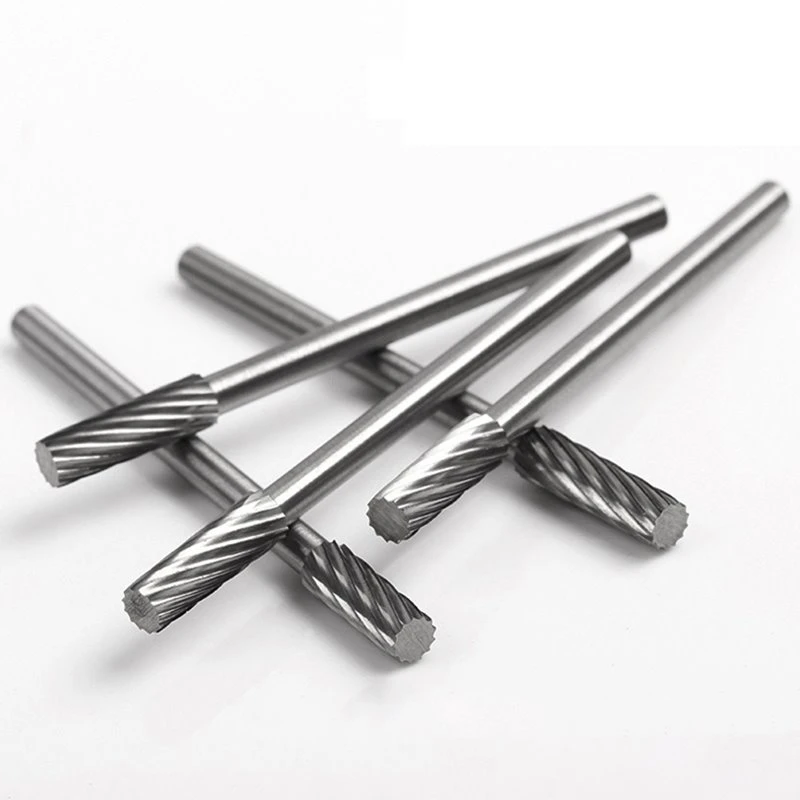
First off, let’s start with the star of the show: the cutting drum. Wait, but not just any old metal cylinder. This isn’t a log rolling through a sawmill—highway milling drums are heavy-duty steel, usually heat-treated so they don’t warp or bend mid-job. What makes them actually cut is the way teeth (we’ll get to those in a sec) are mounted all over them, in a specific pattern, not just random holes. Some drums have a “milled” surface with little pockets called bit holders welded or bolted on—bolt-on is way better for repairs, by the way, because if one holder cracks, you don’t have to weld the whole drum. Also, drum size matters for jobs: big 8-foot drums for resurfacing entire lanes, smaller 2-foot drums for pothole fixes or touch-up work. I once had a customer call me panicking because their drum snapped mid-job on a highway project—turns out they used a worn-out drum on a job that needed extra tough steel. Lesson there: don’t skimp on the drum.
Next, the thing that makes the drum spin: the drive system. This is a mix of parts that transfer power from the mill’s engine to that heavy drum. Most modern mills use hydraulic drives instead of old-school mechanical chains, right? Hydraulic drives are smoother, adjust easier when you’re changing how deep you cut, but they’ve got two main parts: the hydraulic pump and the motor. The pump is driven by the mill’s main engine, pushes high-pressure fluid to the motor, which twists the drum. Then there’s the gearbox—sometimes it’s part of the hydraulic motor, sometimes separate—that slows down the spin speed so the drum has enough torque to chew through 2 inches of asphalt at a time. If your gearbox is bad, the drum just spins fast and slips, like when you rev a car in neutral. I’ve had folks bring in mills that won’t spin the drum, and 9 times out of 10 it’s a clogged hydraulic line or a worn gear in the box.
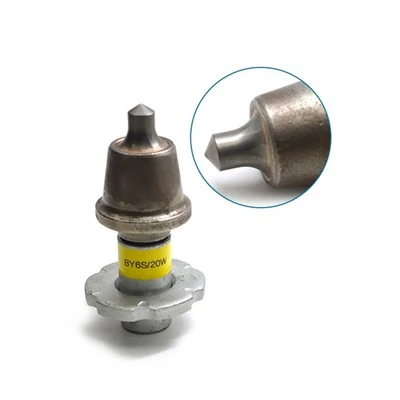
Now, the part everyone actually notices when they see the mill working: the cutting bits. These are the little pointy things that actually rip up the asphalt, and they’re not just sharpened steel sticks—wait, no, actually, a good cutting bit is a carefully engineered tool. It has three main parts: the shank, the carbide tip, and the shoulder. The shank is the part that slides into the bit holder on the drum—usually a round or hexagonal shape so it doesn’t spin around in the holder mid-cut. The carbide tip is the hard, pointy end that does the cutting. Carbide is way tougher than steel, so it stays sharp way longer, even when it’s grinding through asphalt with gravel or concrete chunks mixed in. The shoulder is the little ring at the base of the tip that sits against the bit holder, so when the bit cuts, it doesn’t get pushed too far into the holder and break. If you’ve ever seen a milling job with bits that look all worn down to nubs, that’s a cheap bit—our bits last 2-3 times longer than the generic ones, which saves crews from stopping every 10 minutes to replace them.
Speaking of the holders I just mentioned, bit holders are the unsung heroes of the milling tool. They’re the parts welded (or bolted, like I said earlier) to the drum that the cutting bits slide into. Holders have to take a ton of abuse—every time a bit hits asphalt, the holder gets banged, twisted, and sometimes hit with a rock. So they’re made from heavy alloy steel, usually tempered to resist impact. There are two main types of holders: pressed-fit and welded. Pressed-fit holders are easier to replace if they crack, which is perfect for small crews that don’t have a welding rig on-site. Welded holders are more secure for heavy-duty jobs, like milling down to the concrete base for a full road rebuild. I always tell customers to go with pressed-fit holders if they do a mix of jobs, because replacing a bad holder only takes 5 minutes, not an hour of welding.
Now, let’s talk about the depth adjustment system. Because here’s the thing: you don’t just mill the road at the same depth every time. Sometimes you need to shave off ¼ inch for a new layer of asphalt, sometimes you need to go 6 inches deep to fix a pothole or remove old, cracked pavement. The depth system controls how far down the cutting drum sits relative to the ground. It’s made up of hydraulic cylinders, control arms, and height gauges. The cylinders push or pull the front and back of the mill’s frame to lift or lower the drum. Most modern mills have digital depth controls—you punch in “2 inches” and it sets itself, no guessing. Old-school mills used manual cranks, which worked but took forever, and you’d end up with a lumpy cut if you didn’t get the height right. I remember my first mill gig back in the day, my boss made me crank the depth by hand for 2 hours—never again.
Wait, we can’t forget about the guidance system, right? Because if the mill drifts to the left or right, you end up cutting a wavy road that’s uneven, which is a nightmare for paving. The guidance system keeps the mill straight, usually with laser guides or side skids. Skids are little metal pads that run along the edge of the road or the existing pavement, so when the mill moves forward, the skid rides along that edge, keeping the drum aligned. Laser guides are more precise, especially for large projects on straight highways—they connect to a receiver on the mill, so if you’re off by even an eighth of an inch, it alerts the operator. I’ve had a few jobs where the skid wore down too fast and we drifted into the lane of oncoming traffic—cost us a day of work, and a lot of explaining. So skid maintenance is non-negotiable.
Oh, and the discharge conveyor system! Where does all that chewed-up asphalt go, right? If the mill just piles it up behind it, the crew has to stop every 5 minutes to move it, which kills productivity. The discharge conveyor is a long, sloped belt that sits at the back of the mill. It picks up the milled asphalt (called millings, by the way) and dumps it into a waiting dump truck, so the mill can keep moving. Conveyors have their own motors, usually hydraulic, and they adjust height so they can dump into trucks of different sizes—small pickup trucks for small jobs, big 18-wheelers for full highway projects. Bad thing about conveyors: if you don’t clear the excess millings off the belt, they jam, and you have to shut the whole mill down to unclog it. I always tell new crews to keep a small broom on the mill for that exact reason.
Wait, let’s not skip the power unit—because none of this works without a good engine. Most highway milling tools have big diesel engines, usually between 100 and 500 horsepower, depending on the size of the mill. The engine runs the hydraulic pumps, the conveyor, the depth system, everything. If the engine is underpowered, you can’t mill through thick asphalt or concrete without stalling. A lot of cheap mills have tiny engines to save money, but they end up costing more in downtime because they can’t handle big jobs. I once had a customer try to use a small 150-horsepower mill on a 4-inch concrete section—they stalled three times in an hour, and burned out the clutch. Now they use our heavy-duty mills with 300-horsepower engines, and they finish jobs half the time.
Also, the operator’s console, even though it’s not a physical part of the cutting mechanism, it’s key because it’s how you control every part. It has levers or touchscreens for the drive system, depth adjustment, conveyor speed, and guidance controls. Newer consoles have backup cameras so the operator can see behind the mill, which is helpful when lining up the conveyor with the truck. Old consoles had way too many levers, and it was easy to mix up the drum drive lever with the conveyor lever—ask me how I know (spoiler: I almost dumped a load of millings on a crew member’s foot).
Wait, let’s make sure I didn’t miss any parts. Oh! The drum cover or the housing. That’s the big metal box around the cutting drum. It’s not just for looks—it keeps debris from flying everywhere when the drum spins, so rocks or asphalt don’t hit the operator or bystanders. Also, some covers have water nozzles inside, right? Because milling creates tons of dust, which is bad for the operator’s lungs and the environment. The water nozzles spray mist into the housing to suppress the dust. That’s a big deal now, because most states have strict dust control rules for road projects. If your cover doesn’t have good water nozzles, you can get fined, or even shut down mid-job. I’ve had to retro-fit water nozzles on old mills more times than I can count—worth every penny.
Let me circle back to why this matters, especially if you’re someone who needs to buy or supply these parts. A lot of new operators or small crews don’t realize that every part works together. If you skimp on the bit holders, your bits will break. If your depth system is off, you’ll have uneven cuts that make paving harder. If your discharge conveyor is broken, you’re not getting work done fast enough. I don’t sell just parts—I sell parts that work together, parts that are tested to hold up to the abuse of highway work.
Now, if you’re in the market for highway milling tools or parts—whether you’re a road crew owner, a equipment operator, or someone looking to upgrade your mill—let’s chat. I’ve been in this game long enough to know what works, what doesn’t, and what parts will save you time and money on jobs. No pushy sales talk, just straight-up advice and parts that get the job done right. Just reach out, and we can go over your specific needs, whether you need a new cutting drum, replacement bits, holders, or any other part I mentioned.
When you break it all down, a highway milling tool isn’t just a big loud machine—it’s a collection of precision parts, each doing their job to turn old pavement into reusable millings, so we can build better roads. Next time you see a crew milling a stretch of road, you can nod and know exactly what’s spinning, cutting, and moving that asphalt. And if you need any parts to keep your mill running strong, I’m here to help.
Valve Seat Tools References
- Asphalt Paving Alliance. (2022). Highway Milling Equipment: Component Breakdown and Operational Best Practices.
- Construction Equipment Association. (2021). High-Performance Cutting Tools for Pavement Milling Applications.
- Federal Highway Administration. (2020). Dust Control and Safety Standards for Road Milling Operations.
Kunshan Zhiyi Dingli Cemented Carbide Tool Co., Ltd.
We are one of the most professional highway milling tool manufacturers and suppliers in China, also support customized service. We warmly welcome you to wholesale high quality highway milling tool made in China here from our factory. If you have any enquiry about cooperation, please feel free to email us.
Address: No.80 Chuangfu Road, Qiandeng Town, Mondragon Industrial Park, Kunshan City, Suzhou, Jiangsu, China.
E-mail: 2060056236@qq.com
WebSite: https://www.kszydl.net/
