If you’re in the aerospace industry, you know that precision isn’t just a buzzword—it’s the foundation of every component that keeps planes, satellites, and rockets flying safely. As a CNC gantry boring mill supplier, I’ve spent years working directly with aerospace manufacturers, and let me tell you: these heavy-duty machines are behind some of the most critical parts in modern aviation and space systems. Today, I want to break down exactly what aerospace parts we help make with our gantry boring mills, why this machine is non-negotiable for aerospace, and how manufacturers can partner with suppliers like us to streamline their production. CNC Gantry Boring Mill

First, let’s get clear on what a CNC gantry boring mill does, because it’s different from smaller machining tools. Unlike a vertical mill that moves a spindle over a fixed workpiece, a gantry boring mill uses a rigid, bridge-like gantry that straddles the part—usually one that’s too big to fit on a standard machine. The gantry carries the cutting tools, while the workpiece stays secured on a heavy-duty base, making it perfect for machining large, bulky materials with micron-level accuracy. For aerospace, where a single misalignment of 0.001 inches can lead to catastrophic failure, that rigidity is everything.
Now, let’s dive into the parts. I talk to aerospace engineers every week, and 9 out of 10 of them will admit they don’t fully grasp how many of their “huge” components depend on gantry boring mills. Let’s start with the big ones: engine casings. Commercial jet engines, like the ones that power Boeing 787 or Airbus A350, have fan casings, compressor casings, and turbine casings that can weigh several tons and measure 6 to 10 feet in diameter. These casings need to withstand extreme heat (temperatures up to 2,000 degrees Fahrenheit in the turbine section) and high centrifugal force from spinning blades. To machine the bore of a compressor casing to ensure it’s perfectly round—so the blades have consistent clearance as they spin—you need a machine that can reach across the entire diameter without warping the part. Gantry boring mills use heavy, low-feed cutting tools that remove material evenly, preventing the thermal distortion that plagues smaller tools working on massive, thin-walled casings. I’ve seen a lot of manufacturers switch to gantry mills for engine casing work after wasting thousands of dollars on parts that were out of round by just 0.002 inches.
Next up: structural airframe components. The wings, fuselage, and landing gear of commercial and military planes aren’t just made of aluminum panels—they have massive load-bearing bulkheads, spars, and wing ribs that need to connect dozens of smaller parts and handle the pressure of flight. A wing spar, for example, is a long, beam-like part that runs the length of the wing, transferring lift from the wings to the fuselage. Spars can be 50 feet long or more, and their mounting points for the wing’s control surfaces (flaps, ailerons) have to be precisely aligned to avoid drag. Gantry boring mills excel here because they can machine multiple holes along the entire length of the spar in one setup, without having to reposition the part. Re-positioning a 50-foot spar can lead to alignment errors from the crane moving it, which is why every major aerospace manufacturer from Lockheed Martin to Airbus relies on gantry mills for wing and fuselage structure work. We recently worked with a military defense contractor on a C-130J Super Hercules wing spar order, and they told us switching from their old horizontal mills cut their part tolerance errors by 70% because they could machine all critical features in a single load.
Then there are satellite and launch vehicle components, which most people don’t associate with huge machining jobs, but they should. A satellite’s fuel tank is a perfect example: it’s a large, cylindrical tank that holds liquid propellant, and it needs to be vacuum-tight to avoid leaks in space. Fuel tanks for geostationary satellites can be up to 12 feet in diameter, and their end domes have to be machined to ensure a seamless weld between the tank’s cylindrical body and the dome. Gantry boring mills can machine the edge of the dome to within ±0.0005 inches, which is essential for a weld that won’t break down when exposed to the vacuum of space. We also machine the thrust structures for small launch vehicles—those are the parts that connect the rocket’s engine to the rest of the rocket body, and they have to distribute the engine’s 100,000+ pounds of thrust evenly to avoid structural damage. Thrust structures are often made from high-strength titanium or Inconel, which are hard to cut, but gantry mills have high torque spindles that handle tough materials without chattering or tool breakage.
Wait, let’s not forget landing gear components. The main landing gear strut for a wide-body jet like the Boeing 777 is a massive, forged steel part that can weigh over 1,000 pounds and has to support 700,000 pounds of weight during takeoff and landing. The strut has complex bores, piston chambers, and mounting points for the gear’s hinges and brakes. Machining these bores requires a tool that can reach deep into the part without deflecting, and gantry boring mills have extended-length boring bars that can go 3 feet or more into the strut while maintaining accuracy. I’ve had engineers tell me that if their landing gear bores are even slightly tapered, the strut can leak hydraulic fluid, leading to a failed landing gear deployment. That’s why gantry mills are so critical here—they eliminate taper by keeping the cutting tool perfectly aligned along the entire bore length.
Now, let’s talk about why a gantry boring mill is the right tool for these parts, versus other machines. Let’s compare it to a horizontal boring mill, which is often the go-to for large parts, but gantry mills have a bigger work envelope, more rigidity, and better accuracy over long distances. For example, a horizontal mill with a 4-foot spindle travel can’t machine a 10-foot engine casing’s bore without repositioning the part, which introduces alignment error. A gantry mill’s spindle can travel 10 feet or more in a single axis, so the part stays secured the whole time, reducing errors by up to 50%, according to aerospace industry machining data. Also, aerospace parts are often made from exotic materials—titanium, Inconel, high-strength aluminum alloys like 7075-T6—and these materials generate a lot of heat during cutting, which can warp the part. Gantry mills have heavy, high-mass gantries that dampen vibration, so the cutting tool doesn’t chatter, which reduces heat and keeps the part’s dimensional stability. That’s a big deal for thin-walled parts like engine casings, which can distort just from the heat of a poorly designed cut.
From our experience as a supplier, the biggest pain point for aerospace manufacturers is lead time. They often need replacement parts or prototypes for new programs, and they can’t wait weeks for a machine that can handle large parts. Our gantry mills are built for fast, reliable production, and we offer customization for aerospace-specific needs—like integrated temperature control systems for the work zone, to counteract shop floor temperature fluctuations that can affect accuracy, or high-pressure coolant systems to extend tool life when cutting exotic materials. We also work closely with aerospace quality standards, so our machines are calibrated to meet AS9100 requirements, which is non-negotiable for any company working with commercial or defense aerospace clients.
But here’s what I want aerospace engineers and procurement teams to know: not all gantry boring mills are created equal. A lot of general-purpose gantry mills can handle heavy steel parts, but they don’t have the accuracy or rigidity for aerospace. For example, a general gantry mill might have a positional accuracy of ±0.005 inches, but an aerospace application needs ±0.001 inches or better. That’s why it’s so important to partner with a supplier who understands aerospace’s unique needs, not just a machine tool manufacturer that sells to all industries. We don’t just sell machines—we provide training for your operators, calibration support, and even on-site machining services for large parts, if needed.
Let me share a recent example: a small satellite startup came to us last year, struggling to machine a 8-foot diameter fuel tank for their new CubeSat constellation. They had a standard horizontal mill, but it couldn’t hold the tolerance for the tank’s dome weld surface. We worked with their team to re-program our gantry mill to machine the tank’s edge to within ±0.0004 inches, and they cut their part cost by 25% because they didn’t have to scrap faulty parts. That’s the kind of partnership we offer—we don’t just deliver a machine, we solve your production problems.
Now, for procurement teams: if you’re looking to upgrade your machining capabilities for aerospace parts, ask your gantry boring mill supplier about their experience with AS9100 compliance, their ability to customize work envelopes for your part sizes, and their support for exotic materials. Also, consider lead time for your parts—if you’re producing hundreds of engine casings a year, a gantry mill that can machine multiple parts in one setup will cut your cycle time. For example, many of our gantry mills have multiple work zones, so you can load one part while machining another, reducing downtime between jobs.
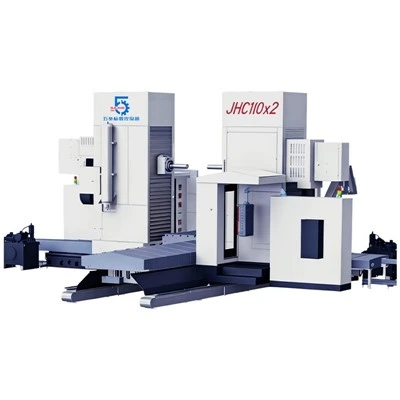
At the end of the day, every time a plane takes off, or a satellite launches into orbit, there’s a good chance a CNC gantry boring mill had a hand in making one of its critical parts. These machines aren’t just for heavy industrial work—they’re precision tools that enable the aerospace industry to push the limits of what’s possible. If you’re an aerospace manufacturer looking to improve your machining accuracy, reduce part scrap, or streamline production for large components, I’d encourage you to reach out to our team to discuss your needs. We’re here to help you find the right gantry boring mill for your specific aerospace applications, no matter the size of your project.
Moving Column Gantry References
- AS9100 Rev D: Quality Management Systems – Requirements for Aerospace, Space, and Defense Organizations
- Machining of Aerospace Materials: A Practical Guide, Society of Manufacturing Engineers, 2021
- Aerospace Structural Component Machining Best Practices, International Aerospace Manufacturing Group, 2022
- CNC Machine Tool Accuracy Standards for Large Work Envelopes, National Institute of Standards and Technology, 2020
5Axis (Shandong) CNC Equipment Co., Ltd.
As one of the most professional CNC gantry boring mill manufacturers and suppliers in China, we also accept customized orders. Please feel free to buy cheap CNC gantry boring mill for sale here from our factory. For price consultation, contact us.
Address: No.2000, Beixin West Road, Jinghe Street, Tengzhou City, Zaozhuang City, Shandong Province
E-mail: summer@good5axis.com
WebSite: https://www.china5axis.com/
