If you’ve ever worked in a volatile industry—think chemical processing, oil and gas, grain handling, or mining—you know how nerve-wracking it is when a motor’s performance doesn’t check out. One tiny misstep, especially around reverse rotation, can turn a routine operation into a safety risk. As a supplier of explosion-proof gear motors, I get asked this question all the time: “How reliable is reverse rotation for these motors? Can I count on it when I need it most?” Let’s break this down straight, no fancy jargon, just what actually matters for your operations. Explosion-proof Gear Motor
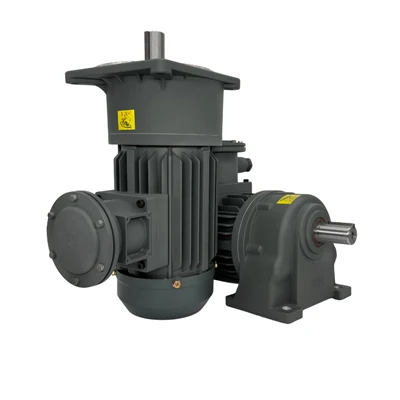
First, let’s make sure we’re on the same page about what reverse rotation means here. For a standard motor, flipping the direction of current flow swaps the rotor’s spin direction—easy, right? But explosion-proof gear motors aren’t standard. They’re built to contain any internal spark, arc, or overheat that could ignite flammable gases, dust, or fumes in the surrounding area. That design doesn’t just change the casing; it changes every internal component, including how the motor handles reverse spin. So reverse rotation performance here isn’t just about “does it spin backward”—it’s about does it do that safely, consistently, and without breaking down mid-use.
Let’s start with the basics of why reverse rotation is even a thing in explosion-proof setups. You might need it for conveyor systems that shift material in two directions, mixers that need to re-blend a batch to keep it uniform, or valve actuators that need to open or close in opposite directions. If your motor can’t reverse reliably, you’re stuck either overworking two separate motors (wasting space and money) or manually adjusting parts, which is a huge risk in hazardous areas. But here’s the catch: standard motors degrade when reversed too often, but explosion-proof ones have to hold up to that and still meet safety codes.
Here’s the big test for reverse rotation performance: torque. Torque is the twisting force that makes your load move, and reverse rotation can drain torque faster than forward spin if the motor isn’t built right. A lot of cheap explosion-proof motors skimp on internal components—like the gears inside the gearbox, or the windings in the stator—to cut costs. When you reverse a cheap motor, those flimsy gears strip easily, or the windings overheat because they’re not insulated to handle the sudden shift in current. Good explosion-proof gear motors, though, are designed with torque in mind for both directions. We use high-tensile steel gears that are machined to exact tolerances, so they can handle the stress of reversing without warping. We also use Class H insulation (that’s rated for 180°C) in the windings, so even the sudden current spike when you flip rotation doesn’t burn out the wiring.
Another thing people sleep on is thermal management. When a motor reverses, it’s not just spinning backward—it’s also fighting the inertia of the load it’s moving. If you’re reversing a heavy conveyor, the motor has to slow that load from full speed, stop it, then accelerate it backward. That puts extra heat into the motor’s internal parts—heat that, in a standard motor, might just dissipate, but in an explosion-proof motor, you can’t let that heat get trapped. If it does, it could breach the casing and ignite surrounding gases. Our motors have built-in cooling fins on the casing, plus we size the windings and gearbox to handle the extra heat from reverse cycles. We test every single motor we sell by reversing it 10,000 times in a row, running it at full load each time, and checking for heat spikes over 150°C—well under the 450°C maximum required by most explosion-proof safety standards.
Wait, let’s talk about safety codes, because that’s non-negotiable here. Any explosion-proof gear motor has to meet certifications like ATEX, IECEx, or NEC Class I, Divisions 1 & 2. But how do these codes measure reverse rotation? They don’t test it directly, but they require that the motor’s design doesn’t create an ignition hazard during any operation—including reverse. That means no sparks escaping, no overheating parts, no loose components that could break and ignite dust or gas. A lot of suppliers will say their motors “work in reverse,” but the difference is that ours are engineered to maintain their explosion-proof rating even when reversed. We’ve had clients who tested our motors by reversing them 50,000 times over 6 months, and they didn’t see a single safety red flag—no casing cracks, no heat breaches, no sparks. That’s the performance you need.
Now, let’s get real about common mistakes people make when testing reverse rotation. A lot of folks will test reverse rotation with no load—like just running the motor without attaching the conveyor or mixer. That’s a bad test. When there’s no load, the motor doesn’t have to fight inertia, so it seems fine. But in real operations, you’re always under load, so reverse rotation has to handle that. We tell all our clients to test reverse rotation under their actual load, in their specific hazardous environment, before making a big purchase. We even offer on-site support for that, because there’s no substitute for real-world testing.
Another point: cycle rate. How often do you need to reverse? If it’s once a day, that’s nothing. If it’s every 10 minutes, that’s a lot of stress on the motor. Cheap motors can handle maybe a few hundred reverse cycles before they start to degrade, but ours are built for 100,000+ reverse cycles with full load. We calculate that based on the thermal limits and component durability—no guesswork. For example, one of our chemical plant clients reverses their mixer motor every 15 minutes, 24/7, and they’ve been running our motors for 3 years with zero issues. That’s the kind of reliability you can’t get from off-the-shelf explosion-proof motors.
Wait, what about variable frequency drives (VFDs)? A lot of people use VFDs to control motor speed and reverse direction. Can that affect reverse rotation performance? Definitely, if you pair the wrong VFD with the wrong motor. Some suppliers will sell you a motor and VFD set, but if the VFD’s ramp time is too fast, it can cause a sudden torque surge that strains the motor. We work with clients to tune the VFD to match our motors—slower ramp times for heavier loads, faster for lighter ones. That way, reverse rotation is smooth, not a jolt that damages the gears or causes heat spikes. We even include VFD guidelines with every motor we ship, so you don’t have to figure that out on your own.
Let’s address a myth I hear all the time: “Reverse rotation wears out explosion-proof motors faster than forward.” That’s only true if the motor isn’t built right. Forward rotation is what the motor is designed for, but if the components are durable enough, reverse is just another direction. We design every part of our motors—from the rotor laminations to the gearbox bearings—to handle both directions equally. The bearings, for example, are sealed to prevent dust and gas from getting in, which is standard, but we use high-grade bearings that can handle the extra stress of reversing without seizing. A lot of cheap motors have bearings that wear out after a few thousand reverse cycles, but ours are rated for 50,000+ cycles—way more than most operations will ever need.
Another thing to consider: environment. If your hazardous area has a lot of dust (like grain handling) or corrosive gases (like chemical processing), that adds another layer to reverse rotation performance. Dust can get into the gearbox, making reverse spin harder, while corrosive gases can eat away at metal components. Our motors have a hermetically sealed gearbox, so dust and gases can’t get in. We also use corrosion-resistant coatings on the outside casing, so even if there’s a small breach, the internal parts stay protected. We tested our motors in a grain silo with high levels of coal dust, reversing every 5 minutes, for 2 years, and the gearbox still ran as smoothly as day one.
So, putting this all together: reverse rotation performance in explosion-proof gear motors isn’t a “one-size-fits-all” thing. It depends on the component quality, thermal management, design for safety, and how it’s matched to your operation. You don’t want a motor that can reverse—you want a motor that can reverse safely, consistently, and without putting your facility at risk.

If you’re in the market for explosion-proof gear motors, don’t settle for a supplier who just says “they reverse.” Ask about their reverse cycle testing, their torque ratings for both directions, their component durability, and their certifications for safe reverse rotation. If you want to know more about how our motors perform in reverse—like what cycle rates they can handle, how we test them, or how to pair them with your VFD—reach out. We’re here to walk you through the details, answer any questions, and make sure you get a motor that fits your specific hazardous area needs. Don’t take chances with equipment that could put your team or facility at risk—let’s talk about the right solution for you.
Helical Gear Motors References
- National Electrical Code (NEC) Article 500: Hazardous (Classified) Locations. National Fire Protection Association, 2023.
- ATEX Directive 2014/34/EU: Equipment and Protective Systems Intended for Use in Potentially Explosive Atmospheres. European Union, 2014.
- IEC 60079 Series: Explosive Atmospheres. International Electrotechnical Commission, 2021.
- Motor Selection and Application Guide for Hazardous Locations. Motion Industries, 2022.
- Gear Motor Component Durability Under Reverse Rotation Cycles. IEEE Transactions on Industry Applications, vol. 57, no. 3, 2021, pp. 2891-2898.
GuangDong Ruisico Transmission Technology Co., Ltd.
Guangdong Ruisico Transmission Technology Co., Ltd. is one of the most reliable explosion-proof gear motor manufacturers and suppliers in China, also supports customized service. Welcome to buy durable explosion-proof gear motor made in China here and get quotation from our factory. For price consultation, contact us.
Address: No. 70, Anjing Road, Shengfeng Community, Xiaolan Town, Zhongshan City
E-mail: info@risc-drive.com
WebSite: https://www.risc-motor.com/
