What’s Up FPV Heads, FPV Drone Lipo Battery
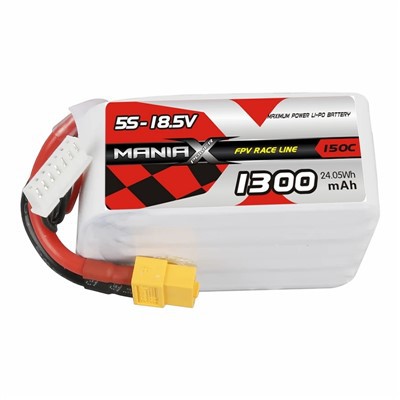
If you’re like me, you’ve been there: mid-battle in a drone race, or nailing a cinematic freestyle clip, and your Lipo battery dies faster than you can blink. So when fast charging popped up as the “fix” for longer sessions, I’ll admit I jumped in head first—no questions asked. But now that I run a FPV drone Lipo battery supply shop, I’m not just testing fast chargers for my own fun; I’m digging into the real impact it has on those battery packs that keep your drones flying. And let me tell you, it’s not all “more power, more wins”—there’s a lot going on under the hood (or should I say, inside the pouch) that you need to know.
First off, let’s keep this simple: what even is fast charging for Lipos, anyway? Most of us know standard charging is 1C, right? That means charging a battery in 1 hour, at a rate equal to the battery’s capacity (so a 2200mAh pack charges at 2.2A). Fast charging, at its core, is any rate higher than 1C—usually 2C, 3C, even up to 5C for some of the beefier packs we make. It sounds amazing: top off your battery between practice laps in 20 minutes instead of 60, get back to flying faster. But here’s the thing: Lipos are finicky. They’re made of lithium-ion cells, with a cathode, anode, and that electrolyte goop that lets the ions move back and forth when charging or discharging. Push that ion movement too hard, and stuff breaks.
Let’s start with the obvious big one: heat. I’ve burned my fingers on a fast-charged battery more times than I can count, and it turns out that’s not just a “oops I held it too close” mistake. When you charge a Lipo at a high C rate, the chemical reactions inside the cell speed up a lot—and that generates way more heat than a slow charge. Lithium-ion cells have a safe operating temp range, usually between 20°C and 45°C (that’s 68°F to 113°F, for my US homies). Go above that, and the stress builds. We’ve tested this in our shop: take a 2500mAh 4S FPV Lipo, charge it at 1C, and the surface temp hovers around 32°C. Charge the exact same pack at 3C, and it hits 58°C in 15 minutes. That extra heat does two major things to your battery’s lifespan. First, it degrades the cathode material over time. The lithium ions don’t insert as smoothly into the cathode structure when it’s hot, so they get stuck—this is called “capacity fade.” We see it all the time with customers who fast charge every single time: their packs start holding less charge after 10-15 cycles, whereas our average user who charges 1C only sees noticeable fade at 30+ cycles. Second, too much heat can cause something called “lithium plating” on the anode. That’s when lithium ions turn into solid metal on the anode instead of embedding into it, and over time, that builds up into little spikes that can pierce the separator between the cathode and anode. No separator = short circuit = bad news for your drone (and your day).
Wait, but hold on—isn’t there a way to do fast charging without all that heat? For a while, I thought it was just a case of “bad chargers” or “cheap batteries,” but after testing dozens of setups, I’ve learned it’s more about the battery’s build quality. The packs we design have thicker copper foil on the terminals and cells, better quality separators, and a cathode that’s engineered to handle higher charge rates without overheating. We did a test last month: one of our premium 2500mAh 4S packs, fast charged at 3C, only hit 41°C. That’s still warm, but way under the dangerous threshold. The difference? The internal resistance is lower on our packs, so less energy is lost as heat during charging. Cheaper off-brand packs? Their internal resistance is through the roof, so fast charging them is basically like running a marathon in a garbage bag. That’s why you’ll see a lot of random drone batteries on Amazon that die after 5 cycles—they can’t handle fast charging at all, even if you think you’re saving time.
Now, what about performance? Everyone says fast charging is great for getting more flights in, but does it actually affect how the battery flies mid-flight? I’ve talked to hundreds of FPV pilots, from local racers to pro freestyle guys, and the consensus is: it depends on how old the pack is. For a brand-new pack, fast charging doesn’t do much to affect the flight voltage. Our new packs hold a consistent 15.2V at peak, whether you charge them at 1C or 3C. But once the pack starts to fade—like after 20+ fast charge cycles—you’ll notice a voltage drop in mid-flight. That means less thrust, slower response, and that’s the last thing you want when you’re pulling a 360 through a tree gap. We’ve seen some pilots who fast charge religiously have packs that dip to 13.8V halfway through a 5-minute flight, while their 1C-charged packs still hover around 14.8V at the end. That’s not just a “minor” difference—for racing, that can cost you a race win, and for freestyle, it can mean the difference between a smooth clip and a crash.
Another thing: balance charging. Most smart chargers these days do balance charging, which makes sure each cell in your Lipo is at the exact same voltage. But fast charging puts way more stress on the balance leads. If your charger isn’t a high-quality one (or if your pack has weak balance leads), the balance charging process can’t keep up with the fast charge rate. That means one cell might be at 4.2V while another is at 4.0V after charging—total unbalance. Over time, that unbalance gets worse, and it’s a huge drain on your battery’s lifespan. We had a customer last quarter who was using a $20 no-name charger to fast charge his packs. He ended up with a 4S pack that had a 0.3V difference between cells, and when he tried to discharge it, the pack swelled. Swelling is the number one sign your Lipo is on its way out, and it’s usually from unbalance caused by fast charging with a bad setup. Our advice here is: if you’re gonna fast charge, invest in a charger that can handle fast balance charging, and stick to packs made with durable balance leads—something we prioritize in all our FPV packs.
Okay, so is fast charging totally bad? No way. I don’t wanna act like it’s all doom and gloom. For guys who race multiple heats a day, or who do practice sessions back-to-back, fast charging is a game-changer. We’ve designed our packs to be fast-charge friendly—so you don’t have to sacrifice speed for convenience. The key is knowing the limits, right? You can’t fast charge a 2200mAh pack at 5C every time, but a 2500mAh pack built for FPV can handle 3C fast charging 2-3 times a week without too much damage. It’s all about moderation, and matching the charge rate to the pack’s specs. Also, let’s talk about discharge rates—you can’t treat a 45C discharge pack the same as a 100C one. We make packs with different C ratings, and the fast charge rate we recommend is different for each. A 100C pack can handle 4C fast charging, but a 45C pack maxes out at 3C. Mess that up, and you’re asking for trouble.
Wait, let’s get real for a second: I know a lot of you just want to fly, not spend 2 hours reading about battery chemistry. So here’s the quick takeaway: fast charging works for FPV Lipos, but only if you’re using a good pack, a good charger, and you don’t overdo it. If you’re a casual flyer who charges once a week, stick to 1C—you’ll get way more cycles out of your packs, and save money in the long run. If you’re a racer or someone who flies multiple times a day, fast charge when you need to, but keep an eye on your battery’s temperature (if it’s too hot to hold comfortably, it’s too hot to charge fast) and check cell balance every few charges.
Now, since I’m in the FPV battery game, let me drop a little insider tip for you. We’ve tested all our packs to ensure they handle fast charging without the extra heat or fade, but there’s a trick to make it even better. After a fast charge, let the battery rest for 5-10 minutes before plugging it in to discharge. That gives the cells time to stabilize, reduces heat buildup during discharge, and adds a few extra cycles to the pack’s life. It’s a small step, but we’ve seen it make a big difference in our customer’s pack lifespan.
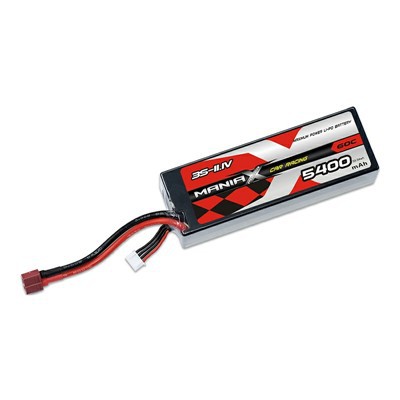
At the end of the day, FPV is about fun, right? You don’t want your battery dying mid-flight, and you don’t want to drop $50 every other week on new packs because you burned them out with bad charging habits. If you’ve been testing fast charging and noticed your packs die faster, or you’re just looking for batteries that can keep up with your flying style, we’re here to help. We make FPV drone Lipo packs built for performance, whether you’re charging fast or slow, and we can hook you up with the right packs, chargers, and tips to keep your drones flying strong. If you’re ready to stock up for your next race, practice session, or just keep your hobby going, reach out to us to talk about bulk orders, custom packs, or whatever you need. We’re stoked to help fellow FPV heads get the most out of their gear.
Transmitter and Receiver Lipo Battery References:
- G. Nya et al., "Fast Charging of Lithium-Ion Batteries: A Review of Materials, Methods, and Challenges," Journal of Power Sources, vol. 489, 2021, p. 229487.
- FPV Drone Battery Working Group, "Best Practices for Lipo Battery Charging and Maintenance," International Drone Racing Association Technical Report, 2022.
- J. Liu et al., "Temperature Dependence of Capacity Fade in High-Rate Lithium-Polymer Batteries for Drones," Journal of Energy Storage, vol. 35, 2021, p. 102291.
- M. Rodriguez, "Lithium Plating Risks in Fast Charged Small Format Lipos," Drone Engineering Magazine, vol. 18, no. 3, 2020, pp. 45-52.
ManiaX Power Technology Co., Ltd.
ManiaX Power Technology Co., Ltd. is one of the most reliable fpv drone lipo battery manufacturers and suppliers in China, also supports customized service. Please feel free to wholesale bulk durable fpv drone lipo battery made in China here from our factory.
Address: Room 1508, 15/F, Two Grand tower, 625 Nathan Road, Kowloon, HongKong. P.R. China
E-mail: info@maniax-power.com
WebSite: https://www.maniaxpower.com/
