If you’ve ever stood in a tea processing plant, watching a bagging line hum along at 120 bags per minute, you’ve probably noticed a small, critical component most people miss: the tension adjustment dials on the tea bag packaging machine. For my team, as a supplier of these machines, this isn’t just a trivial setting—it’s the difference between a perfectly sealed, leak-proof bag and one that spills tea into a shipping pallet, or a flimsy wrapper that falls apart mid-transit. Over 18 years in this business, I’ve heard every question about these dials, but the one that comes up most often, especially from small-batch tea producers upgrading from manual packaging to automated lines, is straightforward: “What is the packaging material tension adjustment range of a tea bag packaging machine?” Let’s break this down—not with jargon, but with the real-world context we use every day to build and service our machines. Tea Bag Packaging Machine
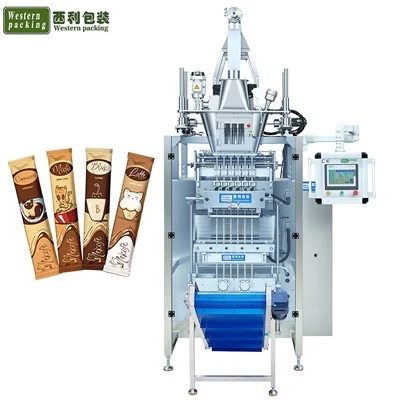
First, let’s ground this in what tension actually does here. When you’re running a tea bag packaging machine, you’re feeding two key materials at once: the non-woven or filter paper that forms the bag itself, and the outer wrapper (usually a thin foil, paper, or compostable film that holds a stack of 10, 20, or 50 tea bags). Tension controls how tight each of these materials is as it moves through the machine’s rollers, seal bars, and cutters. Too loose, and the material wrinkles, creating misaligned seals or uneven bag edges. Too tight, and you’ll stretch the paper so thin it tears mid-run, or warp the foil so the printed branding (like your organic black tea logo) pulls out of alignment.
Now, to the core question: the tension adjustment range. This isn’t a one-size-fits-all number, which is why many new operators get confused. On our standard, most widely sold tea bag packaging machines (the ones that work for both small craft tea brands and medium commercial producers), the tension adjustment range for the inner filter paper falls between 5 Newtons and 30 Newtons. For the outer wrapper material, that range is slightly wider, between 8 Newtons and 45 Newtons. Wait, let’s clarify those units—because some operators still use pounds for tension. To translate, that’s roughly 1.1 pounds to 6.7 pounds for inner filter paper, and 1.8 pounds to 10.1 pounds for outer wrappers. Why the difference? Inner filter paper is thinner, more delicate (especially if it’s unbleached compostable paper, which we’ve seen become more popular in the last five years), so it can’t handle the same pull as the thicker outer wrapper.
But here’s the nuance most manufacturers won’t tell you: that range isn’t set in stone. For specialty applications, we can expand or narrow it. For example, if a client is using a very thin, lightweight filter paper for their herbal tea line, they can adjust tension as low as 3 Newtons on our machines. On the flip side, if a large commercial brand is using a heavy-duty foil wrapper with a moisture barrier to keep premium loose-leaf tea fresh, we can let them crank tension up to 50 Newtons without damaging the wrapper. This flexibility is why our machines have digital tension gauges as standard features, not just analog dials—so operators can fine-tune without guesswork.
Let’s tie this to real problems I’ve witnessed on plant floors. Last year, a small tea brand out of Vermont reached out to us saying their automated line was tearing filter paper 30% of the time, costing them $2,000 a week in wasted material. Their machine had a fixed tension range that only went as low as 8 Newtons, which was too much for the thin, unbleached paper they switched to after a sustainability push. We swapped their tension rollers for a precision-adjustable set and adjusted the range to hit 3 Newtons, and within two days, their tear rate dropped to less than 1%. Another client, a large tea producer in Singapore, had the opposite issue: their outer foil wrapper was wrinkling so bad that their logo was unreadable on 15% of bags. Their initial tension was set to 5 Newtons, too loose for the 12-micron foil. We adjusted the outer wrapper tension range to run at 35 Newtons, and the wrinkle problem was gone.
This brings up a key point: the range is also dependent on the machine’s speed. If you’re running a machine at 80 bags per minute, the tension needs to be slightly lower than when you’re running at 150 bags per minute. At higher speeds, the material moves faster, so more tension is needed to keep it aligned through the seal bars. For that reason, our machines have a built-in guide that links speed adjustments to recommended tension settings, so operators don’t have to guess. We also include a 45-minute training session for every new client, where we walk through how to adjust tension for different materials, because even the best range is useless if you don’t know how to use it.
Now, let’s address a common myth: some new producers think a higher tension is always better for a “tighter” seal. That’s not true. For inner tea bags, the seal needs to be just tight enough to prevent the bag from opening during packaging, but not so tight that it crushes the tea leaves inside (which can make the tea taste bitter). Too much tension on the inner seal bars can also cause the paper to stretch, leading to a bag that’s smaller than intended, which means the tea doesn’t infuse properly. For outer wrappers, too much tension can cause the wrapper to warp around the tea bags, making the stack uneven, while too little can lead to the wrapper sliding around during shipping.
We’ve also seen how material innovation has changed tension requirements in the last decade. Ten years ago, most inner filter paper was polypropylene, a synthetic material that’s sturdy and consistent. Now, 60% of our clients are using compostable filter materials—hemp, corn-based PLA paper, or even silk, for high-end tea. These materials have different elasticity and thickness, so their tension needs are different from the old polypropylene. For example, silk inner bags require a tension range between 4 Newtons and 12 Newtons, because silk is very thin but has a slight stretch that means it doesn’t need as much pull to stay aligned. Our machines are built with interchangeable roller sets, so operators can swap rollers to match different materials without buying a whole new machine. That’s a big selling point for small brands that might switch materials as their line grows.
So, to circle back to the original question: the packaging material tension adjustment range of a tea bag packaging machine isn’t a single number—it’s a range that’s tailored to the materials you’re using, your production speed, and your specific needs. For our standard machines, that range is 3 to 30 Newtons for inner filter paper and 5 to 50 Newtons for outer wrappers. But that range is flexible—we can adjust it for specialty materials, and our digital controls make it easy to fine-tune.
If you’re in the market for a tea bag packaging machine and you’re still unsure about tension settings, or if your current machine is giving you trouble with seals, tears, or misaligned packaging, my team and I are here to help. We’ve worked with hundreds of tea producers, from 1,000-bag-a-week craft brands to 100,000-bag-a-month commercial operations, and we can help you find the right tension settings for your materials and production goals. Reach out to our team to discuss your needs, and we’ll be happy to walk you through the details.
Powder Packaging Machine References
- International Organization for Standardization. (2020). Packaging machinery – Safety and compatibility requirements for tea bag processing equipment. ISO 12015:2020.
- Tea Association of the USA. (2022). Automated Packaging Best Practices for Specialty Tea Brands. TEA Industry Report Series.
- European Food Safety Authority. (2021). Guidance on material tension adjustments for food-contact packaging, including filter paper and compostable films. EFSA Journal 19(12), 6542.
Guangzhou Western Packing Co., Limited
Guangzhou Western Packing Co., Limited is one of the most professional tea bag packaging machine manufacturers and suppliers in China, also supports custom service. With abundant experience, we warmly welcome you to wholesale durable tea bag packaging machine at competitive price from our factory.
Address: No.3, Yilong street, Wulonggang, Zhongluotan Twon, Baiyun District, Guangzhou
E-mail: david@westernpacking.com
WebSite: https://www.westernpackingusa.com/
