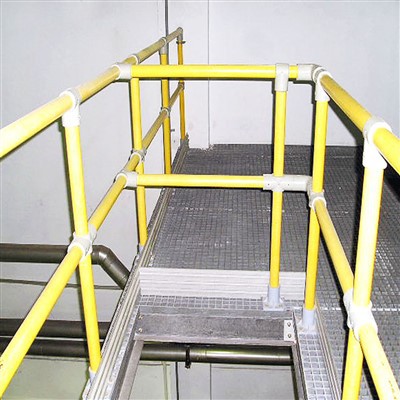
Fiber Reinforced Polymer (FRP) standard profiles have gained significant popularity in various industries due to their high strength-to-weight ratio, corrosion resistance, and low maintenance requirements. As a supplier of FRP standard profiles, ensuring the quality of our products is of utmost importance. In this blog post, I will share some essential methods to test the quality of FRP standard profiles. FRP Standard Profile
Visual Inspection
Visual inspection is the first and most straightforward step in testing the quality of FRP standard profiles. It allows us to quickly identify any obvious defects or irregularities that may affect the performance of the profiles.
Surface Quality
Examine the surface of the FRP profile for any cracks, scratches, or bubbles. A smooth and uniform surface indicates a well – manufactured product. Cracks can significantly reduce the structural integrity of the profile, while scratches may expose the fibers to the environment, leading to potential degradation. Bubbles can be a sign of improper resin mixing or curing, which can also weaken the material.
Color Consistency
Check for color consistency across the entire length of the profile. Significant color variations may suggest issues with the resin formulation or the manufacturing process. For example, inconsistent color may be due to uneven distribution of pigments or improper curing temperatures, which can affect the mechanical properties of the FRP.
Dimensions
Measure the dimensions of the FRP standard profile using appropriate measuring tools such as calipers and rulers. The dimensions should match the specified tolerances. Any deviations can cause problems during installation and may also affect the performance of the profile in the intended application. For instance, if the width of a beam profile is not within the specified tolerance, it may not fit properly into the support structure.
Mechanical Property Testing
Mechanical property testing is crucial for determining the strength and durability of FRP standard profiles. The following tests are commonly used:
Tensile Testing
Tensile testing involves applying a pulling force to a sample of the FRP profile until it breaks. This test measures the ultimate tensile strength, yield strength, and modulus of elasticity of the material. The ultimate tensile strength indicates the maximum stress the material can withstand before failure, while the yield strength is the stress at which the material begins to deform plastically. The modulus of elasticity measures the material’s stiffness.
To conduct a tensile test, a sample of the FRP profile is prepared according to the relevant testing standards. The sample is then placed in a tensile testing machine, and the force is applied at a constant rate until failure. The results of the test are used to evaluate the quality of the profile and to ensure that it meets the required specifications.
Flexural Testing
Flexural testing is used to determine the ability of the FRP profile to resist bending. In this test, a sample of the profile is supported at two points and a load is applied at the center until the sample breaks or reaches a specified deflection. The flexural strength and modulus are calculated based on the applied load and the deflection of the sample.
Flexural strength is an important property for FRP profiles used in structural applications such as beams and columns. A high flexural strength indicates that the profile can withstand heavy loads without excessive bending or failure.
Compression Testing
Compression testing measures the ability of the FRP profile to withstand compressive forces. A sample of the profile is placed in a compression testing machine, and a load is applied until the sample fails. The compressive strength of the material is then calculated.
Compression testing is particularly important for applications where the FRP profile is subjected to compressive loads, such as in vertical support structures. A profile with a high compressive strength can ensure the stability and safety of the structure.
Chemical Resistance Testing
One of the key advantages of FRP standard profiles is their excellent corrosion resistance. Chemical resistance testing is used to evaluate the ability of the profile to withstand exposure to various chemicals.
Immersion Testing
In immersion testing, samples of the FRP profile are immersed in a specific chemical solution for a predetermined period. The samples are then removed, and their physical and mechanical properties are evaluated. Any changes in weight, dimensions, color, or mechanical properties indicate the degree of chemical attack.
For example, if the profile is intended for use in a chemical processing plant, it may be exposed to acids, alkalis, or solvents. Immersion testing can help determine whether the profile can resist the corrosive effects of these chemicals over time.
Spray Testing
Spray testing involves spraying the chemical solution onto the surface of the FRP profile. This method simulates real – world conditions where the profile may be exposed to chemical splashes or mists. After spraying, the profile is observed for any signs of damage or degradation.
Fire Resistance Testing
Fire resistance is an important consideration for FRP standard profiles, especially in applications where there is a risk of fire. Fire resistance testing is used to evaluate the ability of the profile to withstand fire and to prevent the spread of flames.
Ignition Resistance
Ignition resistance testing measures the ease with which the FRP profile ignites when exposed to a flame. The test involves applying a small flame to the surface of the profile for a specified period. The time it takes for the profile to ignite and the duration of the flame after the ignition source is removed are recorded.
Flame Spread
Flame spread testing measures the rate at which the flame spreads across the surface of the FRP profile. A sample of the profile is placed in a test chamber and exposed to a flame. The flame spread index is then calculated based on the distance the flame travels and the time it takes.
Environmental Aging Testing
FRP standard profiles are often exposed to various environmental conditions such as sunlight, moisture, and temperature changes. Environmental aging testing is used to evaluate the long – term durability of the profiles under these conditions.
Weathering Testing
Weathering testing involves exposing the FRP profiles to natural or artificial weathering conditions. Natural weathering involves placing the profiles outdoors for a specified period, allowing them to be exposed to sunlight, rain, wind, and temperature changes. Artificial weathering uses a weathering chamber to simulate these conditions more rapidly.
After the weathering period, the profiles are inspected for any changes in appearance, mechanical properties, or chemical composition. For example, prolonged exposure to sunlight can cause the profile to fade, become brittle, or lose its mechanical strength.
Hygrothermal Testing
Hygrothermal testing simulates the combined effects of high humidity and temperature on the FRP profile. The profiles are placed in a chamber with controlled humidity and temperature conditions for a specified period. The changes in dimensions, weight, and mechanical properties are then measured.
Hygrothermal testing is important for applications where the profiles are exposed to high – humidity environments, such as in coastal areas or in buildings with poor ventilation.
As a supplier of FRP standard profiles, we are committed to providing high – quality products that meet the strictest standards. By conducting comprehensive quality tests, we can ensure that our profiles are reliable, durable, and suitable for a wide range of applications.
If you are interested in purchasing FRP standard profiles, we would be more than happy to discuss your requirements. Our team of experts can provide you with detailed information about our products and help you choose the right profiles for your project. Contact us to start a procurement discussion.
Nursery Plant Supports References
ASTM International standards related to FRP testing (e.g., ASTM D638 for tensile testing, ASTM D790 for flexural testing)
Composite Materials Handbook, Joint Army – Navy – Air Force (JANAF)
Yizheng Wanteng Composites Co., Ltd.
As one of the most professional FRP standard profile manufacturers and suppliers in China, we’re featured by quality products and good service. Please rest assured to wholesale bulk slip-resistant FRP standard profile for sale here from our factory. Contact us for pricelist.
Address: No. 20 Longyi Road, Qingshan Town Industrial Park, Yizheng City, Jiangsu Province, China
E-mail: mark@wantfrp.com
WebSite: https://www.wantfrp.com/
