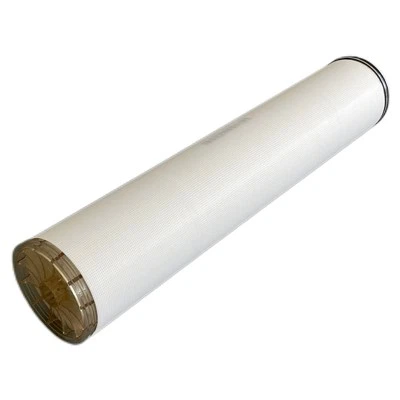
Seawater reverse osmosis (SWRO) has emerged as a crucial technology for addressing the global water scarcity issue. As a supplier of spiral wound membranes, I’ve witnessed firsthand the transformative impact these membranes have on desalination processes. However, like any technology, using spiral wound membranes in seawater reverse osmosis comes with its own set of challenges. In this blog, I’ll delve into these challenges and discuss how we, as a membrane supplier, are working to overcome them. Spiral Wound Membrane
Fouling and Scaling
One of the most significant challenges in SWRO is fouling and scaling on the spiral wound membranes. Fouling occurs when suspended particles, organic matter, and microorganisms accumulate on the membrane surface, reducing its permeability and increasing the pressure required to maintain the desired water flow. Scaling, on the other hand, is the precipitation of inorganic salts, such as calcium carbonate and calcium sulfate, on the membrane surface. These deposits can form a hard layer that not only reduces membrane performance but also shortens its lifespan.
The high salt concentration in seawater makes it particularly prone to scaling. The presence of divalent ions like calcium and magnesium can react with carbonate and sulfate ions to form insoluble salts. Additionally, the high organic matter content in seawater can contribute to fouling. Algae, bacteria, and other microorganisms can attach to the membrane surface and form a biofilm, which further exacerbates the fouling problem.
To combat fouling and scaling, we offer membranes with advanced surface properties. Our membranes are designed to be hydrophilic, which means they have a high affinity for water. This property helps to prevent the adhesion of particles and organic matter to the membrane surface. We also incorporate anti – scaling agents into our membrane manufacturing process. These agents can inhibit the precipitation of salts and reduce the risk of scaling.
High Pressure Requirements
Seawater has a high osmotic pressure due to its high salt concentration. To overcome this osmotic pressure and force water through the membrane, SWRO systems require high operating pressures. Typically, SWRO systems operate at pressures ranging from 55 to 80 bar. These high pressures place a significant strain on the spiral wound membranes.
The high pressure can cause mechanical stress on the membrane structure. Over time, this stress can lead to membrane compaction, which reduces the membrane’s pore size and permeability. It can also cause delamination of the membrane layers, resulting in a loss of membrane integrity.
To address the issue of high pressure, we have developed membranes with enhanced mechanical strength. Our membranes are made from high – quality materials that can withstand the high pressures of SWRO systems. We also use advanced manufacturing techniques to ensure the uniformity and stability of the membrane structure. This helps to minimize the risk of membrane compaction and delamination.
Membrane Degradation
Another challenge in using spiral wound membranes in SWRO is membrane degradation. The harsh chemical environment of seawater, combined with the high operating pressures, can cause the membrane to degrade over time. Oxidizing agents, such as chlorine, can react with the membrane material and damage its structure. Additionally, the presence of free radicals and other reactive species in seawater can also contribute to membrane degradation.
To protect our membranes from degradation, we offer membranes with excellent chemical resistance. Our membranes are made from materials that are resistant to oxidation and other chemical reactions. We also provide guidelines on the proper use of chemicals in SWRO systems to minimize the risk of membrane damage. For example, we recommend using de – chlorination agents to remove chlorine from the feed water before it enters the membrane system.
Energy Consumption
SWRO is an energy – intensive process. The high pressures required to force water through the membrane consume a significant amount of energy. This energy consumption not only increases the operating costs of SWRO plants but also has environmental implications.
As a membrane supplier, we are constantly working to improve the energy efficiency of our membranes. We are researching and developing new membrane materials and designs that can reduce the pressure required for water filtration. For example, we are exploring the use of thin – film composite membranes with higher water permeability. These membranes can allow more water to pass through at lower pressures, thereby reducing the energy consumption of SWRO systems.
Feed Water Quality Variability
The quality of seawater can vary significantly depending on the location, season, and weather conditions. Variations in feed water quality can have a significant impact on the performance of spiral wound membranes. For example, during algal blooms, the concentration of organic matter in seawater can increase dramatically, leading to severe fouling of the membranes.
To address the issue of feed water quality variability, we offer customized membrane solutions. We work closely with our customers to understand their specific feed water characteristics and design membranes that are optimized for their particular operating conditions. We also provide pre – treatment solutions to remove impurities from the feed water before it enters the membrane system. This helps to protect the membranes from fouling and scaling and ensures the long – term performance of the SWRO system.
Cost – Effectiveness
The cost of spiral wound membranes is an important consideration for SWRO plants. While the initial investment in membranes can be significant, the long – term cost – effectiveness of the membrane system is crucial. The cost of membranes, along with the cost of energy, maintenance, and replacement, can have a major impact on the overall operating costs of SWRO plants.
As a membrane supplier, we are committed to providing cost – effective solutions. We strive to optimize our manufacturing processes to reduce the production cost of our membranes without compromising on quality. We also offer long – term warranties and technical support to our customers, which helps to reduce the overall cost of ownership of our membrane systems.
Conclusion
Using spiral wound membranes in seawater reverse osmosis presents several challenges, including fouling and scaling, high pressure requirements, membrane degradation, energy consumption, feed water quality variability, and cost – effectiveness. However, as a leading supplier of spiral wound membranes, we are constantly working to overcome these challenges. Through research and development, we are developing new membrane materials and designs that offer improved performance, durability, and energy efficiency.
System Center If you are interested in learning more about our spiral wound membranes and how they can meet your specific SWRO needs, we encourage you to contact us for a procurement discussion. Our team of experts is ready to assist you in selecting the right membrane solution for your project.
References
- Wilf, M., & Klinko, M. (2005). Reverse Osmosis Technology: Principles, Design, and Applications. Technomic Publishing.
- Baker, R. W. (2012). Membrane Technology and Applications. John Wiley & Sons.
- Greenlee, L. F., Lawler, D. F., Freeman, B. D., Marrot, B., & Moulin, P. (2009). Reverse osmosis desalination: A state – of – the – art review. Journal of Membrane Science, 336(1 – 2), 1 – 22.
Hangzhou Nanoimp Environmental Technology Co., Ltd.
With abundant experience, we are one of the most professional spiral wound membrane manufacturers and suppliers in China. Welcome to wholesale high quality spiral wound membrane in stock here and get pricelist from our factory. We also accept customized orders.
Address: Road 25, Baiyang Street, Qiantang District, Hangzhou City, Zhejiang Province
E-mail: keith.wang@nano-sepmer.com
WebSite: https://www.nanoimp-membrane.com/
